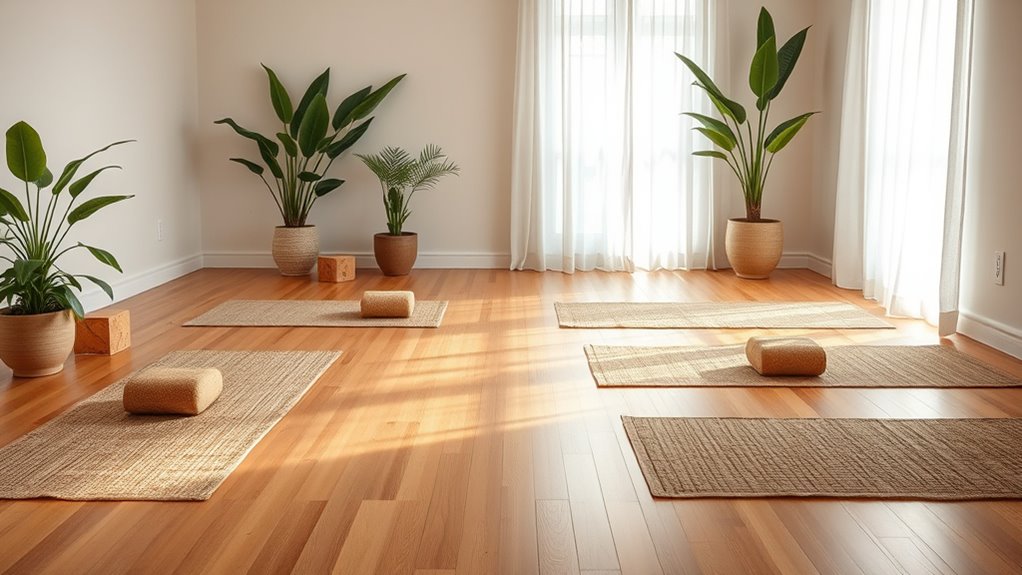

Switching to eco-friendly yoga mats and biodegradable products helps you reduce your environmental footprint and practice with peace of mind. These mats are made from sustainable materials like natural rubber, cork, or recycled rubber, which decompose naturally and minimize pollution. By choosing environmentally responsible options, you support green innovation and promote healthier ecosystems. If you’re interested in making your wellness routine more sustainable, there’s plenty more to discover about eco-friendly practices and materials.
Key Takeaways
- Eco-friendly yoga mats are made from natural, biodegradable materials like cork, jute, and sustainably sourced natural rubber.
- Using biodegradable mats reduces environmental pollution caused by traditional synthetic rubber and PVC mats.
- Certifications like OEKO-TEX or FSC ensure eco-conscious manufacturing and responsible sourcing of materials.
- Material innovations enhance durability and grip while maintaining sustainability and biodegradability.
- Practicing with eco-friendly mats supports environmental responsibility, reduces waste, and promotes a greener wellness lifestyle.
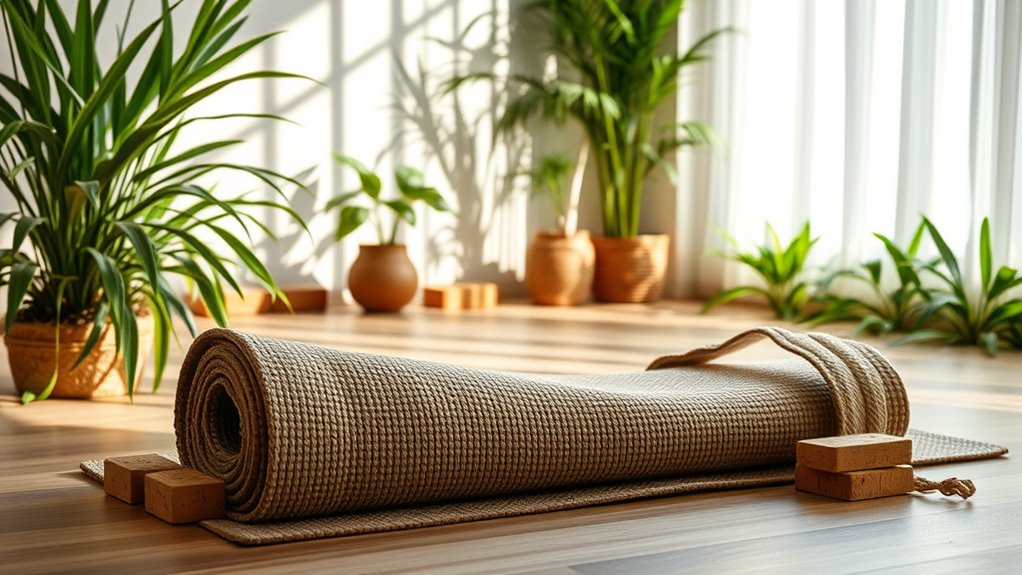
Choosing eco-friendly yoga mats allows you to practice with a clear conscience while supporting sustainable materials. When you opt for these mats, you’re making a conscious decision to reduce your environmental footprint and embrace material innovation. Traditional yoga mats often rely on PVC or synthetic rubber, which can take centuries to decompose and contribute notably to environmental pollution. In contrast, eco-friendly options are crafted from innovative materials like natural rubber, jute, cork, or recycled rubber, all designed to minimize environmental impact. These materials are sourced responsibly and manufactured with sustainability in mind, ensuring that your practice doesn’t come at the planet’s expense.
Material innovation plays a pivotal role in shaping the future of sustainable wellness. Manufacturers are continually developing new, eco-conscious materials that deliver the grip, durability, and comfort you need without harming the environment. For example, cork and jute are naturally renewable, biodegradable, and provide excellent traction, making them ideal choices for eco-minded yogis. Natural rubber, derived from sustainably harvested latex, offers a resilient and eco-friendly alternative to synthetic options. These advancements mean you can enjoy high-performance mats that are not just functional but also aligned with your values of environmental responsibility. By choosing mats made from innovative, sustainable materials, you’re actively reducing reliance on harmful plastics and supporting greener manufacturing processes.
Your choice of eco-friendly yoga mats also impacts the broader environment by reducing waste and pollution. Non-biodegradable synthetic mats often end up in landfills or oceans, where they persist for hundreds of years, harming wildlife and ecosystems. Conversely, biodegradable mats break down naturally over time, leaving little to no lasting environmental footprint. This means less waste in landfills and fewer microplastics polluting our water sources. When you invest in biodegradable products, you’re helping to foster a circular economy—where materials are reused, recycled, or broken down safely—rather than contributing to the growing problem of plastic waste.
Furthermore, eco-friendly mats often come with certifications like OEKO-TEX or FSC, giving you confidence that your purchase supports environmentally responsible practices from raw material extraction to manufacturing. By prioritizing these sustainable options, you’re not just caring for your body but also for the planet. Your mindful choice encourages brands to continue innovating and improving their eco-friendly offerings, creating a ripple effect across the wellness industry. Additionally, choosing materials like natural rubber and cork can help promote material innovation, which is essential for advancing sustainable manufacturing. Ultimately, selecting a yoga mat made from sustainable, innovative materials helps you practice with integrity and supports a healthier planet for future generations.
Frequently Asked Questions
How Long Does a Biodegradable Yoga Mat Typically Last?
A biodegradable yoga mat typically lasts about 6 months to 2 years, depending on material durability and how often you practice. You might notice wear and tear sooner if you regularly do hot yoga or practice outdoors. While biodegradable mats reduce environmental impact after disposal, their lifespan varies with use. To maximize their durability, clean them properly and avoid harsh chemicals, ensuring they serve you well during your practice and then return to nature.
Are Eco-Friendly Mats Suitable for Hot Yoga Sessions?
Eco-friendly mats are generally suitable for hot yoga sessions because many are designed with good slip resistance, even when sweaty. Look for mats labeled as hot yoga compatibility, which often feature textured surfaces to prevent slipping. Since these mats are biodegradable, they’re a sustainable choice that can handle the moisture and heat of hot yoga, ensuring you stay safe and eco-conscious during your practice.
Do Biodegradable Mats Emit Any Harmful Chemicals During Use?
Biodegradable mats generally don’t emit harmful chemicals during use. For example, a study found that these mats avoid synthetic additives that can cause chemical leaching. Since they’re made from natural materials like cork or jute, they’re less likely to release dangerous fumes or chemicals while you practice. You can enjoy your yoga without worry, knowing these mats are designed to be safe and eco-friendly throughout their lifespan.
How Should I Dispose of My Old Eco-Friendly Yoga Mat?
You should recycle or donate your old eco-friendly yoga mat. Check local recycling options—some facilities accept biodegradable mats, breaking them down safely. If recycling isn’t available, consider donation tips: pass it to someone who can use it or repurpose it creatively. This way, you extend the life of your mat and reduce waste, aligning with your eco-conscious values and supporting sustainable wellness practices.
Are Eco-Friendly Yoga Mats More Expensive Than Conventional Ones?
Eco-friendly yoga mats tend to be more expensive than conventional ones, primarily due to higher material costs. Notably, a recent study shows that eco-friendly mats can cost 20-30% more upfront. However, their durability and biodegradable nature often save you money in the long run. While the initial investment is higher, you’re supporting sustainable materials and eco-conscious manufacturing. So, yes, they’re generally pricier, but many find the benefits worth the extra cost.
Conclusion
By choosing eco-friendly yoga mats and biodegradable products, you’re not just improving your wellness—you’re helping the planet too. Many believe that small, conscious choices can create big environmental impacts over time. So, next time you practice, remember that your mindful decision supports sustainability. It’s worth questioning whether traditional mats truly prioritize Earth’s health. Embrace eco-friendly options and see how simple shifts can lead to a more sustainable, balanced lifestyle for you and future generations.