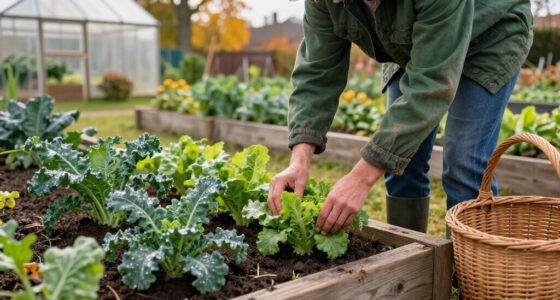
Urban gardening helps you grow more food in small spaces by using strategic plant pairings, vertical gardening, and containers. Companion planting boosts growth, improves soil health, and naturally deters pests, reducing reliance on chemicals. Mixing plants like beans, basil, and marigolds creates a resilient and productive ecosystem. Focusing on soil fertility and space-efficient techniques will turn your limited area into a thriving, sustainable garden. Keep exploring ways to maximize your urban patch for a bountiful harvest.

Get garden gear delivered free with Prime
- Fast, free delivery on millions of items
- Prime Video, Amazon Music and more included
- Member-only deals all year
Key Takeaways
- Utilize vertical gardening and container planting to maximize limited space efficiently.
- Implement companion planting strategies to boost plant health and natural pest control.
- Choose compatible plant pairs, like tomatoes with basil, to improve growth and flavor.
- Enrich soil with organic matter and rotate crops to maintain soil fertility and resilience.
- Create diverse, layered plantings that mimic natural ecosystems for sustainable urban gardens.

Have you ever wondered how to turn small city spaces into lush green retreats? If you’re keen to grow your own food despite limited space, understanding the power of companion planting can make a big difference. This technique involves pairing plants that support each other’s growth, which not only boosts your garden’s productivity but also encourages healthier soil. When you plant certain vegetables and herbs together, they can naturally repel pests, improve nutrient uptake, and create a balanced ecosystem right in your urban backyard or balcony.
To start, think about how companion planting directly influences soil health. Healthy soil is the foundation of a thriving garden, and in small spaces, it’s even more critical to maximize every inch. Companion plants help maintain soil vitality by reducing the need for chemical fertilizers. For example, legumes like beans fix nitrogen in the soil, enriching it for neighboring plants. Meanwhile, herbs such as basil or marigolds can deter pests, decreasing the need for harmful sprays that can degrade soil quality over time. When you rotate and combine plants thoughtfully, you promote a diverse microbial community in the soil, which enhances nutrient cycling and keeps your plants resilient.
In limited spaces, every planting decision counts. You can utilize vertical gardening or container planting to create layered ecosystems reminiscent of natural environments. Incorporate companion plants like carrots and onions, which can repel each other’s pests, or plant tomatoes alongside basil to improve flavor and growth. By pairing plants strategically, you’re not only optimizing space but also fostering a soil environment that’s rich in organic matter and free from pests and diseases. This symbiotic relationship between plants reduces your need for chemical interventions, making your urban garden more sustainable.
Moreover, maintaining soil health through companion planting encourages a cycle of growth that benefits your entire garden. As plants grow, they shed roots and leaves, adding organic matter to the soil. This organic matter feeds beneficial soil organisms, which in turn help break down nutrients into forms your plants can absorb easily. Over time, your soil becomes more fertile and resilient against environmental stresses. This natural process means less effort on your part for soil amendments and fewer worries about soil exhaustion.
In small urban spaces, every plant counts, and companion planting helps you get the most out of your limited area. By choosing compatible plants and paying attention to soil health, you craft an ecosystem where your vegetables, herbs, and flowers thrive together. Not only does this approach boost your food production, but it also creates a vibrant, sustainable retreat amid concrete surroundings. With a little planning and care, you’ll turn your tiny city patch into a lush, productive oasis.
Products Worth Considering

Samsung 42-Inch Class OLED S90F 4K Smart TV (2025)

Samsung 48-Inch S90H OLED 4K Smart TV (2026)

Roborock RockNeo Q110H Wire-Free Robot Lawn Mower
As an affiliate, we earn on qualifying purchases.
Frequently Asked Questions
What Are the Best Plants for Shaded Urban Gardens?
You should choose shade-tolerant vegetables like lettuce, spinach, and kale for your urban garden. These plants thrive in limited sunlight and grow well in small containers. Additionally, container-friendly herbs such as mint, parsley, and chives are perfect options for shaded spots. They’re easy to care for and add flavor to your meals. By selecting these plants, you’ll maximize your small space and enjoy fresh produce even in low-light conditions.
How Do I Prevent Pests in Small Urban Gardens?
Pests can seem like a swarm of locusts threatening your garden’s harmony, but you can outsmart them! Use companion planting to attract beneficial insects that fight pests naturally, and apply natural repellents like neem oil or garlic spray to keep unwanted visitors at bay. Regularly inspect your plants and maintain good airflow. With these strategies, you’ll create a pest-free paradise in your small urban garden!
What Soil Types Are Ideal for Container Gardening?
You should choose a well-draining, nutrient-rich soil mix for container gardening, such as a high-quality potting mix. Incorporate soil amendments like compost or organic matter to boost fertility and improve moisture retention. When selecting containers, opt for ones with good drainage holes to prevent waterlogging. This combination guarantees your plants have the ideal environment, promoting healthy growth and maximizing your urban gardening success.
How Can I Maximize Space in Tiny Gardens?
To maximize space in tiny gardens, you should embrace vertical gardening by using wall-mounted planters or trellises for climbing plants. Also, incorporate companion planting to optimize space and improve plant health. Grow taller plants alongside shorter ones, and stack containers where possible. These strategies help you make the most of limited space, increase yield, and create a lush, productive garden even in a small area.
Are There Eco-Friendly Pest Control Options for Urban Gardens?
They say, “An ounce of prevention is worth a pound of cure,” and that’s true for eco-friendly pest control. You can use companion planting to deter pests naturally and incorporate natural repellents like neem oil or garlic spray. These methods keep your urban garden healthy without harmful chemicals, helping you protect your plants while respecting the environment. With these simple steps, you’ll grow thriving, sustainable food in your small space.
Conclusion
As you tend to your small garden, it’s no coincidence that tiny sprigs of greens peek through the cracks, just like your efforts. Every leaf you nurture feels like a secret shared between you and the city’s heartbeat. In this unexpected oasis, you realize that even in tight spaces, growth and abundance flourish—proof that with a little care, you can turn concrete jungles into lush, edible landscapes. Your urban sanctuary becomes a harvest waiting to be enjoyed.