
TL;DR

Get garden gear delivered free with Prime
- Fast, free delivery on millions of items
- Prime Video, Amazon Music and more included
- Member-only deals all year
A Homes & Gardens report advises checking every container plant’s drainage holes before winter weather arrives, clearing blockages and raising pots off wet surfaces. Poor drainage can leave roots waterlogged and vulnerable to rot and freezing, while expanding frozen moisture can crack some pots.
Gardeners should check and clear drainage holes in outdoor pots before winter weather worsens, according to a Homes & Gardens report, which warns that blocked outlets can leave plants sitting in saturated soil. The report says waterlogged roots can rot and become more vulnerable to freezing, while frozen moisture can also crack some containers.
Drainage holes let excess water escape from containers. The report says they can become obstructed by compacted soil, leaves and other debris, roots, pests, or mineral and salt deposits. A blockage may not be obvious from above, so gardeners may need to lift or tilt each pot to inspect its base.
To clear an accessible blockage, the report recommends gently pushing a chopstick or wooden skewer through the drainage hole and twisting it to dislodge material. Gardeners should also remove saucers for winter, since water collected beneath a pot can leave it standing in moisture or frozen water. Pots placed directly on paving or concrete may drain poorly if their holes are sealed against the surface; pot feet can raise them and allow water to escape.
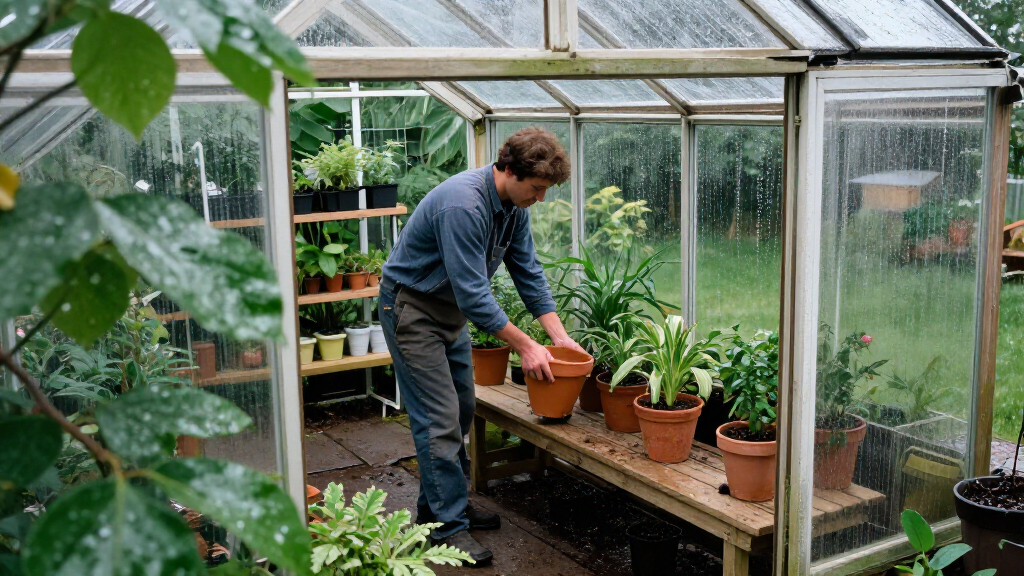
The report also suggests grouping containers in a sheltered place, such as beside a wall or beneath an overhang, to reduce exposure to rain and cold, and considering budget-friendly greenhouses to protect plants from the elements. It advises checking plants through winter for yellowing, wilting, or mold on the soil. These signs can have different causes, so they do not by themselves confirm that drainage is the problem.
How Poor Drainage Threatens Winter Pots
When soil remains saturated, its air spaces fill with water, leaving roots with less oxygen. The Homes & Gardens report says this can lead to root rot; affected roots may become black, soft, and foul-smelling, while damage above the soil can appear as yellow leaves, wilting, and dieback. Persistently wet conditions can also encourage fungal problems, the report says.
Cold adds another risk. Moist soil can freeze, and container-grown plants have less insulation than plants in the ground. The report warns that even hardy plants may be harmed if their pot freezes while waterlogged. As water expands when it freezes, it can also damage containers, particularly porous terracotta and clay. Checking drainage is a low-effort way to reduce these risks, though it cannot prevent all winter injury.
Products Worth Considering

Ring Battery Doorbell and Chime (3rd Gen), Satin Nickel

LG C2 Series 65-Inch OLED evo 4K Smart TV (OLED65C2PUA, 2022)

iRobot Roomba Max 715 Pet Robot Vacuum with AutoEmpty Dock
As an affiliate, we earn on qualifying purchases.
Why Pots Need Winter Checks
The advice concerns outdoor container plants as wet and freezing weather approaches. Drainage is needed year-round, but the report emphasizes checking it before winter because repeated rain can leave a blocked pot saturated, and freezing temperatures can compound the damage. Some planters are sold without drainage holes, so the article advises checking a container before planting; adding holes may be possible, depending on the material and design.
The suggested tasks are part of routine seasonal care, not a guarantee that plants will survive severe weather. The report also identifies container material as a factor: fiberglass, fiberstone, resin, and wood are described as more resistant to freezing conditions than porous clay or terracotta. No comparative test data or specific plant-by-plant guidance is included in the source.
““It takes little to no time to assess if they are clear and unblock them if needed.””
— Homes & Gardens report
Limits of the Winter Advice
The source does not quantify how often blocked drainage causes plant loss or container breakage, and it does not provide test results comparing materials. The extent of risk will vary with local rainfall, temperature, pot size and material, plant type, and the severity of any blockage. Yellowing or wilting can have causes other than waterlogged roots, so gardeners may need to inspect soil and roots rather than rely on one symptom.
The report also does not give detailed instructions for drilling drainage holes into different types of planters. Whether a container can be safely modified depends on its construction; the source’s general suggestion to use a drill should not be taken as advice to drill fragile or unsuitable pots.
Checks to Make Before the Next Frost
Before winter conditions set in, gardeners can inspect each pot’s base, clear visible obstructions, remove saucers, and raise containers on pot feet or another stable support that leaves the holes unobstructed. Pots can then be moved to a sheltered location where appropriate. The report advises continued checks during winter, especially after prolonged rain, for signs of excess moisture or mold.
There is no single next date or official follow-up attached to this seasonal advice. The practical next step is to complete the inspection before the next stretch of wet or freezing weather, then adjust shelter and watering to local conditions and the needs of each plant.
Key Questions
How can I check whether a pot’s drainage hole is blocked?
Inspect the base of the container, lifting or tilting it if needed. The Homes & Gardens report suggests gently working a chopstick or wooden skewer through the hole to clear debris, then checking that water can drain freely.
Should I leave plant saucers under pots in winter?
The report recommends removing saucers from outdoor pots for winter because they can hold water beneath the container. Standing water may freeze or keep the pot wet.
Why raise pots off paving or concrete?
A pot placed flat on a hard surface may have its drainage holes obstructed. Pot feet or another stable support can leave space beneath the container for water to escape.
What are signs that a container plant may be waterlogged?
The report lists yellow foliage, wilting, dieback, and mold on the soil surface. These signs are not proof of waterlogging on their own; check the soil and drainage, and consider other possible causes.
Can clearing drainage holes guarantee a plant will survive winter?
No. Clearing holes can reduce the risk of waterlogging, but winter survival also depends on factors such as frost exposure, plant hardiness, container material, and local conditions.
Source: homesandgardens.com