
TL;DR

Get garden gear delivered free — and shop member deals
- Fast, free delivery on millions of items
- Access to Prime Big Deal Days deals on October 6–7
- Prime Video, Amazon Music and more included
A Laidback Gardener article republished on Oct. 5, 2026, describes replacing an electric mower with a manual reel mower for a small Quebec lawn. The writer says the mower is quiet and cuts well, but cannot shred leaves, leaving an electric leaf vacuum as a noisier, slower workaround; the report does not establish a single universally most eco-friendly mower.
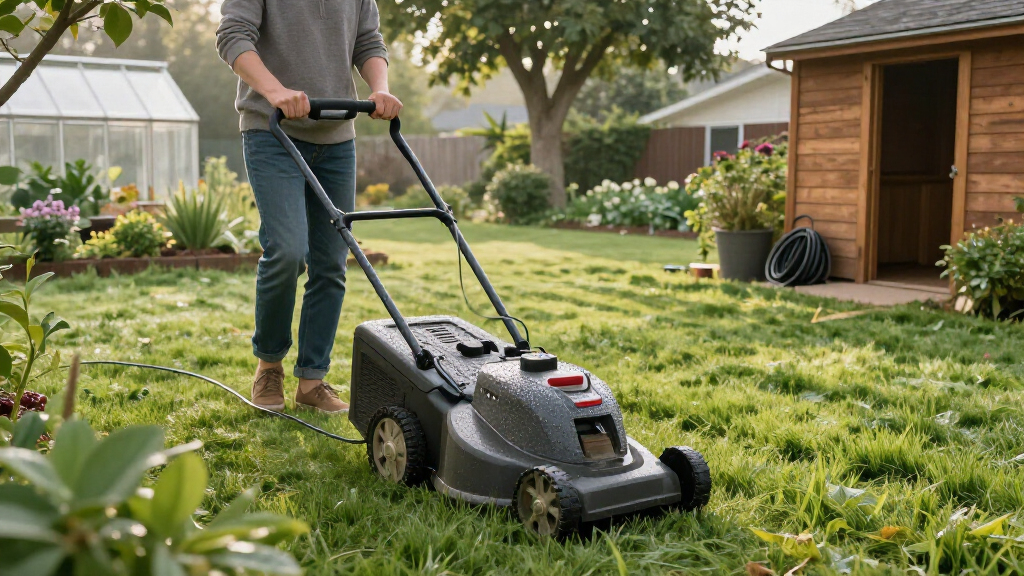
A manual reel mower has replaced an electric mower for a Quebec gardener with only about 110 square feet (10 square metres) of backyard lawn, according to a Laidback Gardener article republished Oct. 5, 2026. The account describes quiet, human-powered mowing but also a trade-off: the reel mower does not shred leaves, so the writer turned to a noisy electric leaf vacuum.
In the article, Larry Hodgson says his electric mower stopped working in spring, prompting him to choose a push reel mower. He reports that mowing his remaining backyard lawn takes no more than 10 minutes, and that the reel mower cuts cleanly with very little noise. The front yard, he says, no longer has a lawn.
The switch did not cover all of the mower’s former jobs. Hodgson had used his electric mower to chop autumn leaves, then direct the shredded material toward flower beds and a vegetable garden as mulch. He says using leaf mulch has meant he has not needed to apply fertilizer to his plantings, a personal account rather than a controlled comparison.
To replace that leaf-shredding function, Hodgson bought an electric leaf vacuum that collects and shreds leaves before sending them into a bag. He says collecting leaves now takes about twice as long as it did with the mower and that the vacuum is noisier than his former electric mower. The article gives no model names, prices, measured emissions, or independent product testing.
A Cleaner Cut, With a Leaf Trade-Off
The account shows why a mower’s environmental footprint can depend on the size and layout of the yard, as well as on what other tasks the machine performs. For Hodgson’s small lawn, a manual mower avoids fuel and electricity during mowing and is reported to operate almost silently. That does not establish that it is the best choice for larger lawns, steep terrain, or people who cannot comfortably push one.
The leaf vacuum also complicates a simple comparison. Hodgson’s experience suggests a manual mower may not replace an electric mower one-for-one if the latter was also used to manage leaves. A household considering a switch may need to account for extra equipment, added time, noise and electricity use, not only the mower itself. The article offers a practical example, but does not quantify those costs or environmental effects.
As an affiliate, we earn on qualifying purchases.
The Writer’s Quebec Garden
Hodgson frames his decision around reducing pollution and says Quebec’s electricity is generated largely from hydropower rather than from burning nonrenewable resources. That is his rationale for viewing an electric mower as preferable to his former gas-powered one; the article does not provide emissions data or a lifecycle assessment comparing the machines.
The article’s publication date is Oct. 5, 2026, but its source note says the piece was first published in Fleurs, plantes, jardins in October 2003. It is therefore a republished personal account, not a new mower test or a report on a recently announced product. Hodgson’s son, Mathieu, is making his father’s writings available to the public, according to the source note.
“Mowing the whole thing takes me no more than 10 minutes.”
— Larry Hodgson, in the Laidback Gardener article
As an affiliate, we earn on qualifying purchases.
No Universal Eco-Friendly Winner
The article does not compare specific mower models, calculate emissions, or assess manufacturing, battery, electricity and disposal impacts. It also does not establish that a reel mower is environmentally preferable for every household; Hodgson’s lawn is unusually small, and his description is based on personal use.
It remains unclear whether he found a quieter, non-electric way to shred leaves after writing the article. The source provides no update on that search, and its original publication in 2003 means the equipment and market observations are not a current product survey. The article’s 2026 republication does not itself confirm that the described equipment or prices reflect today’s options.
As an affiliate, we earn on qualifying purchases.
Choosing Equipment for Each Task
The article reports no planned follow-up or new product release. Readers weighing similar equipment can compare options against their own lawn area, physical ability, leaf volume, noise constraints and need for mulching, while checking current product specifications and costs. Any environmental comparison would require evidence beyond this account, including energy use and the equipment’s full lifecycle.
For Hodgson, the next step remained finding a way to manage both mowing and leaves without electricity or disruptive noise. The article closes that question unresolved; it does not report that sheep or another alternative were adopted.
As an affiliate, we earn on qualifying purchases.
Key Questions
What mower does the article describe?
Larry Hodgson says he replaced his electric mower with a manual reel mower, which he pushes by hand. The article does not name its make or model.
Why did Hodgson switch to a reel mower?
After his electric mower stopped working, he chose a human-powered mower for a small remaining lawn. He says mowing takes no more than 10 minutes and that the reel mower cuts cleanly with very little noise.
How does he handle fallen leaves?
His reel mower does not shred them, so he bought an electric leaf vacuum that collects and shreds leaves into a bag. He says the process takes about twice as long as using his former mower and is noisier.
Does the article prove that a reel mower is the most eco-friendly option?
No. It is a personal account, not a measured comparison of emissions, energy use, manufacturing or disposal. The experience concerns a small lawn and does not establish a best choice for all properties.
Source: rss
Fall Picks
fall essentials
As an affiliate, we earn on qualifying purchases.