TL;DR

Get garden gear delivered free with Prime
- Fast, free delivery on millions of items
- Prime Video, Amazon Music and more included
- Member-only deals all year
A Homes & Gardens gardening report recommends removing perennial weeds in October, when dying-back plants can make them easier to spot and moist, workable soil can help with root removal. The advice depends on digging out the full root or rhizome network: fragments left behind may regrow, so a surface cut alone is not enough.
Homes & Gardens has advised gardeners to remove perennial weeds in October to reduce the work and regrowth they may face in spring. The report says the approach is most effective when gardeners dig out the entire root or rhizome network, since leftover fragments can produce new growth.
The report identifies dandelions, bindweed, couch grass and dock among perennial weeds that can survive winter through underground roots, rhizomes or tubers. These plants store nutrients in their underground structures before winter, which helps them return when conditions warm. Removing them before frost can limit their chance to regrow, although the report does not quantify how much spring weeding a gardener can expect to avoid.
October may offer practical advantages: as other plants die back, weeds can be easier to distinguish, and moist soil may be loose enough to help gardeners lift taproots and spreading roots. The advice is conditional on the ground being neither frozen nor waterlogged. The report also cautions that spring weeding can be harder around emerging bulbs and perennials, which may be mistaken for weeds.
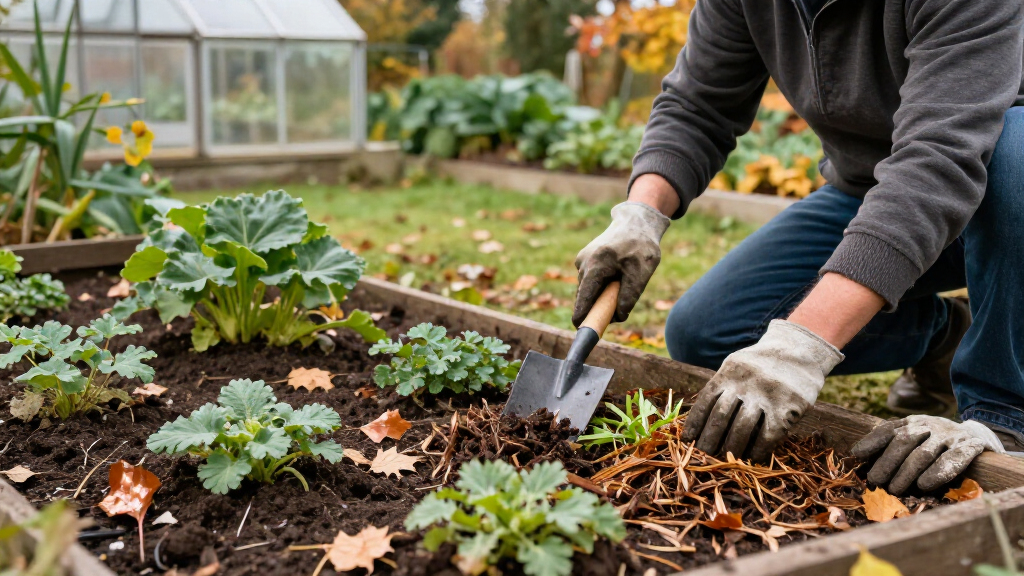
For removal, the article recommends tools such as a trowel, standing weeder, dandelion weeder or hori-hori knife, chosen to help extract roots rather than just cut foliage. It warns that slicing off a weed at soil level leaves its underground structure in place. After weeding, the report suggests applying two to three inches of mulch, with compost, leaves or wood mulch offered as examples.
Why Complete Root Removal Matters
The practical point is that October effort may reduce a recurring spring task, but the result depends on the method. Perennial weeds can return from pieces of root or rhizome left in the soil, according to the report, so hurried surface cutting may leave the problem unresolved. Careful digging takes more time during the fall, but may spare gardeners from repeating the same work around new growth.
Reducing established weeds can also limit competition with garden plants and seedlings for water, nutrients and light as they begin growing in spring. For gardeners with self-seeding flowers or early bulbs, working before new shoots appear may make it easier to identify unwanted plants. These are reasons to act early, not a guarantee that every weed will be eliminated.
Products Worth Considering

Samsung 42-Inch Class OLED S90F 4K Smart TV (2025)

Samsung 48-Inch S90H OLED 4K Smart TV (2026)

Roborock RockNeo Q110H Wire-Free Robot Lawn Mower
As an affiliate, we earn on qualifying purchases.
The October Conditions That Help
The recommendation concerns perennial weeds, which differ from annual weeds because they can persist across seasons through underground structures. The report says they prepare for winter by storing sugars and nutrients in roots, rhizomes or tubers. Those reserves can support renewed growth after winter, which is why removing only the visible top may not solve the issue.
Timing and soil conditions matter. The article describes fall soil as often moist and workable, but advises gardeners to proceed only when it is not frozen or waterlogged and to remove weeds before frost arrives. It also says fall dieback can expose weeds in beds and borders, while spring growth can make it harder to distinguish weeds from wanted plants. No local weather forecast or region-specific schedule is included, so October is a seasonal suggestion rather than a universal deadline.
“The crucial point to remember with perennial weeds is that they must be completely removed to stop them from coming back.”
— Homes & Gardens report
What Fall Weeding Cannot Guarantee
The report does not provide measured results showing how much time October weeding saves, nor does it compare outcomes across different climates, soil types or weed species. Its advice is general seasonal guidance, and the appropriate timing will depend on local frost dates and ground conditions. It also does not say that one round of removal will eliminate established perennial weeds permanently.
Some roots or rhizome fragments may be missed, and the article says even small pieces can regrow. Gardeners should also take care not to remove desirable plants as they clear beds. The report does not discuss pesticide use; its recommendations focus on physical removal and mulch.
The Next Steps Before Frost
Gardeners following the advice can inspect beds and borders while plants are dying back, identify perennial weeds and use a suitable digging tool to lift the full root system. They should work when the soil is workable, check the excavated area for remaining fragments and avoid simply cutting weeds at ground level. Where roots have spread, careful removal may require more than one pass.
Once the weeds are removed, the report recommends covering the area with two to three inches of mulch. The immediate next milestone is the arrival of frost or unsuitable ground conditions; after winter, gardeners can check for new shoots and remove any regrowth. The source offers no further scheduled update or local guidance.
Key Questions
Which weeds does the October advice cover?
The report focuses on perennial weeds, including dandelions, bindweed, couch grass and dock, which can return from underground roots or rhizomes.
Why is cutting a weed at soil level not enough?
Cutting off the visible top may leave roots or rhizomes in the soil. The report says those remnants can produce new growth, so gardeners should aim to remove the full underground network.
What tools can help remove perennial weeds?
The report names a trowel, standing weeder, dandelion weeder and hori-hori knife as options for digging out roots. The best choice depends on the weed and the soil.
When should gardeners avoid weeding?
The article advises against working when the ground is frozen or waterlogged. It also recommends tackling weeds before frost, with timing adjusted to local conditions.
Should the area be covered after weeding?
The report suggests applying a two- to three-inch layer of mulch after removal, citing compost, leaves and wood mulch as possible materials.
Source: homesandgardens.com