
TL;DR

Get garden gear delivered free with Prime
- Fast, free delivery on millions of items
- Prime Video, Amazon Music and more included
- Member-only deals all year
A Greenhouse Grower contributor argues that commercial greenhouse businesses should work with high schools to strengthen vocational horticulture programs and introduce students to growing careers earlier. The proposal is an argument for industry-school partnerships, not a report of a new program or policy; its scope and adoption are not established in the source.
A contributor to Greenhouse Grower is urging commercial greenhouse businesses to partner with high schools to build students’ practical horticulture skills, arguing that workforce development should begin before young people reach college or the job market. The article presents a proposal, not an announcement of a new program or evidence that a specific partnership has begun.
The contributor draws on a personal experience in vocational horticulture at Warren Central High School in Indianapolis, where teachers Phil Pitts and Pam Greene introduced students to greenhouse growing and floriculture. The writer says the hands-on instruction helped make horticulture a career choice and describes having worked in the field for more than 40 years, after entering the industry without first attending college.
The report does not argue that college is unnecessary. It says the industry needs university-trained horticulturists, plant scientists, breeders, researchers and growers, while also contending that a four-year degree should not be treated as the only route into a professional horticulture career. The writer connects that point to employers’ reported difficulty finding growers with practical production experience.
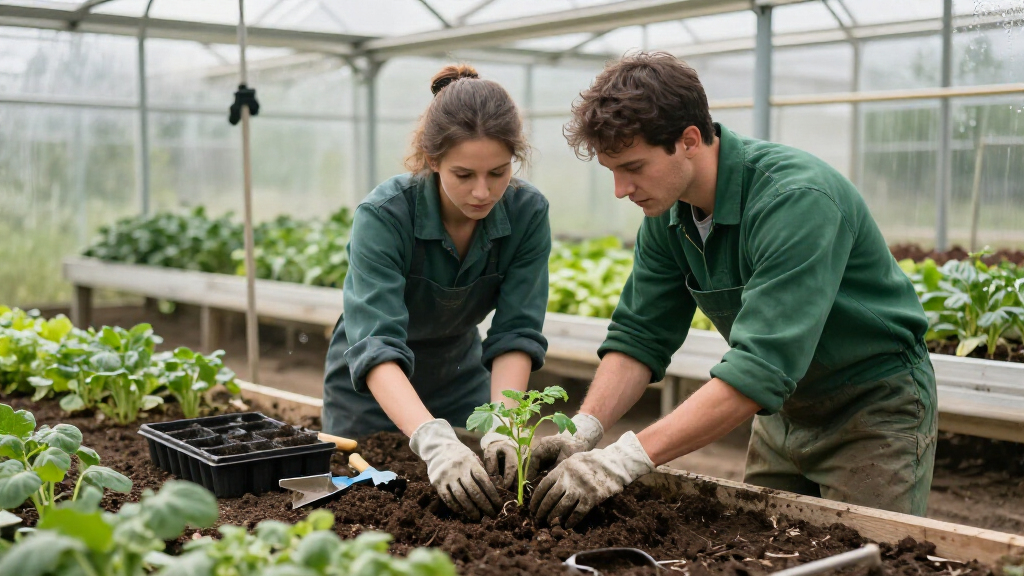
As a potential response, the contributor suggests that commercial operations support nearby school greenhouses as technical partners. That could include helping teachers plan crops, set growing standards, use greenhouse equipment, and teach students how to scout plants, examine roots and diagnose problems. The article stresses that businesses would support teachers rather than take control of school greenhouses or set the curriculum.
Building Skills Before Hiring
The proposal shifts workforce development upstream: instead of relying mainly on recruiting graduates or hiring people who already have production experience, growers could help students encounter the work while they are still deciding on a career. That could give students a more direct view of greenhouse production and give teachers access to practical knowledge that may be difficult to develop alone.
The report also frames horticulture training as a matter of access to career pathways. A student who does not plan to attend a four-year college could still discover a professional role in the industry through vocational education. For greenhouse businesses, stronger school connections could help build awareness of jobs and skills they say are hard to find. The article does not provide research showing that partnerships would resolve hiring shortages, so that outcome remains an argument rather than a measured result.
Products Worth Considering

Ring Alarm 14-Piece Wireless Security System Kit

Philips Hue Secure Wired Video Doorbell, 2K, Black

Shark AI Ultra Robot Vacuum with Self-Empty Base
As an affiliate, we earn on qualifying purchases.
From School Greenhouse to Career
The writer recalls a high-school greenhouse that continued to demand attention outside classroom hours. Plants required water on weekends, and pests and crop conditions did not follow the school timetable. The experience is used to explain why vocational horticulture should involve real growing decisions, not only plant identification, worksheets or fundraising crops.
The article notes that agriculture teachers may cover broad subjects and cannot reasonably be expected to become specialists in every area of greenhouse production, from irrigation and crop scheduling to pest management and environmental controls. The author proposes industry expertise as a supplement to that teaching role. Summer internships are described as useful but insufficient on their own; the supplied source ends before explaining the full reason or offering further detail.
““College shouldn’t be the moment when a young person first discovers horticulture.””
— Greenhouse Grower contributor
Proposal, Not a New Program
The source is a contributor’s argument and does not identify a specific school-business partnership, participating greenhouse operator, funding commitment or implementation schedule. It provides no data on how many high schools offer vocational horticulture, how many students enter the industry through these programs, or whether such partnerships improve recruitment or retention.
The supplied text also cuts off while discussing why summer internships may not be enough. Further recommendations or supporting evidence from the original article are not available here, so they cannot be stated as confirmed details.
Partnerships Would Need Local Plans
The article does not announce a formal next step or a deadline. If growers and schools act on the proposal, they would need to work out the scope of support locally, including crop plans, technical guidance, teacher needs and the time businesses can commit. Any arrangement, as described by the writer, would leave curriculum decisions with educators.
Readers should look for specific school or industry announcements before treating the proposal as an active program. Evidence about participation, student training and hiring outcomes would be needed to judge whether these partnerships can strengthen the horticulture workforce.
Key Questions
What is the actual development in this report?
A Greenhouse Grower contributor has called for commercial greenhouse operators to support high-school vocational horticulture programs. The report proposes an approach; it does not announce a newly launched partnership.
What could greenhouse businesses contribute?
The writer suggests practical help with crop planning, growing standards, equipment and plant scouting, along with guidance on diagnosing crop problems. The examples are proposals, not confirmed services already being provided.
Does the article say students should skip college?
No. The contributor says the industry needs university-trained specialists as well as people entering through vocational routes, and argues that a four-year degree should not be the only pathway into a horticulture career.
Is there evidence that the proposal will reduce hiring shortages?
The article describes employers’ difficulty finding growers with practical experience, but provides no outcome data showing that school partnerships would reduce shortages. That remains the contributor’s proposed workforce-development strategy.
Source: rss