
Building a community tool library lets you borrow tools instead of buying, saving money and fostering neighborly connections. You’ll promote shared resources, encourage collaboration, and strengthen bonds through collective effort. Installing an organized space with clear policies and labeling makes borrowing easy and trustworthy. Promoting awareness through outreach and events helps sustain interest. If you want to discover how to set up and grow a successful tool library that benefits everyone, keep exploring these ideas further.

Get garden gear delivered free with Prime
- Fast, free delivery on millions of items
- Prime Video, Amazon Music and more included
- Member-only deals all year
Key Takeaways
- Engage residents early through meetings and outreach to identify tool needs and foster ownership.
- Secure a suitable, organized space with clear policies, labeling, and safety measures for easy access and trust.
- Collaborate with local organizations and schools to increase resources, funding, and community involvement.
- Promote the library via flyers, social media, and events to boost awareness and participation.
- Foster community relationships and resource sharing, creating a resilient, cooperative neighborhood environment.

Creating a community tool library is a practical way to promote shared resources and foster collaboration among neighbors. When you set up a space where residents can borrow tools instead of buying their own, you encourage tool sharing, which benefits everyone involved. This approach not only reduces individual expenses but also strengthens community bonds as neighbors work together and support one another. By participating in a tool library, you help create a sense of collective responsibility and resourcefulness that can make your neighborhood more vibrant and sustainable.
A community tool library fosters sharing, reduces costs, and builds stronger neighborhood connections through collective resourcefulness.
The key to building a successful community tool library is active community engagement. When you involve residents from the start, they feel a sense of ownership and are more likely to participate regularly. You can host initial meetings to gather input, discuss what tools are most needed, and explain how the system will work. This collaborative effort helps ensure the library reflects the community’s needs, which increases usage and enthusiasm. Engaging local organizations, schools, or businesses can also boost participation and provide additional resources or funding to get your project off the ground.
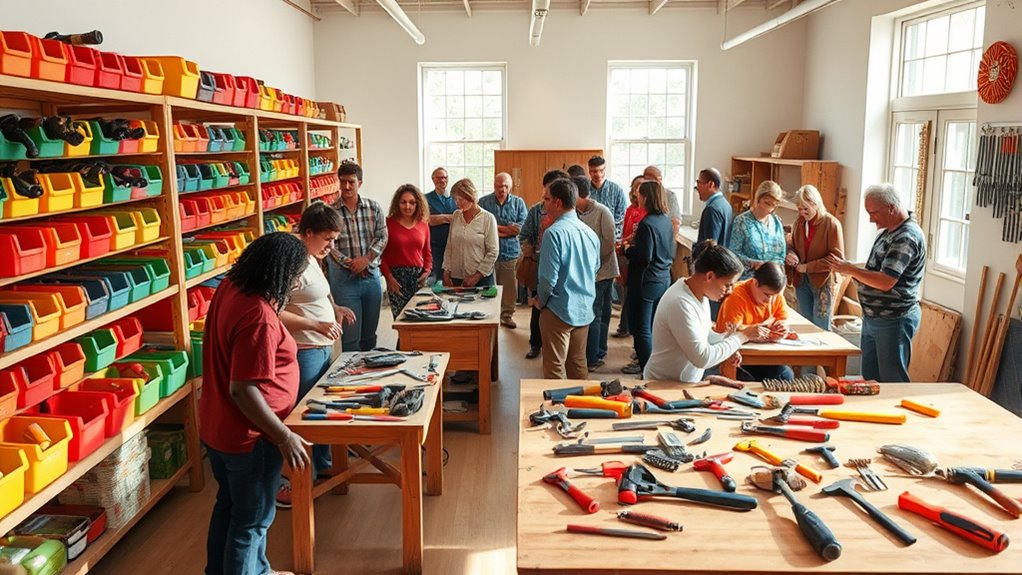
Designing an accessible and organized space is essential. You want neighbors to feel comfortable borrowing tools without hassle. Consider establishing clear borrowing policies, such as check-out durations and return procedures, to keep operations smooth. Labeling tools and creating an inventory system makes it easier for users to find what they need and return items properly. Ensuring the space is safe and secure also encourages trust and reliability. If possible, set up a system for volunteers or staff to oversee the library, handle maintenance, and address any issues that arise.
Promoting the tool library is an ongoing process. Use flyers, social media, and word-of-mouth to spread the word throughout your neighborhood. Highlight the benefits of tool sharing—cost savings, environmental impact, and community connection—to motivate participation. Hosting events like open houses or tool workshops can also generate excitement and familiarize residents with the available resources. As more neighbors get involved, the library becomes a hub of community engagement, where people exchange not only tools but also ideas, skills, and stories.
Ultimately, a community tool library is more than just a collection of tools; it’s a platform for building relationships and empowering residents to work together. By encouraging tool sharing and fostering community engagement, you create a space where neighbors support each other’s projects and contribute to a more resilient, cooperative neighborhood. This shared resource can transform the way your community approaches DIY projects, gardening, repairs, and more—all while creating lasting bonds among those who live nearby. Maximize space and organization can help ensure the library remains functional and welcoming for everyone involved.
Products Worth Considering

Dyson Ball Animal 3 Extra Upright Vacuum

Samsung 42-Inch S90H OLED 4K Smart TV Bundle

Levoit Core 600S-P Smart Air Purifier for Large Rooms
As an affiliate, we earn on qualifying purchases.
Frequently Asked Questions
How Do I Secure Funding for a Tool Library?
Securing funding for a tool library starts with effective community outreach to demonstrate local support and need. You should also focus on grant writing by researching available grants from local governments, nonprofits, and foundations. Craft compelling proposals that highlight your project’s benefits and sustainability. Building relationships with community members and stakeholders can also open doors to sponsorships or donations, making your tool library a reality.
What Safety Protocols Are Necessary for Tool Lending?
When setting up your tool library, you need to prioritize safety protocols. Focus on tool safety by regularly maintaining and inspecting tools. Provide user training to ensure everyone understands proper handling and safety procedures. Make sure to display clear instructions, use safety gear, and establish guidelines for safe tool use. These steps will help protect users, reduce accidents, and keep your community tool library a secure, welcoming space for everyone.
How Can I Attract Volunteer Staff and Members?
Getting people to join your community tool library is like hitting two birds with one stone. You’ll want to focus on community outreach to spread the word and highlight benefits. Offer engaging volunteer training sessions to show your commitment and build confidence. Make it fun and inclusive, and use social media to showcase success stories. When people see the impact, they’ll be enthusiastic to lend a hand and become members.
What Insurance Coverage Is Needed for Tools and Users?
You’ll need to secure tool insurance and liability coverage for your community tool library. Tool insurance protects your tools from damage or theft, while liability coverage shields you if users get injured or cause damage. Make sure to discuss these needs with an insurance provider who understands community resources. Having proper coverage guarantees safety for members and protects your library from potential legal and financial risks.
How Do I Manage Tool Inventory and Maintenance?
You manage tool inventory and maintenance by implementing clear tool cataloging and maintaining regular maintenance schedules. Keep an organized catalog to track each tool’s condition, usage, and location. Schedule routine inspections and repairs to guarantee safety and longevity. Use checklists to monitor maintenance tasks, and update your inventory as tools are added or retired. This proactive approach helps keep your tools in top shape and your community’s projects running smoothly.
Conclusion
By embracing the idea of a community tool library, you’re gently weaving together neighbors and resources, creating a space where sharing becomes second nature. It’s a subtle shift from ownership to connection, fostering trust and sustainability. When you open your doors (and your tools), you’re planting seeds of cooperation that bloom into a stronger, more vibrant community. So, consider this your invitation—together, you can cultivate a neighborhood that’s richer in kindness and collaboration.