
A circular economy encourages you to rethink consumption by emphasizing sustainable design, resource efficiency, and product longevity. Instead of the traditional take-make-dispose model, it promotes reusing, recycling, and extending the life of products to reduce waste and conserve resources. This shift benefits the environment, lowers pollution, and creates smarter resource management. When you embrace these principles, you help build a resilient future—continue exploring to discover how you can make a difference.
Key Takeaways
- A circular economy promotes reusing and recycling materials to create a closed-loop system, reducing waste and resource extraction.
- It shifts from linear “take-make-dispose” models to sustainable practices that extend product lifespan.
- Sustainable design focuses on durability, repairability, and recyclability to support resource conservation.
- Efficient resource management minimizes environmental impact by tracking and optimizing material use.
- Consumer demand for eco-friendly, long-lasting products drives market and business shifts toward circularity.
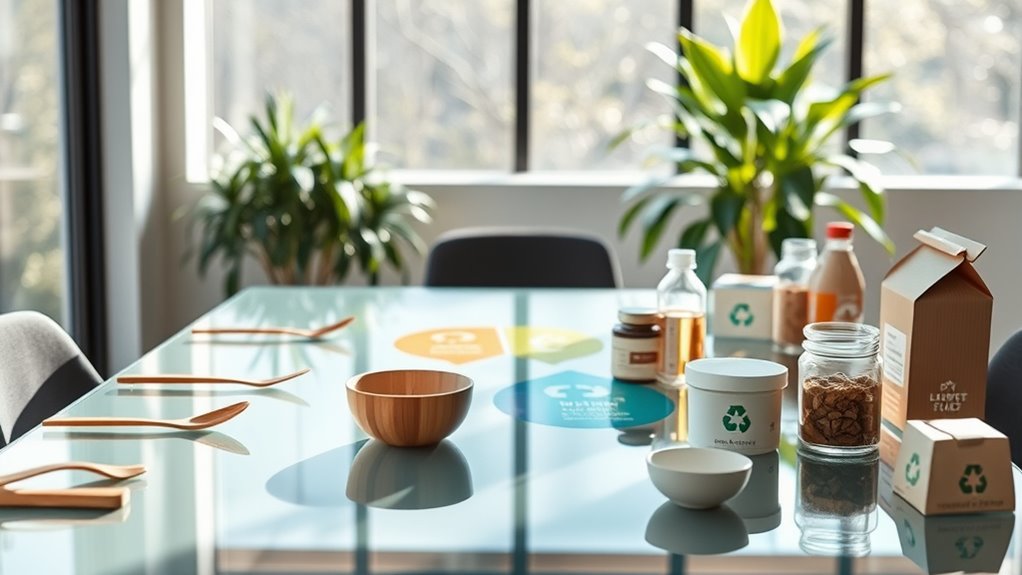
Have you ever wondered how we can reduce waste and make better use of resources? The answer lies in embracing the principles of a circular economy, which encourages us to rethink consumption and design products with longevity and reuse in mind. Central to this shift is sustainable design—a strategic approach that considers the entire lifecycle of a product, from creation to disposal. By integrating sustainable design, you’re not just making environmentally friendly choices; you’re actively contributing to resource management that minimizes waste and conserves natural resources. This means designing products that are durable, repairable, and recyclable, so they stay in use longer and retain their value.
Embrace sustainable design to create durable, repairable, and recyclable products that support resource conservation and waste reduction.
In a traditional linear economy, we follow a take-make-dispose pattern, where resources are extracted, transformed into products, and discarded after use. This approach leads to significant waste and environmental strain. Conversely, the circular economy promotes a closed-loop system, where materials are continuously reused, repurposed, or recycled. You can think of it as shifting from a line to a circle—keeping resources in circulation rather than letting them become waste. Implementing effective resource management is vital here. It involves carefully tracking and optimizing how materials are used, ensuring minimal waste and maximum efficiency. When you prioritize resource management, you’re reducing the need for raw material extraction, lowering energy consumption, and decreasing environmental impact.
Designing products with a circular mindset means considering their entire lifecycle from the outset. For example, you might choose materials that are easy to disassemble and recycle, or incorporate modular components that can be repaired or upgraded. This way, products don’t quickly become obsolete; instead, they are designed to be part of a sustainable loop. You also play a role in resource management by supporting businesses and products that prioritize these principles. Your purchasing decisions can influence manufacturers to adopt more sustainable design practices, fostering a market shift towards circularity.
Furthermore, adopting sustainable design and effective resource management helps reduce the strain on finite natural resources, mitigates pollution, and lowers greenhouse gas emissions. It’s about being smarter with what we have, rather than constantly consuming more. Additionally, innovations in product durability and repairability are essential to supporting a circular economy and ensuring products remain useful longer. It’s about being smarter with what we have, rather than constantly consuming more. As a consumer, you have the power to demand products that are built with longevity and recyclability in mind. By understanding and supporting the fundamentals of a circular economy, you help create a more resilient and sustainable future—one where waste is minimized, resources are preserved, and consumption aligns with the planet’s ecological limits.

Pure Life Purified Water Bottles, 12 Pack – Still Bottled Water Enhanced with Minerals for a Crisp Taste, Plastic Bottles – 16.9 Fl oz
Refreshing Taste: Every bottle of Pure Life Water is enhanced with minerals for a crisp taste that makes…
As an affiliate, we earn on qualifying purchases.
As an affiliate, we earn on qualifying purchases.
Frequently Asked Questions
How Can Small Businesses Adopt Circular Economy Principles?
You can adopt circular economy principles by implementing sustainable packaging to reduce waste and encourage reuse. Consider resource sharing with other local businesses to optimize materials and decrease environmental impact. Engage your customers in recycling and recycling incentives, and design products with longevity in mind. These steps help you minimize waste, conserve resources, and build a more sustainable business model that benefits both your company and the environment.
What Are the Main Challenges in Implementing Circular Models?
You’ll face challenges like technological barriers that limit your ability to develop sustainable processes and regulatory hurdles that complicate compliance. These issues can slow down innovation and make it harder to implement circular models effectively. To overcome this, stay informed about evolving regulations and invest in new technology. Collaborate with partners to share resources and knowledge, helping you navigate these obstacles and shift toward a more sustainable, circular approach.
How Does Circular Economy Impact Global Supply Chains?
You’ll find that adopting a circular economy enhances your supply chain resilience by reducing dependency on raw materials and fostering resource optimization. It encourages reuse, recycling, and smarter logistics, which helps you adapt to disruptions and market changes more effectively. By integrating circular practices, you can lower costs, minimize waste, and create a more sustainable, flexible supply chain that thrives in a global economy.
What Role Do Consumers Play in Promoting Circular Practices?
You play a vital role in promoting circular practices through your purchasing behavior. When you’re aware of the impact of your choices, you support sustainable products and demand reuse, recycling, and repair. This consumer awareness drives companies to adopt circular models, reducing waste and conserving resources. By choosing eco-friendly options and advocating for responsible consumption, you help shift the economy towards sustainability, making a real difference in creating a circular economy.
Are Circular Economy Initiatives Cost-Effective in the Long Run?
Yes, circular economy initiatives are cost-effective in the long run. By focusing on resource efficiency and reducing waste, you can achieve significant cost savings over time. These practices lower material and disposal costs, boost operational efficiency, and create new revenue streams. Although initial investments may be needed, the ongoing savings and sustainability benefits make circular initiatives a smart, economical choice for your business and the environment.
repairable modular furniture
As an affiliate, we earn on qualifying purchases.
As an affiliate, we earn on qualifying purchases.
Conclusion
By embracing the circular economy, you challenge the traditional wasteful mindset and promote sustainability. While some argue that implementing these systems isn’t always feasible or cost-effective, studies show that circular approaches can boost innovation and long-term profitability. Rethinking consumption isn’t just idealistic—it’s backed by evidence suggesting it can reshape industries and reduce environmental impact. So, by adopting circular principles, you make a meaningful difference, proving that sustainable practices are both practical and essential for a resilient future.

Masirs Reusable Grocery Bag (10-PACK | COLORS) – Reusable Ripstop Bags – Large, Strong Eco Friendly Bags – Foldable Shopping Bag – For Kitchen, Grocery & More – Packable Shopping Bag
REUSABLE: Reduce the usage of wasteful disposable bags and take along this reusable Shopping Bag on all your…
As an affiliate, we earn on qualifying purchases.
As an affiliate, we earn on qualifying purchases.

Self-Sufficiency: Natural Household Cleaning: Making Your Own Eco-Savvy Cleaning Products (IMM Lifestyle) Ingredients, Recipes, & How-To for Green Cleaning Your Kitchen, Laundry Room, Bathroom, & More
As an affiliate, we earn on qualifying purchases.
As an affiliate, we earn on qualifying purchases.