
TL;DR

Get garden gear delivered free with Prime
- Fast, free delivery on millions of items
- Prime Video, Amazon Music and more included
- Member-only deals all year
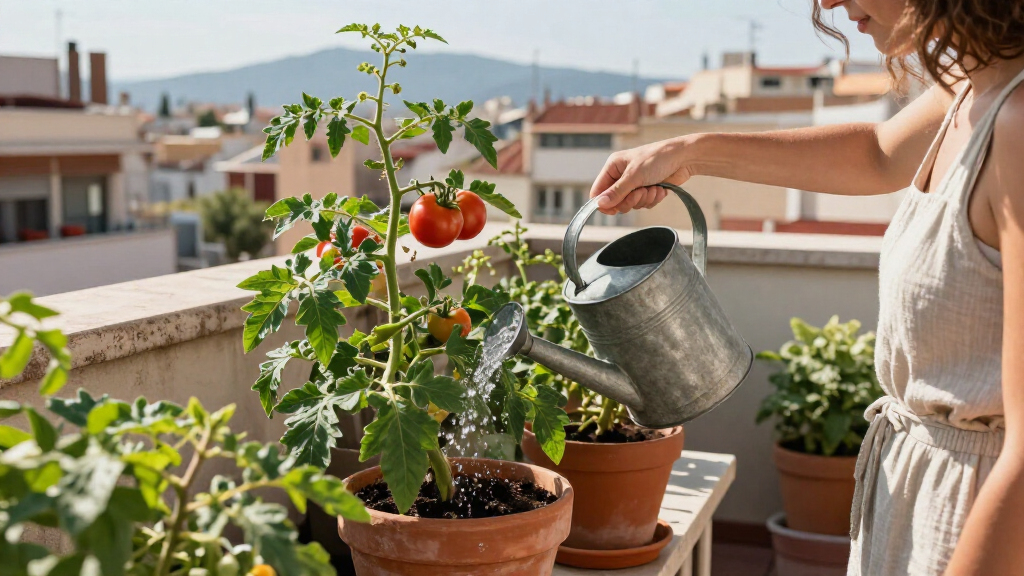
A new study indicates that rooftop gardens on Barcelona’s municipal buildings could produce up to 31% of the city’s tomato consumption. This highlights urban agriculture’s potential to enhance local food security and sustainability.
Recent research from the Autonomous University of Barcelona suggests that municipal rooftops across the city could produce up to 31% of the tomatoes consumed in Barcelona. This finding underscores the potential of urban agriculture to bolster local food resilience and reduce reliance on external supply chains.
The study analyzed the available rooftop surface area on municipal buildings and assessed the feasibility of cultivating tomatoes in these spaces. It estimates that, if fully utilized, these rooftops could generate approximately 30,000 tons of tomatoes annually, covering nearly a third of the city’s estimated consumption.
Researchers considered factors such as sunlight exposure, structural capacity, and access to water, concluding that a significant portion of rooftops are suitable for tomato cultivation. The project aims to explore sustainable urban farming models that integrate with existing city infrastructure.
Officials from the Barcelona City Council have expressed interest in pilot programs to test rooftop farming, but no specific implementation plans have yet been announced. The study emphasizes that such initiatives could contribute to local food security, reduce transportation emissions, and promote green urban spaces.
Potential Impact on Urban Food Security and Sustainability
This development highlights a promising avenue for urban food production that could reduce dependence on external supply chains, lower food miles, and promote sustainability. If scaled, rooftop tomato farming could serve as a model for other cities seeking to enhance local resilience amid global supply disruptions and climate change challenges.
Additionally, integrating agriculture into city infrastructure aligns with broader sustainability goals, including increasing green spaces, improving air quality, and fostering community engagement in urban farming initiatives. The potential to produce nearly a third of the city’s tomatoes domestically marks a significant step toward more self-sufficient urban ecosystems.
As an affiliate, we earn on qualifying purchases.
Urban Agriculture and Rooftop Farming in Barcelona
Barcelona has been increasingly exploring urban agriculture as part of its climate and sustainability strategies. Previous projects have focused on community gardens, green roofs, and small-scale vertical farms. The current study builds on this trend by evaluating the capacity of municipal rooftops specifically for vegetable cultivation, with a focus on tomatoes due to their popularity and nutritional value.
The idea of rooftop farming is not new globally, but Barcelona’s dense urban fabric presents unique challenges and opportunities. The city’s climate, with abundant sunlight and moderate temperatures, is conducive to outdoor vegetable growing, making rooftop cultivation a promising option.
While the concept has gained attention, actual large-scale implementation remains limited, partly due to structural, logistical, and regulatory hurdles. This new research aims to quantify the potential and inform future policies to support urban agriculture.
As an affiliate, we earn on qualifying purchases.
Uncertainties About Practical Implementation and Scale
While the study presents promising estimates, it remains unclear how quickly and extensively rooftop tomato cultivation can be implemented across Barcelona. Structural modifications, ongoing maintenance, and regulatory approvals are factors that could influence deployment. Additionally, the actual yield may vary depending on local conditions and farming practices. Further pilot projects are needed to validate these estimates and determine real-world feasibility.
As an affiliate, we earn on qualifying purchases.
Next Steps for Urban Farming Pilot Programs in Barcelona
The city is expected to initiate pilot projects in selected municipal rooftops within the coming year to test the practical aspects of rooftop tomato farming. These pilots will evaluate yield, maintenance requirements, and community engagement. Based on results, policymakers may develop broader strategies to expand urban agriculture, potentially integrating it into city planning and sustainability policies.
Research teams will continue monitoring and refining their models, and local stakeholders—including community groups and environmental organizations—are likely to be involved in the rollout of these initiatives.
solar-powered irrigation system for gardens
As an affiliate, we earn on qualifying purchases.
As an affiliate, we earn on qualifying purchases.
Key Questions
How much of Barcelona’s tomato consumption could rooftop farms realistically supply?
According to the study, rooftop farms could supply up to 31% of the city’s tomato needs, assuming full utilization of suitable rooftops and optimal farming conditions.
What are the main challenges to implementing rooftop tomato farms in Barcelona?
Challenges include structural limitations of buildings, access to water and sunlight, regulatory approvals, ongoing maintenance, and ensuring economic viability of urban farming projects.
Could this approach be scaled to other crops or cities?
Yes, similar models could be applied to other vegetables and fruits, depending on local climate and infrastructure. Other dense urban areas with suitable rooftop space could also adopt this approach, though specific feasibility studies are needed.
What benefits could rooftop farming bring to Barcelona aside from food production?
Benefits include increased green spaces, improved air quality, urban cooling, community engagement, and educational opportunities about sustainable agriculture.
Source: local
Fall Picks
fall essentials
As an affiliate, we earn on qualifying purchases.