
TL;DR

Get garden gear delivered free with Prime
- Fast, free delivery on millions of items
- Prime Video, Amazon Music and more included
- Member-only deals all year
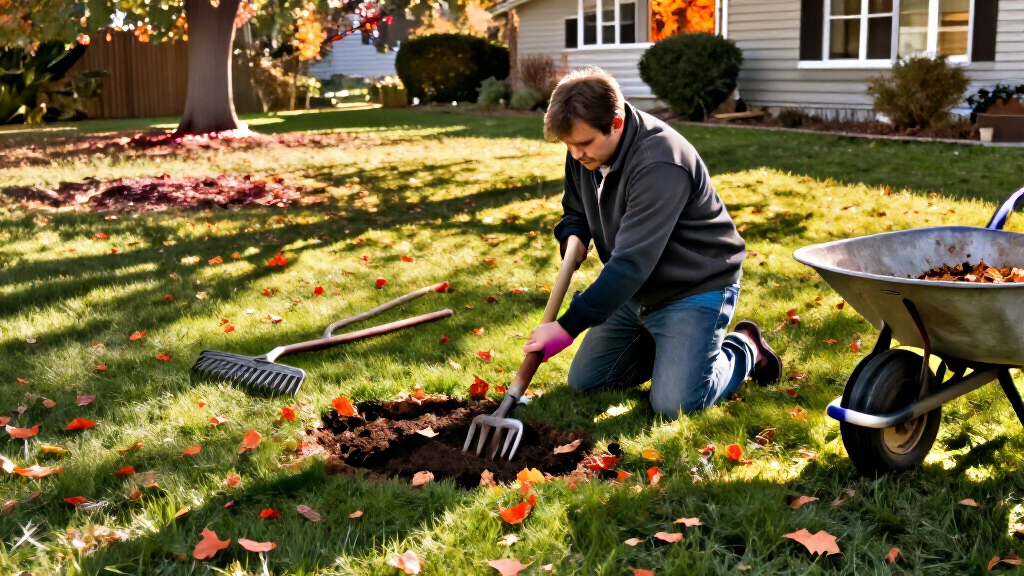
An Ideal Home report recommends checking lawns for compaction in October and aerating affected areas when the soil is moist and workable, not waterlogged. A garden fork can be enough for small patches; the report says it is not necessary to aerate every part of the lawn.
An Ideal Home report advises gardeners to aerate compacted lawn areas in October, saying holes in the soil can help air, water and nutrients reach grass roots before wetter winter weather. The advice is to work when the soil is moist and workable, but not saturated, and to focus on places where water pools or foot traffic is frequent.
Aeration opens channels in compressed soil, which can restrict the movement of air and water and leave rain sitting near the surface. The report says compaction can follow a summer of mowing, walking on the lawn and dry weather, and that heavier autumn and winter rainfall may put additional pressure on affected areas. It does not present aeration as a guarantee against waterlogging or lawn damage.
Morris Hankinson, managing director of Hopes Grove Nurseries, recommends assessing compacted ground after rain has softened it. A garden fork can make holes in small lawns or individual patches; dedicated lawn aerators may be more practical for larger areas or more severe compaction. Hollow-tine tools remove small plugs of soil to create channels, according to the report.
Gardeners should start with high-traffic areas, such as routes across the lawn, ground around garden furniture and children’s play areas, as well as patches where puddles regularly form. To check for compaction, push a fork into the soil: strong resistance may indicate that the ground would benefit from aeration. The report cautions against working on saturated soil, which can worsen compaction, and advises avoiding repeated foot traffic over newly aerated ground.
Reducing Compaction Before Winter
Compacted soil has less space for air and water to move through it. When rain cannot penetrate readily, it may remain on the surface, leaving grass roots with less access to moisture and nutrients in the soil. Aerating affected spots is a practical way to address that condition before a period of wetter weather, rather than treating the entire lawn as though it has the same problem.
The recommendation is relevant to homeowners whose lawns see regular foot traffic or develop puddles after rain. It is targeted maintenance, not a promise that aeration alone will prevent a soggy lawn: the report provides gardening guidance, not research data measuring results across different lawns or soil types.
As an affiliate, we earn on qualifying purchases.
Choosing the Right October Conditions
The report frames October as a chance to assess lawns ahead of winter, rather than a requirement to carry out every seasonal task at once. It notes that aeration may be useful after a dry summer, when soil compaction can make it harder for rainfall to soak toward roots. The timing depends on conditions: gardeners are advised to wait until rain has made the ground workable, while avoiding soil that is waterlogged.
Hankinson’s quoted guidance refers to September as an ideal time to aerate after rain, while the article’s headline and main advice focus on October. That difference means the recommendation should be read as condition-dependent seasonal guidance, not a fixed date that applies to every lawn. The report also cites Christopher O’Donoghue, director of Gardens Revived, advising gardeners to remove fallen leaves and repair bare patches when conditions allow, and not to work on saturated ground.
“Aerating is helpful after a dry summer because compacted soil prevents rain from soaking deeper into the roots.”
— Morris Hankinson, as quoted by Ideal Home
As an affiliate, we earn on qualifying purchases.
How Much Aeration Is Needed
The report does not specify a single depth, hole spacing or repeat schedule for aeration, and it gives no measurements of how much the practice reduces pooling or improves lawn health. The right approach may vary by the extent of compaction and the lawn’s conditions. It also does not establish that every lawn needs aeration in October; its instructions are to identify affected patches and focus on those areas.
The article’s headline points to October, but Hankinson’s quoted timing names September as ideal once soil has softened after rain. The report does not explain whether that difference reflects regional weather, publication timing or a general seasonal window. Gardeners should use soil conditions rather than assume a particular calendar date applies everywhere.
As an affiliate, we earn on qualifying purchases.
Check the Lawn After Rain
After autumn rain, inspect the lawn for puddles and test suspect ground by pushing in a garden fork. If the soil is moist and workable, aerate the compacted areas with a fork or suitable aerator; avoid doing so when the lawn is saturated. Once the work is done, limit foot traffic over the treated patches and monitor how the ground drains after later rainfall.
The source offers general seasonal advice, not a reported follow-up or a scheduled next development. Its other October suggestions include clearing fallen leaves and repairing thin or bare areas when conditions are mild. Mowing can continue while grass is growing, O’Donoghue says, with the decision guided by the lawn’s growth and the weather rather than a rigid schedule.
As an affiliate, we earn on qualifying purchases.
Key Questions
What lawn-care job does the report recommend in October?
It recommends aerating compacted areas so air, water and nutrients can move more readily toward grass roots.
Can I aerate with an ordinary garden fork?
Yes. The report says a garden fork can work for small lawns or specific patches. A dedicated aerator may make the task easier over larger areas or where compaction is more serious.
Should I aerate a lawn that is soaked?
No. The advice is to work when soil is moist and workable, not saturated. The report warns that working on waterlogged ground can add to compaction.
Do I need to aerate the whole lawn?
Not necessarily. Start with high-traffic areas and places where water tends to pool. The report recommends targeting ground that appears compacted rather than automatically treating the entire lawn.
Is October too late to mow?
No, if the grass is still growing and conditions are suitable. Christopher O’Donoghue advises letting the lawn’s growth guide mowing rather than following a fixed schedule; the source also says to keep mower blades a little higher than in summer.
Source: rss
Columbus Day / Indigenous Peoples' Day Picks
long weekend sales
As an affiliate, we earn on qualifying purchases.