TL;DR

Get garden gear delivered free — and shop member deals
- Fast, free delivery on millions of items
- Access to Prime Big Deal Days deals on October 6–7
- Prime Video, Amazon Music and more included
Gardening Know How recommends October lawn work tailored to whether a lawn has cool-season or warm-season grass. Its suggested tasks include aerating, repairing or overseeding cool-season turf, applying fall fertilizer where appropriate, lightly mulching leaves and managing winter weeds in warm-season lawns.
Gardening Know How has published an October lawn-care guide recommending that homeowners match fall tasks to their grass type, with the aim of supporting root growth and repairing summer damage before winter. The report lists aeration, seeding, fertilizing, leaf mulching and weed prevention among the options, while stressing that not every task suits every lawn.
The guide says cool-season grasses, including fescue, bluegrass and ryegrass, can continue growing during fall and develop roots before winter dormancy. For those lawns, it recommends aerating compacted soil and repairing bare areas or overseeding when conditions are suitable. The report says October can offer warm soil and cooler air that favor seed germination in many parts of the country, but advises keeping newly seeded soil moist until the grass is established.
For cool-season turf, the report also recommends a fall fertilizer formulated for root development. It advises checking whether a seed mix already contains fertilizer and following the product label rather than applying extra. The guide says fertilizing can help grass recover from summer stress, but it does not offer a universal application rate or schedule; those depend on the product and lawn conditions.
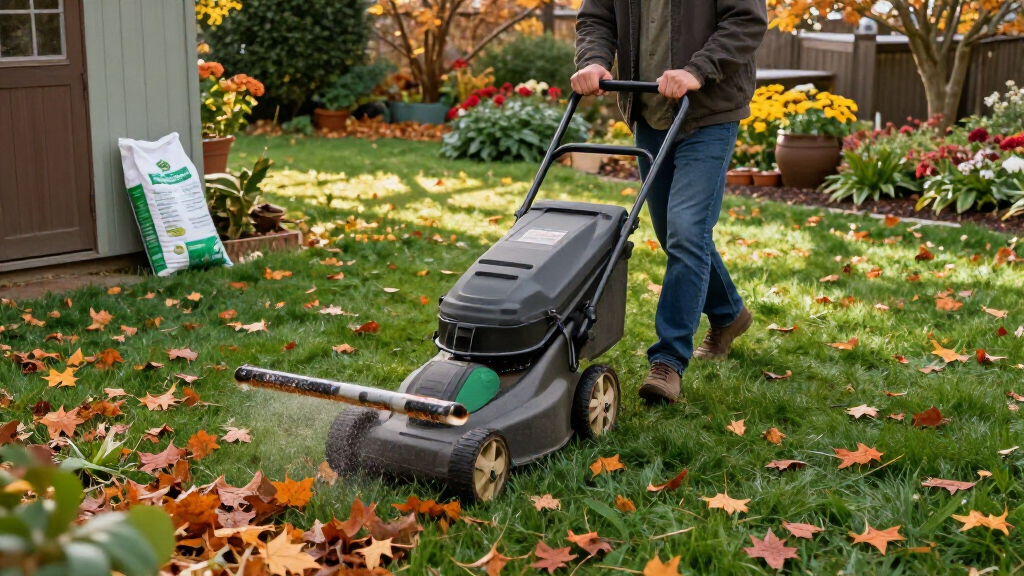
Some suggested work applies across grass types. The report recommends aeration to allow moisture and oxygen into the soil, and mowing fallen leaves into small pieces as a light mulch. It cautions against leaving thick clumps that cover the grass. For warm-season grasses such as Bermuda, St. Augustine and zoysia, which the guide says begin slowing toward dormancy in October, it points to early-month pre-emergent weed control as an option. It advises checking the forecast so prolonged rain does not wash away the product.
October Tasks Depend on Grass Type
The practical point is that October lawn care is not one-size-fits-all. Cool-season turf may still be growing and can be seeded or fertilized under suitable conditions, while warm-season grass is slowing down. Choosing a task that fits the turf’s growth cycle may help homeowners address bare patches, soil compaction or weed pressure without treating every lawn the same way.
The recommendations also give homeowners a way to prioritize if time is limited. Gardening Know How says aeration is the single fall task it would prioritize, while describing the other steps as options rather than requirements. The guide does not report measured results or guarantee a lush lawn next summer; outcomes will depend on local weather, soil, grass variety and care.
As an affiliate, we earn on qualifying purchases.
Cool- and Warm-Season Turf
The report frames October as a period of seasonal change after summer heat. It distinguishes cool-season grasses, which may continue growing through fall, from warm-season grasses, whose growth slows as they approach dormancy. That distinction shapes the guide’s advice: seed and fall fertilizer are aimed at actively growing cool-season lawns, while pre-emergent weed control is presented for warm-season turf during an early-October window.
The guide’s five tasks are recommendations, not a region-specific calendar. It does not identify a particular climate zone, local forecast or soil test, so homeowners need to account for local conditions and the instructions on any seed, fertilizer or weed-control product they use.
“If you only do one fall lawn-care job, make it aerating your lawn.”
— Gardening Know How
fall grass seed mix for overseeding
As an affiliate, we earn on qualifying purchases.
As an affiliate, we earn on qualifying purchases.
Local Conditions Shape the Advice
The report does not provide regional planting dates, soil-test results or a standard fertilizer rate, and it does not establish that completing the tasks will produce a particular result next summer. The best timing for seeding, fertilizing and weed control can vary with climate, turf variety and weather.
It also does not give a detailed product-by-product safety discussion. Anyone using herbicides or fertilizers should follow the label for the specific product, including any stated protective equipment, application limits and restrictions on access by children or pets. The report’s early-October weed-control window should not be treated as a universal date.
fall lawn fertilizer for root growth
As an affiliate, we earn on qualifying purchases.
As an affiliate, we earn on qualifying purchases.
Check Turf and Product Labels
Homeowners can start by identifying whether their lawn is cool-season or warm-season grass, then check local conditions before choosing a task. For cool-season lawns, the guide suggests assessing bare areas and whether overseeding or fall fertilizer is appropriate; for either type, it recommends aeration and only a light covering of chopped leaves.
Before applying seed, fertilizer or weed-control products, read the package directions and confirm the product is intended for the grass and use in question. The report sets out no later milestone or follow-up data, so whether these measures improve a particular lawn will become clearer through its growth over the coming seasons.
As an affiliate, we earn on qualifying purchases.
Key Questions
What October lawn-care task does the report prioritize?
Gardening Know How prioritizes aeration, saying it can help moisture and oxygen reach the soil. The guide offers this as a recommendation, not a guarantee of a specific result.
Should every lawn be overseeded in October?
No. The report recommends repairing bare spots or overseeding mainly for cool-season lawns when local conditions suit germination. It advises keeping seeded soil moist until the new grass is established.
Can I fertilize any grass in October?
The guide’s fall-fertilizer recommendation is for cool-season grass that is still growing. Check whether seed products already contain fertilizer and follow the fertilizer label; the report does not give a universal rate.
Is it safe to leave fallen leaves on the lawn?
The report recommends mowing leaves into small pieces and leaving only a light scattering. Thick layers or clumps can cover grass, so rake them out rather than letting them smother the lawn.
When should warm-season lawns receive weed prevention?
The report points to an early-October window for pre-emergent weed control in warm-season turf, but timing depends on local conditions. Follow the product label and avoid application when the forecast calls for prolonged rain, as the guide advises.
Source: rss
Halloween Picks
halloween
As an affiliate, we earn on qualifying purchases.