
TL;DR

Get garden gear delivered free — and shop member deals
- Fast, free delivery on millions of items
- Access to Prime Big Deal Days deals on October 6–7
- Prime Video, Amazon Music and more included
Anthropic’s Claude Code team has published a framework describing AI loops as repeated work cycles that continue until a stop condition is met. Thorsten Meyer AI frames the model as a “delegation ladder,” showing how teams can hand off checking, stop conditions, triggers and prompts.
Anthropic’s Claude Code team has published a framework for four agentic AI loops, defining a loop as an agent repeating cycles of work until a stop condition is met. The development matters because it gives developers and business teams a clearer way to decide how much work to delegate to AI systems.
The framework, credited to Delba de Oliveira and Michael Segner on Anthropic’s Claude blog, describes loops as a practical engineering pattern rather than a new category of AI product. According to the source material, the four loop types are turn-based, goal-based, time-based and proactive.
Thorsten Meyer AI’s analysis frames those loop types as a delegation ladder. On the first rung, users hand off the check by encoding verification into a skill. On the second, they hand off the stop condition by using a goal and an evaluator model. On the third, they hand off the trigger through a timed loop or schedule. On the fourth, they hand off the prompt itself through event-driven workflows and auto mode.
The source material says Anthropic’s guidance starts with restraint: not every task needs a loop. Teams are advised to begin with the simplest method that works, then move to more autonomous patterns only when the task justifies the added cost, complexity and risk.
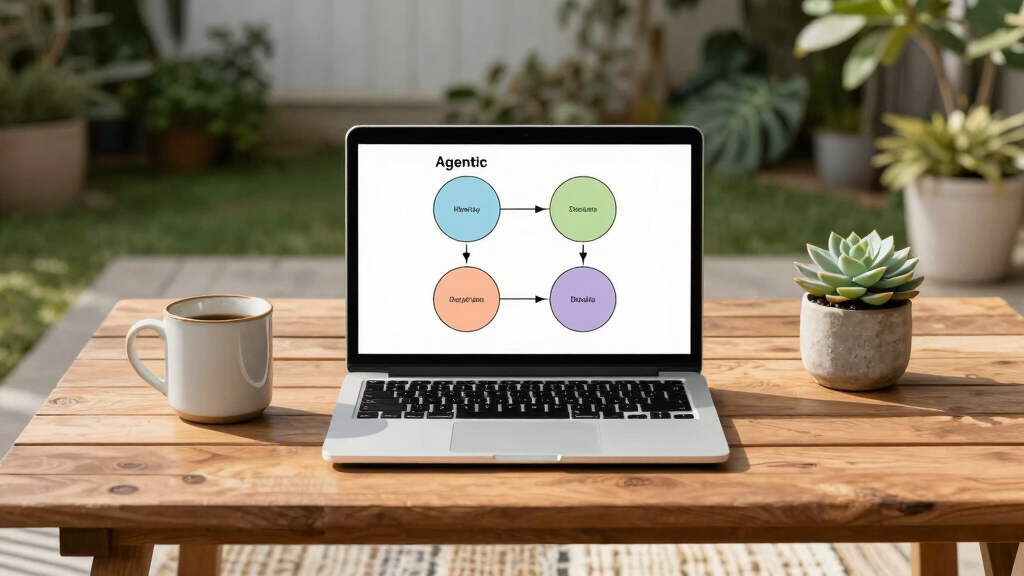
The delegation ladder: four agentic loops, and what each lets you stop doing
Strip the hype and a “loop” is simple — an agent repeating work until a stop condition is met. The useful lens isn’t the mechanics, it’s what you hand off. Four loop types = four rungs of delegation, from a tool you operate to a process that runs.
The whole framework reduces to one question about your own work: where am I the bottleneck, and which single piece can I hand off? Can you write the check? Is the goal concrete? Does the work arrive on a schedule? That answer picks your rung — and you climb one step at a time. The real skill isn’t operating a loop; it’s the judgment of what to delegate and how far — enough hands off to gain leverage, enough on the wheel that “runs without you” doesn’t become “runs away from you.”
AI Work Moves Upstream
The framework gives teams a more precise way to discuss AI delegation. Instead of asking whether an AI system is autonomous in broad terms, the model asks which part of the workflow has been handed off: checking, completion judgment, starting the work or forming the request.
That distinction matters for software teams and business operators because each rung changes the user’s role. A turn-based loop still leaves a human driving each prompt. A goal-based loop reduces manual follow-up. A time-based loop lets scheduled work begin without a prompt. A proactive workflow can respond to events without a person present in real time.
The source material also links autonomy to cost control. It recommends clear stop criteria, turn caps, cheaper capable models where appropriate, scripts instead of repeated reasoning, and usage monitoring through tools such as /usage.
As an affiliate, we earn on qualifying purchases.
Claude Code Sets The Terms
Anthropic’s blog post, titled “Getting started with loops”, was published on June 30, 2026. Thorsten Meyer AI’s July 1, 2026 analysis uses Anthropic’s definitions, primitives and examples, while adding the delegation ladder framing.
The source material gives a front-end development example for the first rung. A skill can require the agent to start a dev server, click a new control, capture screenshots, check the browser console and run a performance trace before treating a UI change as complete.
For the goal-based rung, the example is a performance target: asking an agent to get a homepage score above 90 and stop after a set number of attempts. The analysis says deterministic goals such as passing tests or crossing a threshold work better than vague targets.
task automation software for teams
As an affiliate, we earn on qualifying purchases.
As an affiliate, we earn on qualifying purchases.
Research Preview Boundaries Persist
Several details remain limited by the source material. It says some features are research previews, but does not specify the full availability, pricing or production-readiness of each primitive across all users and environments.
It is also unclear how consistently these loops perform across different codebases, business workflows and risk levels. The analysis stresses that output quality depends on the system around the loop, including clean code patterns, self-verification, review by a fresh-context agent and fixes to the workflow rather than only the individual result.
As an affiliate, we earn on qualifying purchases.
Pilots Before Larger Agent Runs
The next step for teams is likely small-scale testing. The source material recommends pilots before big runs, especially before sending work to hundreds of agents or letting scheduled and event-driven workflows operate with less direct supervision.
Readers tracking the framework should watch Anthropic’s Claude Code documentation for feature status, examples and limits. For teams adopting the model now, the practical question is which single bottleneck can be handed off first without losing control of quality, cost or review.
As an affiliate, we earn on qualifying purchases.
Key Questions
What did Anthropic publish?
Anthropic’s Claude Code team published a framework describing AI loops as repeated work cycles that continue until a stop condition is met.
What are the four agentic loop types?
The four types are turn-based, goal-based, time-based and proactive loops, according to the source material.
What is the delegation ladder?
Thorsten Meyer AI uses that phrase to describe how each loop hands off more work: first the check, then the stop condition, then the trigger, then the prompt itself.
Are all of these features generally available?
The source material says some features are research previews. Full availability and limits should be checked against Claude Code documentation.
What should teams do first?
The guidance is to start with the simplest working approach, add clear checks, set cost controls and use larger autonomous runs only after a smaller pilot succeeds.
Source: Thorsten Meyer AI
Fall Picks
fall essentials
As an affiliate, we earn on qualifying purchases.