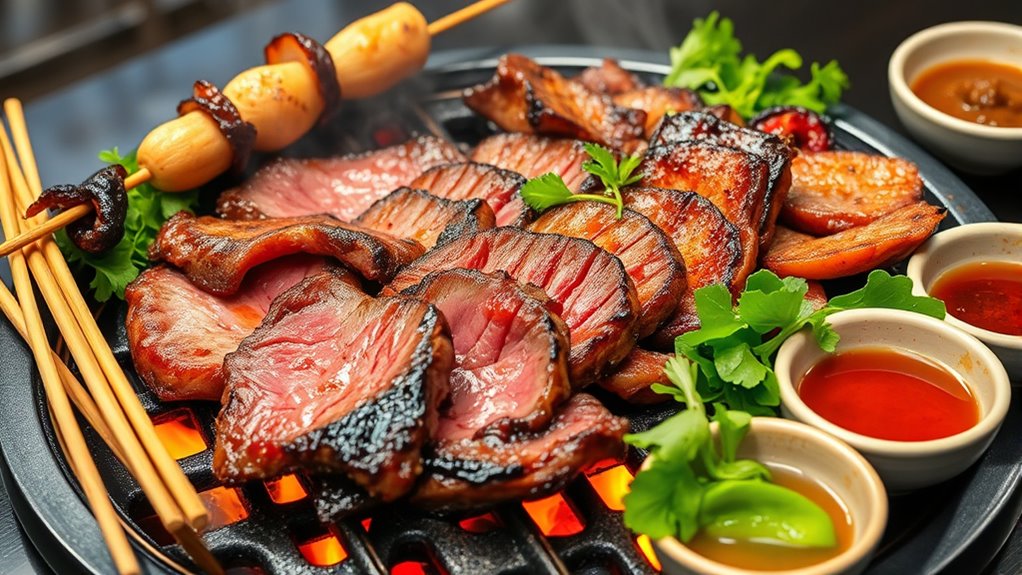
Korean BBQ and Thai grilling blend bold marinades with expert fire control to create vibrant flavors and perfect textures. Korean marinades balance sweet, savory, and umami, while Thai styles focus on spicy, sour, and fragrant ingredients. Managing grill temperature guarantees juicy, tender meat without flare-ups or charring. By combining these traditions, you can master authentic Asian grilled dishes that impress. Keep exploring to discover the techniques that bring these flavors to life.
Listen free for 30 days with Audible
Thousands of audiobooks and originals — cancel anytime.
As an affiliate, we earn on qualifying purchases.
Key Takeaways
- Combining Korean marinades’ savory, sweet, umami flavors with Thai’s bold, aromatic, and spicy profiles creates a fusion of Asian grilling traditions.
- Mastering fire control techniques like high heat searing and flame management is essential for authentic Korean and Thai grilled dishes.
- Marinating techniques differ: Korean uses longer, deep infusions, while Thai emphasizes quick, vibrant flavor enhancements.
- Proper grill maintenance and fire management ensure safety, prevent flare-ups, and develop authentic smoky or crispy textures.
- Integrating cultural grilling methods involves balancing flavors, timing, and heat to craft harmonious, flavorful Asian-inspired barbecue experiences.
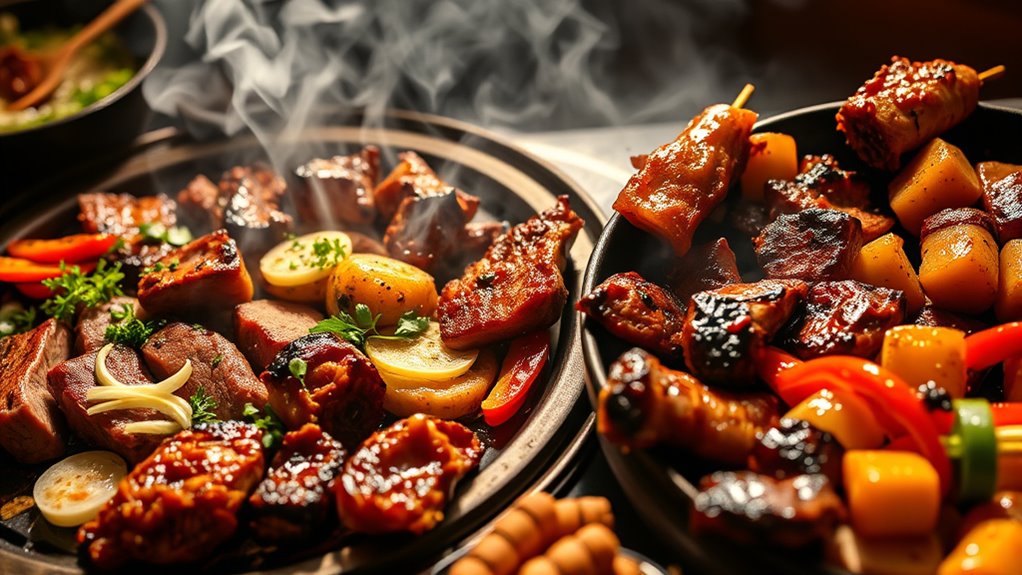
Asian grilling traditions are rich and diverse, reflecting centuries of cultural influences and regional flavors. When you explore these culinary practices, you quickly realize how much emphasis is placed on perfecting techniques that enhance flavor and guarantee safety. One key aspect is marinade techniques. In Korean BBQ, for instance, marinades often combine soy sauce, garlic, sesame oil, sugar, and rice wine, creating a balanced blend of savory, sweet, and umami notes. You’ll notice how these marinades do more than add flavor—they tenderize the meat, making each bite juicy and flavorful. The process of marinating may vary from a few hours to overnight, depending on the cut and desired intensity. By allowing the meat to soak in these flavorful liquids, you guarantee that the taste penetrates deeply, giving your grilled dishes authenticity and depth. Additionally, proper grill maintenance is crucial to ensure consistent results and prevent flare-ups that could compromise the dish’s flavor and safety.
In Thai grilling, marinade techniques tend to be vibrant and aromatic, incorporating ingredients like fish sauce, lime juice, ginger, lemongrass, and chili. These marinades are often lighter but packed with bold flavors that balance sour, spicy, and salty elements. When you prepare Thai grilled dishes, you’ll find that marinating for even a short period can dramatically elevate the dish, imparting a fresh, zesty flavor that’s characteristic of Thai cuisine. Whether you’re working with chicken, beef, or seafood, the key is to let the ingredients absorb the marinade without overdoing it, preserving the bright, lively flavors.
Fire control plays a vital role in mastering Asian grilling traditions. You need to maintain the right heat to prevent burning or undercooking, which is especially important given the variety of ingredients and techniques involved. In Korean BBQ, controlling the fire involves adjusting the grill’s temperature to achieve a consistent, high heat for searing meats quickly, locking in juices and creating a perfect crust. You should be attentive to flare-ups, which can char the meat excessively, by moving the meat away from direct flames or lowering the heat. Conversely, for thicker cuts or delicate items, you might lower the grill’s temperature to allow slow, even cooking.
Thai grilling often involves open flames and charcoal, which demand precise fire control to develop smoky flavors without over-charring. You’ll find that managing the fire means keeping the coals evenly heated and adjusting the grill’s distance from the heat source. This balance allows you to develop a beautiful char while keeping the interior moist and tender. Whether you’re working with Korean-style quick searing or Thai-style slow grilling, mastering fire control ensures your dishes are flavorful, perfectly cooked, and visually appealing. By combining expert marinade techniques with attentive fire control, you can truly honor the traditions of Asian grilling and create dishes that are both authentic and memorable.
As an affiliate, we earn on qualifying purchases.
Frequently Asked Questions
What Are the Key Differences Between Korean and Thai Grilling Techniques?
You’ll notice Korean grilling often uses specialized equipment like tabletop charcoal or gas grills, emphasizing even cooking, while Thai grilling favors open-flame methods like skewers over charcoal. Korean flavors lean toward savory, sweet, and soy-based marinades, creating rich profiles. Thai grilling incorporates vibrant herbs, spices, and tangy marinades, resulting in bold, aromatic flavors. Both traditions celebrate unique techniques that highlight their distinct ingredients and taste preferences.
How Do Traditional Marinades Vary Across Asian Grilling Styles?
Imagine you’re preparing a Thai grilled chicken, and you use a marinade with fish sauce, lime juice, garlic, and sugar. Traditional Asian marinades vary widely in ingredients and flavor profiles; Korean marinades often include soy sauce, sesame oil, and pear for sweetness, emphasizing umami. In contrast, Thai marinades lean toward tangy and spicy notes, with ingredients like lime, chili, and fish sauce, creating vibrant, complex flavors.
Which Types of Meats Are Most Popular in Korean and Thai Grills?
In Korean grills, you’ll find beef cuts like ribeye, brisket, and short ribs, which are perfect for grilling and slicing. In Thai grills, seafood options such as shrimp, squid, and fish are popular, offering fresh, flavorful bites. Both styles also feature marinated meats, but Korean focuses on beef, while Thai emphasizes seafood, giving you delicious options to try on your grill.
What Are Common Side Dishes Served With Asian Grilled Meats?
Imagine you’re in a bustling street market of the 21st century, enjoying Asian grilled meats. You’ll often find pickled vegetables and spicy sauces served alongside, enhancing flavors. These side dishes add crunch and tang, balancing the smoky grilled meats. You might also enjoy fresh kimchi, crispy lettuce wraps, or sweet chili dips. These accompaniments elevate your grilling experience, making every bite vibrant and memorable.
How Do Cultural Influences Shape the Flavors of Asian Grilling Traditions?
Cultural influences shape Asian grilling flavors through fusion flavors and ingredient diversity. You’ll notice how local tastes, spices, and ingredients blend, creating unique profiles. For instance, Korean BBQ emphasizes savory, marinated meats, while Thai grills highlight bold, aromatic herbs. These traditions reflect regional history and trade, giving each style its distinct character. You get to enjoy how cultural exchange results in vibrant, diverse flavors that make Asian grilling truly special.
As an affiliate, we earn on qualifying purchases.
Conclusion
As you explore these vibrant Asian grilling traditions, you’re holding a passport to a world of bold flavors and fiery techniques. Think of each grill as a brushstroke on a delicious canvas, blending Korean and Thai styles into a masterpiece on your plate. So fire up your grill, embrace the heat, and let these culinary traditions inspire your own smoky symphony. Your taste buds are in for a sizzling adventure that’s as rich and diverse as Asia itself.
gas or charcoal grill thermometer
As an affiliate, we earn on qualifying purchases.
As an affiliate, we earn on qualifying purchases.
As an affiliate, we earn on qualifying purchases.
Flea & tick season Picks
flea and tick prevention
As an affiliate, we earn on qualifying purchases.