
If your mind feels restless during meditation, start with simple techniques like focused breathing—inhale slowly through your nose and exhale gently. Incorporate guided imagery, such as visualizing peaceful scenes, to help redirect your attention. Keep sessions short, around five minutes, and find a quiet space. Gently bring your focus back whenever it wanders without judgment. Using these strategies can gradually calm your mind and make meditation easier—more helpful tips await if you keep exploring.
Prime for Young Adults — start your free trial
Fast free delivery, streaming and member deals for eligible 18–24 year olds.
As an affiliate, we earn on qualifying purchases.
Key Takeaways
- Use simple techniques like breathing exercises and guided imagery to channel energy and focus.
- Start with short, five-minute sessions in a quiet, comfortable space.
- Focus on breath or sensory details instead of trying to clear the mind completely.
- Gently redirect attention when the mind drifts, without judgment.
- Combine different methods and tailor practices to individual needs for better engagement.
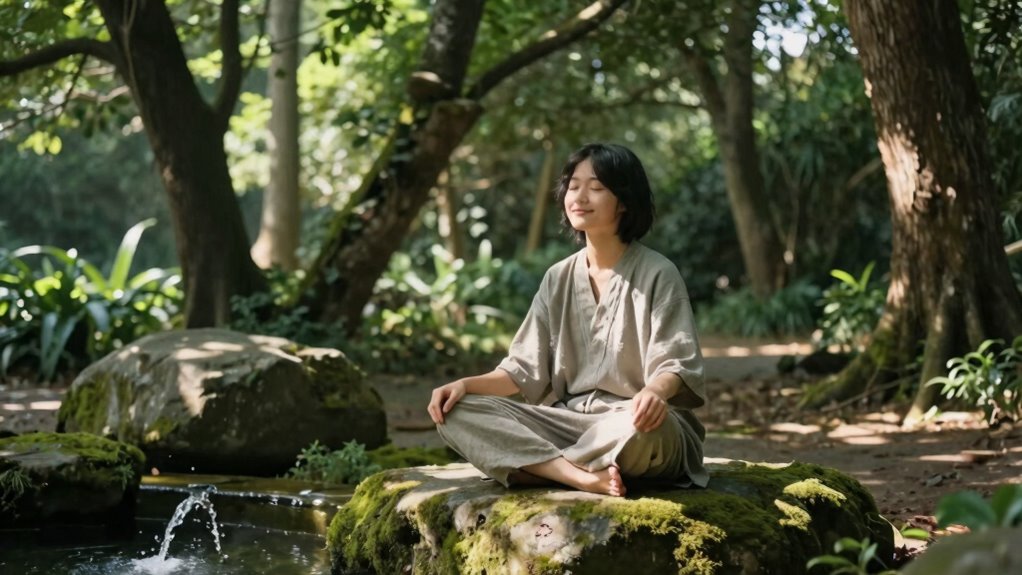
If you find it difficult to sit still or focus during meditation because your mind is constantly restless, you’re not alone. Many people struggle with racing thoughts and an inability to settle down. The good news is that you can make meditation easier by incorporating simple strategies like breathing techniques and guided imagery. These tools help channel your energy and focus, making it less overwhelming to stay present.
Breathing techniques are especially effective because they give you a tangible way to anchor your attention. Instead of trying to clear your mind entirely—which can feel impossible—you focus on your breath. Try inhaling slowly through your nose for a count of four, holding briefly, then exhaling gently through your mouth for a count of six. Repeat this cycle a few times. This controlled breathing calms your nervous system, reducing feelings of restlessness and anxiety. It also creates a rhythmic pattern that distracts from intrusive thoughts, giving your mind a clear focal point.
Focusing on your breath with slow inhales and gentle exhales calms the nervous system and quiets racing thoughts.
Guided imagery is another powerful approach that works well for restless minds. Instead of forcing yourself to stay still or suppress thoughts, you imagine a peaceful scene—perhaps a quiet forest, a serene beach, or a gentle stream. As you visualize this scene, pay attention to the details: the sound of waves, the warmth of the sun, the scent of pine. This mental journey redirects your focus away from racing thoughts and helps anchor you in the present moment. Over time, guided imagery can become a reliable way to reduce mental clutter and cultivate calmness. Engaging your imagination in this way aligns with the concept of mental distraction as a helpful relaxation technique.
To make these techniques more effective, start with short sessions. Even five minutes can bring noticeable benefits. Find a quiet space where you won’t be disturbed, sit comfortably, and try combining breathing exercises with guided imagery. For example, as you breathe slowly, imagine yourself breathing in the fresh, calming air of your chosen scene. If your mind drifts, gently bring it back to your breath or your visualization without judgment. Developing an understanding of how relaxation techniques work can also help you tailor your practice to what best suits your restless mind. Incorporating body-based methods, such as gentle movements or awareness of physical sensations, can further enhance your meditation experience by helping you stay grounded and present.
guided meditation for restless minds
As an affiliate, we earn on qualifying purchases.
As an affiliate, we earn on qualifying purchases.
Frequently Asked Questions
Can Children Benefit From Meditation Techniques for Restlessness?
Children can definitely benefit from meditation techniques for restlessness. Mindfulness in children helps them develop better focus and calmness, making meditation for kids highly effective. You should introduce simple, fun practices like deep breathing or guided imagery tailored to their age. As they practice regularly, they’ll learn to manage their energy more effectively, reducing restlessness and fostering emotional resilience. With patience, meditation becomes a helpful tool for their overall well-being.
Are There Specific Meditation Styles Suited for Hyperactive Individuals?
You might find it ironic, but hyperactive individuals often thrive with movement-based meditation rather than traditional sitting practices. Techniques like walking meditation or gentle yoga can channel your energy positively. Breathing techniques also help calm your mind. These styles keep you engaged, making meditation feel less like a chore and more like a natural extension of your energy, helping you find calm without feeling trapped in stillness.
How Long Should Beginners Meditate to See Noticeable Benefits?
As a beginner, start with just 5 to 10 minutes of mindfulness practice daily to notice benefits. You can try guided visualization to help your mind stay focused and reduce restlessness. Gradually increase your meditation time as you become more comfortable. Consistency is key, so aim to meditate daily, even if only for a few minutes. Over time, you’ll experience improved focus, calmness, and overall well-being.
Is It Necessary to Meditate in Silence or Can Background Noise Help?
You don’t have to meditate in silence; background noise can actually help, especially if it’s calming or natural sounds. Guided meditation recordings often include soothing background noise that guides your focus. Restless people might find this helpful to stay engaged and prevent their mind from wandering. Using gentle background noise or guided sessions can make meditation more accessible and enjoyable, easing your way into regular practice.
What Are Quick Mental Exercises to Calm Restless Thoughts?
You can calm restless thoughts with quick mental exercises like breathing techniques and mindfulness practices. Try inhaling deeply through your nose for four seconds, holding your breath for four seconds, then slowly exhaling for four seconds. Focus on your breath or the sensations around you to anchor your mind. These simple exercises help quiet your thoughts and bring your attention to the present moment, making meditation easier for your restless mind.
breathing exercise tools for meditation
As an affiliate, we earn on qualifying purchases.
As an affiliate, we earn on qualifying purchases.
Conclusion
So, embrace patience, embrace persistence, and embrace your unique journey. Remember, meditation isn’t about perfect stillness but about gentle progress. Stay committed, stay curious, and stay kind to yourself. With each breath, each attempt, and each moment, you’re moving closer to peace. Restlessness is part of the process, and with time, it transforms into calm. Keep practicing, keep believing, and keep showing up—you’re capable of finding serenity amid your energy.
As an affiliate, we earn on qualifying purchases.
As an affiliate, we earn on qualifying purchases.
Fall yard work Picks
leaf blowers
As an affiliate, we earn on qualifying purchases.