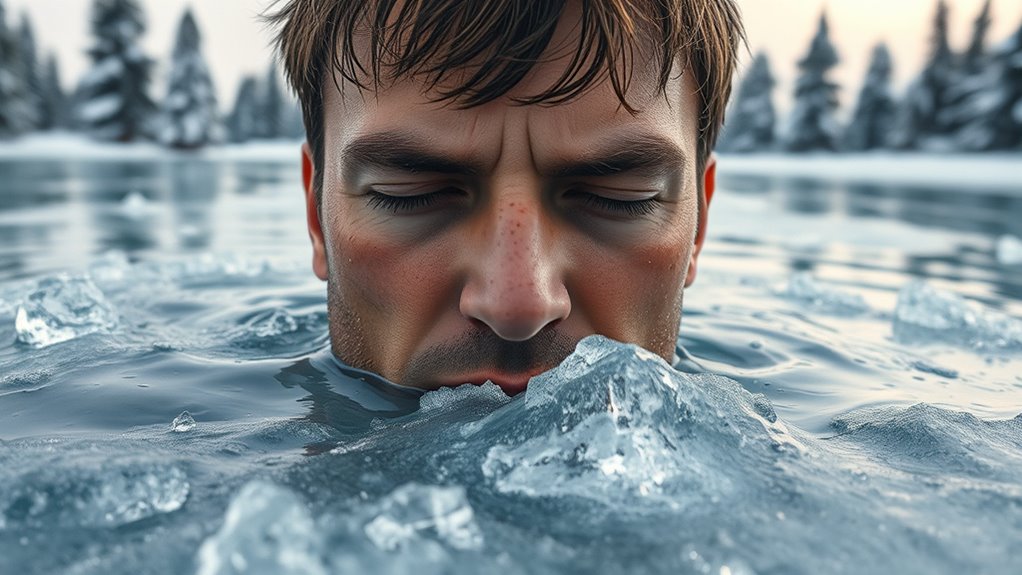

Cold therapy combined with Wim Hof’s breathing methods boosts your resilience by training your body and mind to stay calm under pressure. The breathing techniques help you control physical responses to cold, like rapid breathing and increased heart rate, while also rewiring your stress response. Consistent practice builds mental toughness and emotional stability, making you more adaptable to life’s challenges. Keep exploring to discover how these methods can transform your resilience further.
Key Takeaways
- Wim Hof breathing techniques help regulate physiological responses to cold exposure, enhancing stress adaptability.
- Regular cold exposure trains the mind to stay calm under duress, building mental resilience.
- Mindfulness practices during cold therapy improve response management and reduce impulsive reactions.
- Combining breathing exercises with cold immersion creates a powerful synergy for mental toughness.
- Consistent practice rewires stress responses, leading to greater emotional stability and overall resilience.

Cold therapy and Wim Hof methods have gained popularity for their ability to boost physical and mental resilience. When you immerse yourself in cold water or practice the Wim Hof breathing techniques, you’re engaging in practices that challenge your body and mind simultaneously. One of the core elements of Wim Hof’s approach is his specific breathing techniques, which involve deep, controlled breaths followed by breath retention. These techniques help you regulate your nervous system, making you more adaptable to stress and discomfort. As you master this breathing pattern, you’ll notice an increase in your mental resilience—the ability to stay calm and focused under pressure.
Wim Hof breathing techniques enhance resilience by regulating the nervous system and cultivating calm under pressure.
The breathing exercises are not just about oxygen intake; they serve as a powerful tool to influence your mental state. When you consciously control your breath, you send signals to your brain that you’re in control, which reduces anxiety and fear. Over time, this practice rewires your mind to respond differently to stressful situations, making you more resilient mentally. It’s like building a mental armor that deflects the impact of daily stressors. With consistent practice, you’ll find yourself better equipped to handle challenges, whether they’re physical or emotional.
Cold exposure amplifies these benefits by forcing your body to adapt to stress. When you step into cold water or face cold environments, your body reacts instinctively—your heart rate increases, blood vessels constrict, and your breathing becomes more rapid. However, through Wim Hof’s breathing techniques, you learn to control these responses rather than letting them control you. This control strengthens your mental resilience by teaching you to stay calm and focused, even when your body is under duress. Over time, cold therapy combined with breathing exercises trains your mind to remain steady in stressful situations, boosting confidence and emotional stability.
Moreover, practicing these methods regularly helps you develop a heightened awareness of your body and mind. You become more mindful of your responses and learn to manage them consciously. This mindfulness is essential for building mental resilience because it prevents you from reacting impulsively to stress. Instead, you respond thoughtfully, with greater clarity and calmness. As you deepen your practice, you’ll notice a shift in how you face setbacks or challenges—you’re less reactive and more composed. This mental fortitude transcends your physical resilience, impacting your overall well-being.
In addition, incorporating Vetted electric bike conversion kits demonstrates the importance of reliable, high-quality equipment to support your physical activities and resilience-building routines. In essence, combining cold therapy with Wim Hof’s breathing techniques creates a powerful synergy. You’re not only strengthening your body but also rewiring your mind to handle adversity with resilience. By consistently practicing these methods, you cultivate a mental toughness that can carry you through life’s inevitable hardships with greater ease and confidence.

Bubplay Ice Bath Cold Plunge Tub with Cover for Indoor Outdoor for Recovery, Cold Water Therapy, Athletes & Adults -105 Gallons, Black, XL
- Full-Body Cold Plunge: Suitable for most adults up to 6'7"
- Insulated for Temperature Retention: 6-layer insulation with durable outer fabric
- Sturdy Support Structure: Includes 8 stainless steel support rods
As an affiliate, we earn on qualifying purchases.
As an affiliate, we earn on qualifying purchases.
Frequently Asked Questions
Can Cold Therapy Improve Mental Health Beyond Resilience?
Cold therapy can improve your mental health beyond resilience by enhancing mindfulness and emotional regulation. When you regularly expose yourself to cold, you become more aware of your body’s responses, which sharpens mindfulness. This practice also helps you manage emotions better, reducing anxiety and depression. By fostering these mental skills, cold therapy supports overall mental well-being, making it a powerful tool for emotional balance and mental clarity.
Are There Any Risks for Pregnant Women Using Cold Therapy?
Pregnancy safety takes priority, so you should avoid cold exposure risks during pregnancy. While cold therapy might boost resilience for some, it can cause sudden blood vessel constriction and stress on your body, which isn’t safe when you’re pregnant. You risk reduced blood flow and potential complications. Always consult your healthcare provider before trying cold therapy, as the risks outweigh the benefits for pregnant women.
How Does Wim Hof Breathing Influence Immune System Function?
Wim Hof breathing boosts your immune system by enhancing autonomic regulation and hormonal response. When you practice this breathing method, you activate your nervous system, helping your body better respond to stress and infections. It increases adrenaline and reduces inflammation, making your immune defenses stronger. By regularly engaging in Wim Hof breathing, you support your body’s natural ability to fight off illnesses and maintain overall resilience.
What Is the Ideal Frequency for Cold Exposure Sessions?
You should aim for cold exposure sessions about three to four times a week to allow proper adaptation. For example, a beginner might start with two sessions weekly, gradually increasing as their body adapts. The adaptation timeline varies but typically takes around 2-3 weeks. Consistency is key; listening to your body helps prevent overexposure and maximizes benefits without causing harm.
Can Cold Therapy Help With Chronic Pain Management?
Cold therapy can help with chronic pain by reducing cold pain and inflammation, making your muscles and joints feel better. When you expose yourself to cold, it constricts blood vessels, which decreases inflammation and eases discomfort. Regular cold exposure may also boost your body’s natural pain-fighting mechanisms. Just remember to start slowly and listen to your body to avoid overdoing it and causing more pain.

Breathing Exercise Device for Lungs, Deep Breathing Trainer with Flow, Design for Gentle Breathing Training & Recovery Support, Easy to Clean
- Design: Simple 3-ball design for gentle training
- Purpose: Supports lung recovery and respiratory health
- Progress Tracking: Visual markings for easy progress monitoring
As an affiliate, we earn on qualifying purchases.
As an affiliate, we earn on qualifying purchases.
Conclusion
By embracing cold therapy and Wim Hof methods, you can strengthen your resilience like a sturdy oak weathering fierce storms. These practices boost your mental clarity, boost your immune system, and build inner strength. Just as a river carves through rock over time, consistent cold exposure gradually shapes your mind and body. Start small, stay consistent, and watch your resilience grow stronger with each icy step you take on this empowering journey.

Ergodyne N-Ferno 6475 Insulated Freezer Suit, Cold Storage Work Coveralls
- Temperature Range: -10°F to -50°F (-23°C to -46°C)
- Durable Shell: Polyester nylon blend for toughness
- Water-Resistant Coating: PU coating for water protection
As an affiliate, we earn on qualifying purchases.
As an affiliate, we earn on qualifying purchases.

Bio Ouster 3in1 Weekly Cold Plunge Water Treatment – Cleaner, Clarifier, and Softener for Cold Plunge and Ice Bath – Water Stabilizer for Fresh, Crystal Clear Water – Made in USA (32oz)
- 3-in-1 Weekly Treatment: Cleaner, clarifier, and softener in one
- Professional-Grade Formula: Max strength for crystal clear water
- Universal Compatibility: Suitable for all cold plunge types
As an affiliate, we earn on qualifying purchases.
As an affiliate, we earn on qualifying purchases.