
Indoor composting is an excellent solution for urban dwellers who want to reduce waste without a yard. Using compact, odor-controlled bins or worm composting systems, you can turn kitchen scraps into nutrient-rich soil effortlessly. These methods are quiet, sealed, and designed to prevent smells while minimizing space. With proper management, you’ll see how easy it is to get great compost without any outdoor area—discover more ways to make it work for your lifestyle.
Key Takeaways
- Indoor composting bins with sealed lids and filters effectively contain odors in small urban spaces.
- Worm composting (vermicomposting) transforms kitchen scraps into nutrient-rich soil odorlessly.
- Compact, countertop or closet-friendly compost bins require minimal space and maintenance.
- Using bedding materials helps control moisture and odor, making composting in apartments feasible.
- Urban composting reduces household waste and produces valuable compost without outdoor yard access.
Ever thought you can’t compost without a yard? Think again. You don’t need a sprawling outdoor space to turn kitchen scraps into nutrient-rich soil. With indoor bins and some simple techniques, you can compost right in your apartment or condo without worrying about odors or pests. One of the most effective methods for small spaces is worm composting, also known as vermicomposting. It’s clean, odorless when done correctly, and incredibly efficient at breaking down organic waste.
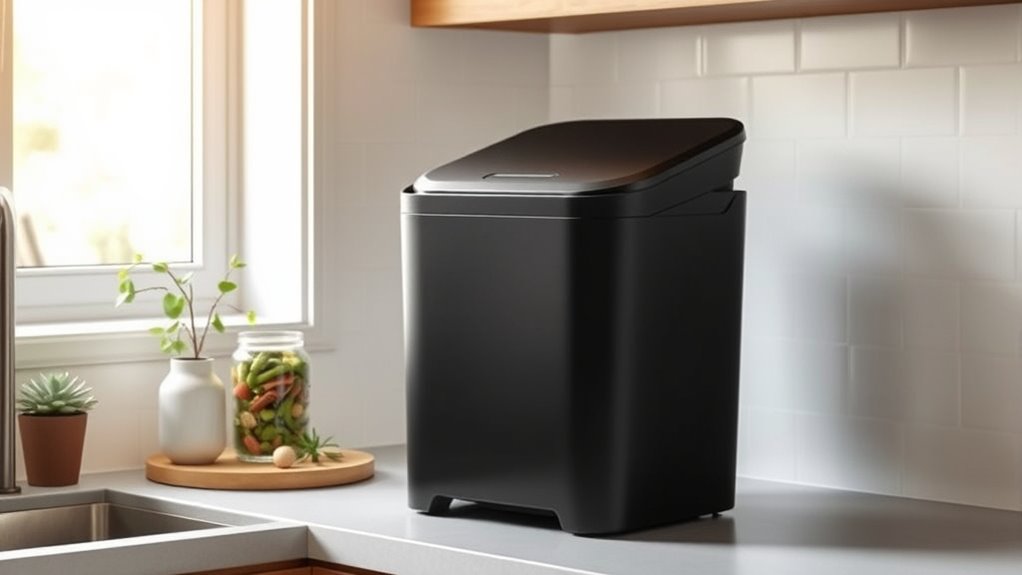
Indoor bins are your best friend when it comes to composting inside. These containers are designed to fit neatly on your countertop, under your sink, or in a closet. They’re usually compact, sealed, and equipped with filters to control moisture and smell. By choosing the right bin, you create a dedicated space for your compostable waste, making it easy to manage daily scraps like fruit peels, coffee grounds, or vegetable trimmings. Plus, many indoor bins come with lids and ventilation systems that prevent odors from escaping, so your apartment stays fresh.
Choose compact, sealed indoor bins with filters to keep your composting odor-free and manageable.
Worm composting takes this a step further. It involves introducing a special type of worm, typically red wigglers, into your indoor bin. These worms feast on your kitchen scraps and quickly turn them into compost. Worm composting is ideal for small spaces because it produces almost no smell when maintained properly. You simply add your kitchen waste to the bin, and the worms do the rest. They thrive in moist, dark environments—conditions you can easily replicate in a designated indoor bin. It’s helpful to layer bedding material like shredded newspaper or coconut coir to keep the environment cozy for your worms and to absorb excess moisture.
One of the greatest advantages of worm composting is its speed. Worms can convert food scraps into compost within a few months, providing you with nutrient-rich soil for your houseplants or garden. Regularly harvesting the worm castings, or worm poop, is straightforward, and the process itself is odorless if you keep the bin balanced—meaning not too wet or dry, and free of excessive food waste. This method also reduces household waste substantially and keeps your trash out of landfills longer.
In essence, indoor bins and worm composting let you embrace sustainable living without needing outdoor space. They’re quiet, odor-free, and highly effective, making composting accessible wherever you live. With just a little setup and regular care, you can turn your kitchen scraps into valuable compost, helping the environment and enriching your plants—all inside your apartment.
Frequently Asked Questions
Can Indoor Composting Attract Pests or Rodents?
Indoor composting can attract pests or rodents if you’re not careful. To prevent this, practice pest prevention by keeping your compost bin covered and avoiding meat or dairy scraps. Use rodent deterrents like airtight lids and secure containers, and regularly turn the compost to reduce odors. Proper maintenance and choosing the right bin help keep pests away, ensuring your indoor composting remains clean and odor-free.
How Long Does It Take for Compost to Be Ready Indoors?
Imagine your first indoor compost is almost ready, filling your apartment with a rich, earthy aroma. Typically, the indoor compost timeline takes about 2 to 4 months for compost maturity, depending on materials and conditions. Active aeration and proper balance of greens and browns speed up the process. With patience, you’ll soon have nutrient-rich compost to nourish your plants, making your urban space more sustainable and eco-friendly.
Are There Any Legal Restrictions on Composting in Apartments?
You might wonder if apartment regulations or composting ordinances restrict composting at home. Typically, local laws don’t ban indoor composting, but it’s wise to check your building’s policies. Some apartments might have rules about odors or waste disposal. To stay compliant, contact your landlord or review local regulations. As long as you keep your compost manageable and odor-free, you can usually compost indoors without issues.
What Are the Best Odor-Control Methods for Indoor Compost Bins?
Did you know that proper odor management can reduce indoor compost smell by up to 90%? To keep your indoor bin smelling fresh, focus on good bin ventilation—use breathable bags or add small vents. Regularly turn the compost and layer browns like dry leaves or paper to absorb odors. Keep the bin sealed tightly when not in use, and consider using natural odor absorbers like activated charcoal to maintain a pleasant environment.
Can Composting Help Reduce Household Waste Significantly?
Composting can considerably reduce your household waste, offering notable composting benefits. When you compost correctly, you turn food scraps and yard waste into valuable soil, cutting down on landfill contributions. This process helps manage waste more sustainably, decreasing the amount of trash you send to disposal sites. By composting, you actively participate in waste reduction efforts, making a positive environmental impact and creating nutrient-rich compost for your plants.
Conclusion
Just like a city skyline without a single tree, urban composting might seem small, but it makes a big difference. I once started with a tiny countertop bin, and now I’m proud to say I’ve diverted hundreds of pounds of waste from landfills. Your efforts may be modest at first, but together, they create a greener, fresher city. Remember, even small actions can grow into a healthy, thriving urban jungle—no yard needed.