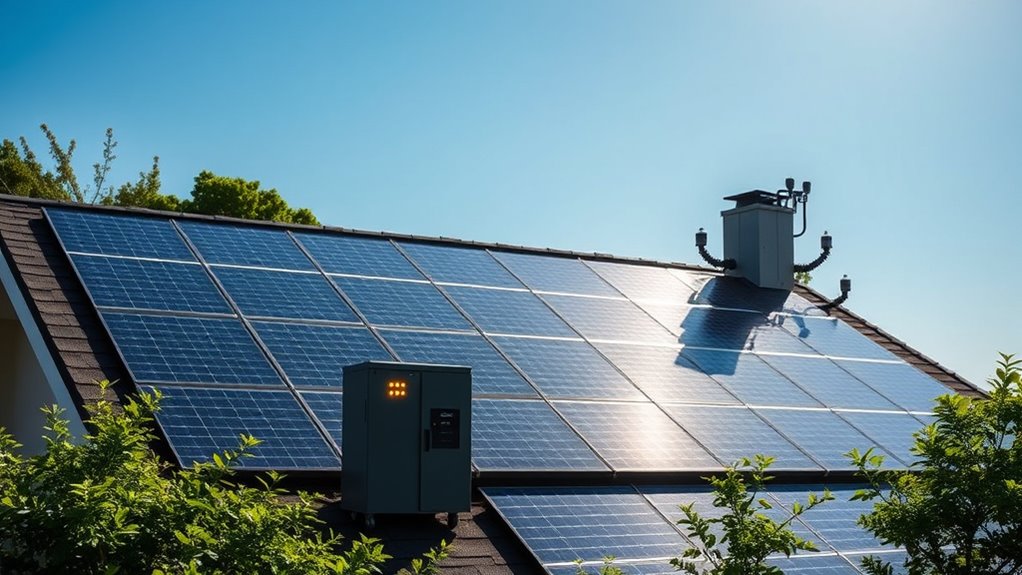

Installing solar power at home allows you to generate clean energy, cut down on your energy bills, and increase your independence with efficient panels and battery storage options. High-quality panels convert sunlight into electricity effectively, while batteries store excess energy for use during cloudy days or at night. Understanding how these components work together helps you maximize savings and benefits. Keep exploring to learn more about making your home’s solar system work best for you.

Get garden gear delivered free with Prime
- Fast, free delivery on millions of items
- Prime Video, Amazon Music and more included
- Member-only deals all year
Key Takeaways
- Solar panels convert sunlight into electricity, reducing energy bills and environmental impact, especially when high-efficiency panels are used.
- Battery storage options like lithium-ion batteries store excess solar energy for use during cloudy periods or at night.
- Proper system sizing and roof orientation maximize energy production and overall return on investment.
- Incentives and tax credits lower upfront costs, making solar power more affordable for homeowners.
- Combining high-quality panels with reliable batteries enhances energy independence, system durability, and long-term savings.
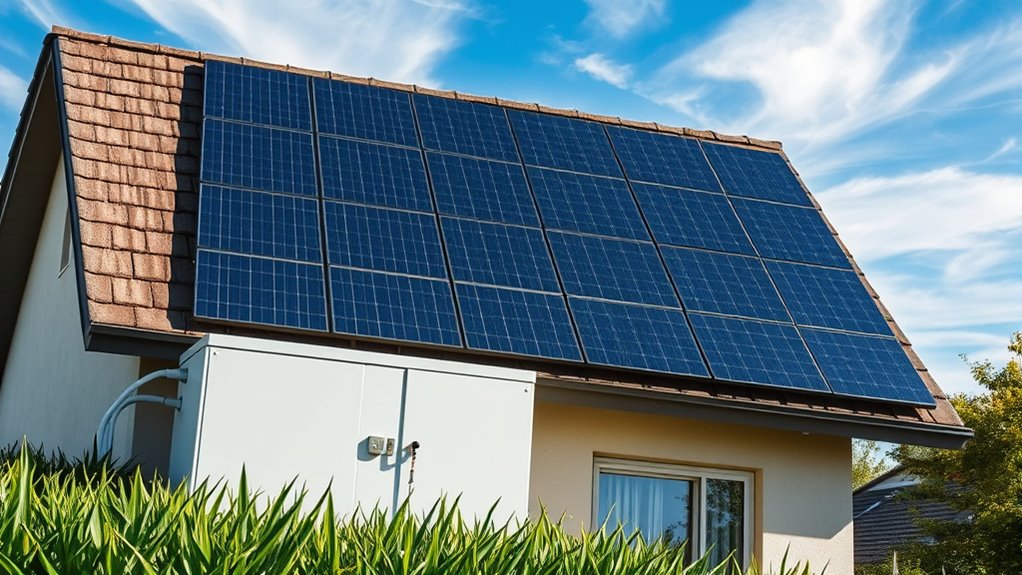
Have you ever wondered how you can reduce your energy bills and lessen your environmental impact at the same time? Solar power offers an excellent solution, but understanding how it works is key to making the most of it. One pivotal factor is solar panel efficiency, which measures how well your panels convert sunlight into usable electricity. Higher efficiency panels produce more power in a limited space, making them ideal for homes with smaller rooftops or shading issues. When shopping for panels, look for those with high efficiency ratings, as they can boost your overall energy production, helping you save more money in the long run.
Alongside panel quality, battery storage options play a vital role in maximizing your solar investment. These batteries store excess energy generated during sunny periods, so you can use it during cloudy days or at night. This not only reduces your reliance on the grid but also guarantees you have a steady power supply whenever you need it. Today’s battery options are more advanced and affordable than ever before. Lithium-ion batteries, such as Tesla Powerwall or LG Chem, are popular because of their durability, high capacity, and efficiency. They can seamlessly integrate with your solar system, allowing you to store surplus energy and access it whenever necessary. Choosing the right battery storage options depends on your energy needs, budget, and available space, but having a reliable backup can notably increase your energy independence and savings.
In addition to these technical aspects, installing high-quality solar panels and batteries can also qualify you for various incentives and tax credits, making your transition to solar even more affordable. Properly evaluating your energy consumption helps determine the right size system and storage capacity, guaranteeing you don’t overspend or fall short of your goals. Also, consider the orientation and tilt of your roof, as these factors influence solar panel efficiency. South-facing roofs generally receive the most sunlight, maximizing your system’s output. Additionally, selecting panels and batteries with proven performance in real-world conditions ensures you get the best return on your investment.
Products Worth Considering

Ring Battery Doorbell Plus (2nd Gen) and Indoor Cam Plus Bundle, Nickel Silver and White

Ring Battery Doorbell (2nd Gen), Indoor Cam Plus, and Chime (3rd Gen) Bundle

Ring Battery Doorbell and Chime (3rd Gen), Satin Nickel
As an affiliate, we earn on qualifying purchases.
Frequently Asked Questions
How Long Do Solar Panels Typically Last Before Needing Replacement?
You can expect your solar panels to last around 25 to 30 years before needing replacement, thanks to their durable design. Panel durability varies based on quality and maintenance, but most are built to withstand weather and environmental conditions. Keep an eye on performance over time; a decline may signal it’s time for a replacement. Regular inspections can help you stay ahead of the replacement timeline and maximize your investment.
What Are the Environmental Impacts of Manufacturing Solar Panels?
Manufacturing solar panels involves some environmental impacts, mainly manufacturing emissions that contribute to greenhouse gases. However, you can help reduce this impact through solar panel recycling, which minimizes waste and recovers valuable materials. By choosing panels from responsible manufacturers, you’re supporting more sustainable practices, ensuring that the environmental footprint of your solar system stays as low as possible over its lifespan, making solar power a greener choice for your home.
Can Solar Power Systems Be Installed in Shaded or Cloudy Areas?
You can install solar power systems in shaded areas or cloudy conditions, but their efficiency drops. Shaded areas reduce sunlight exposure, limiting energy production, while cloudy weather still lets in some diffuse sunlight, though less power is generated. To optimize performance, consider placing panels where they get the most direct sunlight possible, and use shading analysis tools. Even in less ideal conditions, solar panels can still provide useful energy savings.
How Do Government Incentives Influence Solar Power Affordability?
Government incentives like subsidies and tax credits substantially boost solar power affordability for you. These programs reduce your upfront costs, making installation more accessible. When you take advantage of government subsidies, you pay less out of pocket. Tax credits directly cut your tax bill, increasing your savings. Overall, these incentives encourage more homeowners to adopt solar energy, helping you save money while contributing to a cleaner environment.
What Maintenance Is Required to Keep Solar Systems Running Efficiently?
Think of your solar system as a garden that needs regular care. You should perform routine cleaning routines to remove dust and debris that block sunlight, ensuring maximum efficiency. Additionally, schedule system inspections periodically to catch any issues early. This upkeep keeps your panels and batteries functioning smoothly, helping you save money and harness the sun’s power effectively. With consistent care, your solar setup will thrive for years to come.
Conclusion
Now that you understand how solar panels and batteries work together, you might think you’re ready to make the switch. But there’s more to weigh—hidden costs, future innovations, and the true impact on your energy bills. Will you take the leap and embrace this solar revolution? Or will you wait, missing out on its full potential? The choice is yours, but the future of home energy might just depend on what you decide next.