TL;DR

Get garden gear delivered free — and shop member deals
- Fast, free delivery on millions of items
- Access to Prime Big Deal Days deals on October 6–7
- Prime Video, Amazon Music and more included
Gardening Know How’s guidance says lavender is often more at risk from soggy soil and winter wind than from cold alone. Fall care includes a light trim before hard freezes, stopping fertilizer by late summer, reducing watering without letting plants become drought-stressed, and improving drainage and wind protection.
Lavender winter preparation is less about heavy covering than about preventing waterlogged roots and limiting tender late-season growth, according to a Gardening Know How report. The advice calls for light pruning, reduced watering and no late fertilizer, alongside well-drained soil and protection from drying winter winds.
The report recommends a light “green sweep” pruning about four to six weeks before the first hard freeze. Cut roughly one-third of the leafy stems while keeping the trim above the woody base; lavender may not regrow from bare wood. Use clean, sharp blades and retain a rounded shape, which the report says sheds snow better than a flat top. In colder regions, gardeners may limit fall pruning to deadheading and shape plants in spring instead.
Stop fertilizing by early August in most regions, the report advises. Fertilizer applied later, particularly nitrogen-rich feed, can prompt soft new growth that is vulnerable to cold. Established lavender in reasonably fertile soil typically needs little feeding, with light compost mulch in spring described as sufficient.
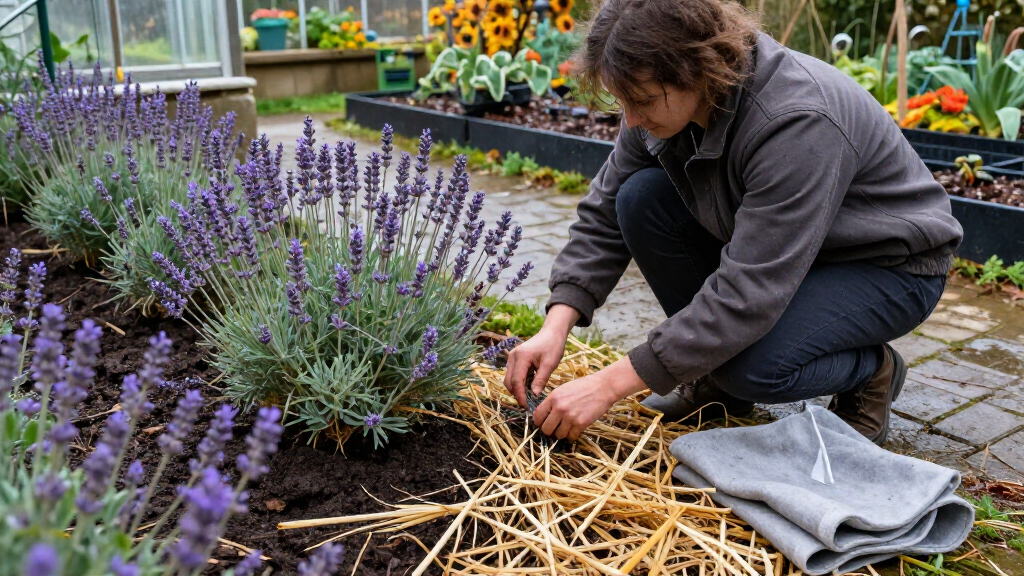
As days shorten, water less often and allow the soil to dry several inches below the surface. The report cautions against leaving plants drought-stressed: a deep watering before a cold snap may help if rain has been scarce. Pull bark or wood-chip mulch away from the crown, and use a free-draining alternative such as pea gravel if the base needs covering. Container plants need separate checks because they dry more quickly and their roots can freeze; raise pots for drainage and move them to a sheltered spot on the coldest nights.
Reducing Winter Root and Wind Damage
The guidance matters because gardeners may focus on low temperatures while overlooking wet soil and exposure. Lavender is adapted to dry, stony Mediterranean conditions, and prolonged winter moisture can leave roots in poorly drained beds vulnerable. Heavy clay and low-lying, soggy sites begin the season at a disadvantage.
Winter wind can also dry the plant’s persistent foliage while frozen ground prevents roots from replacing lost moisture. A windbreak on the exposed side can reduce that stress without wrapping the entire plant. These steps are intended to lower risk, not guarantee survival: drainage, local climate and lavender variety all affect how plants fare.
As an affiliate, we earn on qualifying purchases.
Fall Care Depends on Site and Variety
The report frames winter preparation as an extension of year-round care: lavender does best in full sun and fast-draining soil. Fall work is mainly about avoiding interventions that encourage growth or retain excess moisture as plants slow down.
Pruning advice varies with conditions. The report identifies Spanish and French lavender as less cold-hardy than some other types and says they are usually only deadheaded in fall. Where winter conditions are severe, a breathable cover can be placed over plants after the first hard frost, then removed as spring warms. A burlap screen is another option for exposed sites; keep it several inches from the foliage so air can circulate.
“Soggy roots and soft late growth in cold winds tend to cause the real trouble.”
— Gardening Know How report
As an affiliate, we earn on qualifying purchases.
Local Winter Risks Still Vary
The report does not give a single temperature threshold or one schedule that suits every region. The first hard freeze, rainfall, soil drainage and plant variety vary by location, so the recommended timing may need adjustment. It also does not promise that a windbreak or cover will prevent damage.
Spring appearance can be misleading. Lavender may look gray or untidy early in the season, and the report says browning in March does not by itself prove a plant is dead. Whether a particular plant will recover depends on its condition and local weather; look for new growth near the base before deciding what to remove.
As an affiliate, we earn on qualifying purchases.
Check for Regrowth in Spring
After winter, wait for visible signs of recovery before making major cuts. Once new green growth appears near the base, remove stems that snap rather than bend, as the report advises. Take off any winter cover as spring warms and resume watering according to soil dryness and rainfall.
For the next season, gardeners can review whether water pooled around the plant, whether wind exposure caused browning, and whether fall pruning or feeding occurred too late. Adjusting drainage or siting may help address recurring problems more effectively than adding a heavier cover.
As an affiliate, we earn on qualifying purchases.
Key Questions
When should lavender be pruned before winter?
The report recommends a light trim about four to six weeks before the first hard freeze. Avoid cutting into the woody base; in the coldest regions, consider limiting fall work to deadheading.
Should lavender be fertilized in fall?
No. The report advises stopping fertilizer by early August in most regions, since late feeding can encourage soft growth that is more vulnerable to cold.
Should I stop watering lavender for winter?
No. Water less often as the weather cools and let the soil dry a few inches down, but do not leave plants drought-stressed. A deep watering before a cold snap may be appropriate if there has been little rain.
How can I protect lavender from winter wind?
Planting near a wall or fence can reduce exposure. In an open yard, the report suggests a burlap windbreak on the windward side, set several inches away from the foliage to allow airflow.
Does brown lavender in early spring mean it is dead?
Not necessarily. The report says early spring browning does not always mean the plant has died. Wait for signs of new growth near the base before cutting away stems that snap when bent.
Source: rss
Halloween Picks
halloween
As an affiliate, we earn on qualifying purchases.