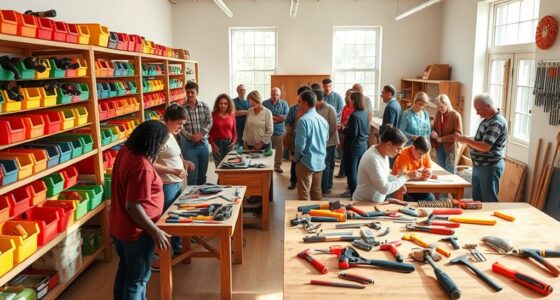
Community sharing economies like tool libraries and swap events help you make better use of resources while reducing waste. You can borrow tools for projects instead of buying rarely-used items, saving money and cutting environmental impact. Swap events let you exchange clothes, books, and household items with neighbors, fostering stronger connections. These initiatives promote sustainability and community resilience. Keep exploring to discover more ways these programs can benefit you and your neighborhood.
Key Takeaways
- Tool libraries provide community access to shared tools, reducing individual purchases and promoting resource conservation.
- Swap events encourage neighbors to exchange clothes, books, and household items, fostering community bonds and sustainable habits.
- Digital platforms facilitate easy reservation, information sharing, and promotion of sharing initiatives and events.
- Sharing economies decrease environmental impact by minimizing manufacturing, waste, and landfill contributions.
- These programs strengthen community resilience and promote eco-friendly living through resource sharing and collective participation.

Have you ever wondered how communities can maximize resources while reducing waste? One effective way is through community sharing economies, like tool libraries and swap events. These initiatives encourage people to lend, borrow, or exchange items rather than buy new ones, helping to cut down on unnecessary consumption and waste. By sharing resources, you not only save money but also lessen the environmental impact associated with manufacturing and disposing of goods. In today’s digital age, easy access to information about these sharing programs is crucial. Digital platforms connect community members, making it simple to locate nearby tool libraries or announce swap events. This digital access fosters greater participation, ensuring more people benefit from shared resources and reducing the number of redundant items ending up in landfills. When more folks engage in sharing, the overall environmental footprint of a community shrinks, creating a more sustainable local ecosystem. Recognizing narcissistic tendencies in community leaders can help ensure these programs are run ethically and inclusively, promoting genuine community well-being.
Tool libraries serve as physical spaces where you can borrow everything from power drills to gardening equipment. Instead of each household purchasing rarely-used tools, you check out what you need for a project, then return it when done. This approach minimizes the production of new tools, conserving raw materials and energy. Plus, these libraries often operate with digital catalogs, allowing you to reserve items online, check availability instantly, and plan your projects more efficiently. This digital access increases convenience and encourages more community members to participate, amplifying the environmental benefits. Swap events, on the other hand, bring neighbors together to exchange clothes, books, toys, or household items. These gatherings create a sense of community while reducing waste. Participants often share stories behind their items, fostering connections and awareness of sustainable practices. By exchanging instead of discarding, you help keep usable items out of landfills, further reducing environmental impact. The success of these events hinges on effective digital communication—social media groups, event apps, and online notices make it easier for everyone to stay informed and participate regularly.
Both tool libraries and swap events exemplify how community sharing economies can leverage digital access to enhance sustainability. They allow you to make better use of existing resources, reduce the demand for new products, and minimize waste. As more people get involved, the collective environmental impact decreases considerably. These initiatives also promote a mindset shift toward valuing shared resources over individual ownership, which is essential for long-term sustainability. By embracing these models, you contribute to a resilient, eco-friendly community where resources are used wisely, waste is minimized, and everyone benefits from a more sustainable way of living.
Top picks for "community shar economy"
Open Amazon search results for this keyword.
As an affiliate, we earn on qualifying purchases.
Frequently Asked Questions
How Do Tool Libraries Sustain Their Funding Long-Term?
You sustain your tool library’s funding long-term by implementing diverse funding strategies, such as grants, memberships, and donations. Engaging your community actively encourages ongoing support, volunteerism, and word-of-mouth promotion. You can also host fundraising events and partner with local businesses or organizations to secure sponsorships. Building strong community relationships guarantees continued interest and investment, making your tool library an essential, sustainable resource for everyone.
What Items Are Most Commonly Exchanged at Swap Events?
At swap events, you’ll most commonly exchange household items, clothing, and tools. These events often feature DIY workshops and community outreach activities that encourage participation. You might trade furniture, books, or toys, fostering sustainable sharing and reducing waste. By engaging in these exchanges, you actively support community building, while DIY workshops provide helpful skills. Your involvement makes swap events vibrant, promoting resourcefulness and strengthening local connections.
How Do Communities Promote Participation in Sharing Economies?
Think of your community as a garden, where participation blooms with care. You can boost engagement by organizing fun events, sharing stories, and highlighting the benefits of sharing. Partner with local businesses and organizations to create a network of support. When everyone feels involved and valued, participation naturally grows. By fostering strong local partnerships and encouraging community involvement, you help your community flourish in sharing economies.
Are There Safety Protocols for Borrowing Tools and Equipment?
Yes, there are safety protocols for borrowing tools and equipment. You should always follow tool safety guidelines, such as inspecting tools before use and wearing appropriate safety gear. Make sure to read and adhere to equipment guidelines provided by the community program. These protocols help prevent accidents and guarantee everyone stays safe. Always ask staff or volunteers if you’re unsure about proper handling or safety procedures for specific tools or equipment.
Can This Model Be Expanded to Digital or Online Sharing Platforms?
Imagine a digital garden where virtual exchanges bloom with every click. You can expand this sharing model online by creating virtual platforms where members swap skills, tools, or digital resources. Digital memberships foster a sense of community, making sharing accessible anytime, anywhere. This online approach turns local sharing into a global network, breaking down barriers and encouraging collaborative growth in a way that’s as seamless as a breeze through the digital trees.
Conclusion
Embracing community sharing economies, like tool libraries and swap events, empowers you to reduce waste and build stronger bonds. As you share resources, you become part of a movement that’s as essential today as the bustling bazaars of ancient times. Remember, in a world that moves faster than a chariot, these exchanges remind us that cooperation and generosity are timeless virtues. So, keep participating, and watch your community flourish like a well-tended medieval village.