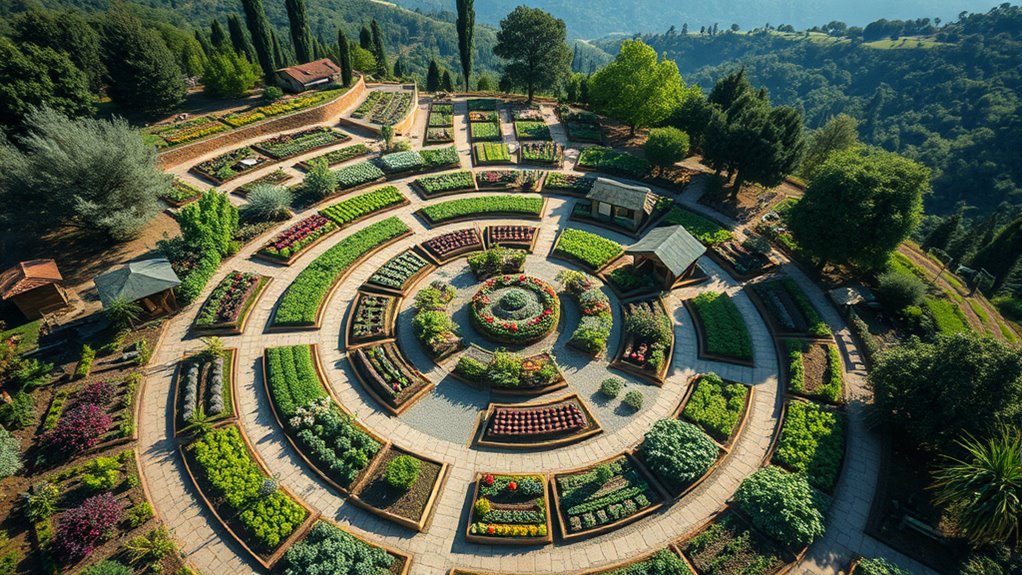

Permaculture principles help you design sustainable ecosystems by using natural patterns and processes. You combine methods like composting and water harvesting to create resilient, productive land that works with nature. By observing your land’s conditions, you can tailor your systems to maximize benefits such as soil health and water efficiency. This integrated approach promotes ecological harmony and long-term resilience—exploring these strategies further will guide you toward building truly sustainable systems.
Key Takeaways
- Emphasize creating ecosystems that mimic natural patterns for resilience and self-sufficiency.
- Integrate composting and water harvesting to recycle resources and enhance soil and water management.
- Design systems that maximize resource efficiency, reducing waste and dependence on external inputs.
- Observe and adapt to local land, climate, and soil conditions for tailored, sustainable solutions.
- Promote closed-loop systems that support biodiversity, soil health, and water conservation for long-term sustainability.

Have you ever wondered how to design sustainable and resilient ecosystems? If so, understanding permaculture principles can guide you in creating systems that work harmoniously with nature. One of the foundational concepts involves effective composting methods. Instead of relying on chemical fertilizers, you can turn organic waste into nutrient-rich compost that feeds your plants naturally. Using composting methods like hot composting or vermicomposting, you break down kitchen scraps, yard waste, and other organic materials into a valuable resource. This not only reduces waste but also improves soil health, making your garden more resilient to droughts and pests. Compost acts as a natural buffer, holding onto moisture and nutrients, which is essential for maintaining plant vitality during dry spells. Additionally, understanding cybersecurity vulnerabilities related to digital tools can help protect your online systems used for managing your permaculture projects.
Alongside composting, water harvesting plays a critical role in designing sustainable ecosystems. You can collect rainwater from rooftops, driveways, or other surfaces and channel it into storage systems like barrels or underground tanks. Water harvesting reduces your dependence on municipal water supplies and helps manage runoff, preventing erosion and waterlogging. By implementing simple techniques such as swales or contour beds, you can direct excess water to where it’s needed most, like plant roots or water-loving trees. These methods ensure your landscape remains hydrated even during periods of low rainfall, boosting the resilience of your ecosystem.
Integrating composting methods with water harvesting creates a synergy that enhances sustainability. For example, placing compost piles near water catchment areas allows you to reuse greywater or excess runoff for compost tea or soil drenches, further enriching your garden’s fertility. This integrated approach minimizes waste, conserves water, and promotes a closed-loop system that mimics natural processes. It’s fundamental to observe your land’s specific conditions and adapt these methods accordingly, ensuring they suit your local climate and soil type.
Frequently Asked Questions
How Can Permaculture Principles Be Applied in Urban Environments?
You can apply permaculture principles in urban environments by focusing on urban greening and rooftop farming. Plant native or edible plants in community gardens, green rooftops, or along sidewalks to create sustainable ecosystems. Use rainwater harvesting and composting to reduce waste and conserve resources. Incorporate diverse plantings to attract beneficial insects and improve soil health, ultimately creating resilient, productive, and environmentally friendly urban spaces.
What Are the Initial Costs of Implementing Permaculture Systems?
You might worry about the initial investment when starting permaculture systems, but the costs vary based on your goals and scale. The initial investment includes planning, soil preparation, plants, and tools, which can be moderate or higher for larger projects. While cost considerations are essential, remember that sustainable systems often save money long-term through reduced inputs and increased resilience, making your effort worthwhile and rewarding.
How Does Permaculture Address Climate Change Resilience?
You can enhance climate change resilience by using permaculture, which prioritizes climate adaptation and resilience planning. By designing your systems to work with natural processes, you create diverse, resilient landscapes that better withstand extreme weather events. Incorporating water harvesting, soil health, and native plants, you reduce vulnerability and improve sustainability. This proactive approach helps your system adapt to changing climate conditions, ensuring long-term productivity and ecological stability.
Can Permaculture Principles Be Integrated Into Existing Agricultural Practices?
You can definitely integrate permaculture principles into existing agriculture. For example, a farm might adopt water harvesting techniques to conserve moisture and implement soil restoration methods like cover cropping. This approach enhances productivity while improving soil health and resilience. By gradually incorporating these practices, you transform conventional farming into a more sustainable system, reducing environmental impact and promoting long-term farm viability.
What Skills Are Necessary to Start a Permaculture Project?
To start a permaculture project, you need to develop skills in soil health and water management. You should learn how to assess and improve soil fertility naturally, using composting and mulching. Additionally, understanding water conservation techniques like rainwater harvesting and efficient irrigation helps create sustainable systems. Building observational skills to understand your site’s unique conditions is essential, enabling you to design resilient, productive landscapes aligned with permaculture principles.
Conclusion
As you embrace permaculture principles, you’re planting seeds of change—like tending a vibrant garden that grows stronger with each mindful act. Think of your efforts as nurturing a tree whose roots reach deep, anchoring sustainability for generations. Every choice you make is a leaf in this living system, symbolizing hope and resilience. By designing with care, you become the gardener of a future where harmony and abundance flourish—your actions shaping a thriving, interconnected world.