
TL;DR

Get garden gear delivered free with Prime
- Fast, free delivery on millions of items
- Prime Video, Amazon Music and more included
- Member-only deals all year
A Gardening Know How report describes seven ways to reuse fallen leaves around the garden, including mulching, making leaf mold and compost, protecting plants, and preparing vegetable beds. The guidance distinguishes useful light leaf cover from thick layers that can smother lawn grass; the source does not provide measured cost savings or trial results.
Gardening Know How has outlined seven ways homeowners can reuse fallen leaves in gardens and lawns, including shredding them for mulch, making leaf mold and adding them to compost. The report says the approach can make use of yard material that might otherwise be discarded, while warning that thick, wet layers left on grass can weaken or smother turf.
The report recommends leaving a light scattering of leaves on the lawn and mowing over it with a mulching mower. Small pieces can fall between grass blades and decompose. When leaves are too deep for the mower to chop effectively, the guide advises removing them from the lawn and using them elsewhere. It says a compacted layer can block light and air, hold moisture and contribute to lawn problems over winter.
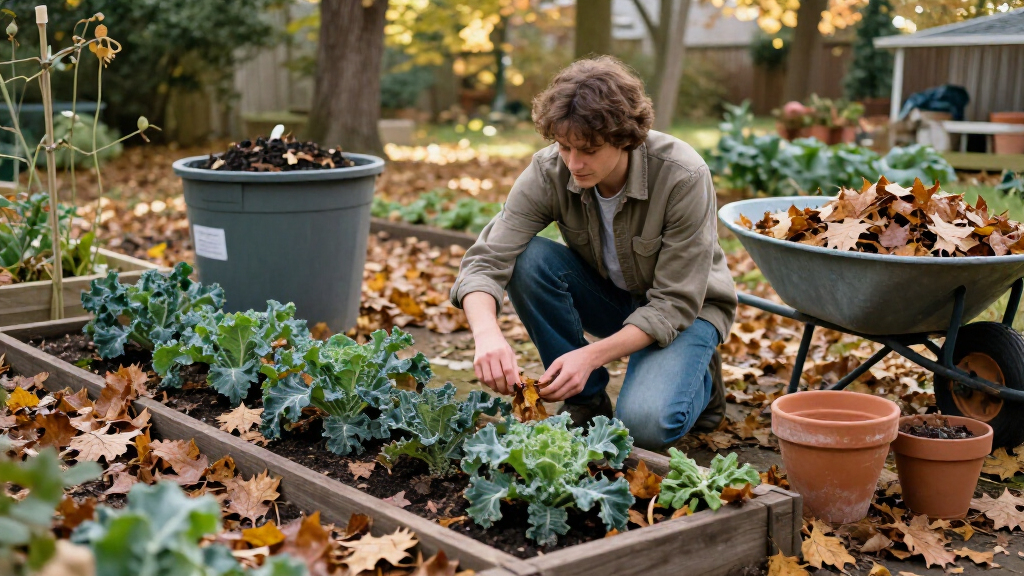
For garden beds, leaves can be shredded and spread as mulch. The article recommends a layer of 2–4 inches around trees, shrubs and perennials, with shredded leaves preferred over whole leaves because they are less likely to mat and can break down faster. Another option is leaf mold: leaves left to decompose into a crumbly soil conditioner. The report estimates shredded leaves may take about six months to break down, while whole leaves may take closer to a year; an unattended pile may take up to two years.
Leaves can also supply the carbon-rich “brown” material in a compost pile, paired with nitrogen-rich “greens” such as grass clippings or kitchen scraps. The guide lists three further uses: insulating tender perennial crowns after temperatures fall well below freezing, adding leaves to cleared vegetable beds, and using them as a stored supply of dry material for future composting. It cautions that oak leaves decompose slowly and black walnut leaves contain juglone, which can harm tomatoes and other sensitive plants.
Keeping Leaves Useful and Lawns Clear
The advice offers gardeners a way to handle seasonal leaf cleanup without automatically bagging everything for disposal. Reusing leaves as mulch, compost or soil conditioner can reduce the need to purchase some garden materials, though the source provides no cost analysis or measured savings. The financial benefit will depend on a household’s garden, leaf supply and what it would otherwise buy.
The lawn guidance also sets a practical limit: leaving some leaves can be compatible with lawn care, but allowing a dense layer to remain through winter may harm the grass. Using leaves in beds or compost can redirect the excess while avoiding a thick mat on turf. For gardeners, the potential benefit is not just less waste but a supply of organic material for soil and plant care.
As an affiliate, we earn on qualifying purchases.
The Difference Between Light and Thick Cover
The report’s central distinction is between scattered leaves and a packed layer. A few leaves can be chopped by mowing, but rain can press a deep covering into a damp mat that restricts light and air. Gardening Know How says such conditions may also favor snow mold in snowy regions and provide cover for voles and mice.
Different leaves need different handling. Oak and magnolia leaves are described as slow to break down and may benefit from shredding or extra time. The article says black walnut leaves contain juglone and advises keeping them away from sensitive plants such as tomatoes or using them only in a hot, well-managed compost pile, where the compound can break down. The source does not provide independent testing of these recommendations.
“Scattered leaves won’t hurt the grass – it’s the thick layer that causes trouble.”
— Gardening Know How
As an affiliate, we earn on qualifying purchases.
Savings and Results Are Not Quantified
The source is a practical gardening article, not a reported comparison of different leaf-management methods. It does not quantify money saved, changes in soil moisture, weed reduction or lawn damage, and it does not give a publication date in the supplied material. Results may vary with leaf type, climate, soil, lawn condition and how the material is prepared.
The supplied source text ends partway through its section on feeding vegetable beds. It identifies that use but does not include the full instructions, so specific details for that method cannot be confirmed from the material provided. The article also does not specify how much juglone remains after composting or provide a timeframe for its breakdown.
As an affiliate, we earn on qualifying purchases.
Choose a Use for Each Leaf Pile
For homeowners applying the guidance, the immediate step is to assess how much leaf cover is on the lawn. Mow a light layer into small pieces; rake or collect thicker accumulations and direct them to beds, a leaf-mold enclosure or a compost pile. Identify tree species where possible, especially before using walnut leaves around sensitive plants.
Further advice would be needed to compare the costs and measured garden results of each method. Until then, the report offers options rather than a guarantee: keep thick leaf mats off turf, prepare leaves according to their intended use, and allow time for slow-decomposing material to break down.
As an affiliate, we earn on qualifying purchases.
Key Questions
Can fallen leaves stay on the lawn?
A light covering can be mowed into the grass, according to Gardening Know How. Thick layers should be removed because they can block light and air and hold moisture against the turf.
What is leaf mold used for?
Leaf mold is decomposed leaf material used as a soil conditioner. The report says it can improve soil structure and water retention, but it is not especially nutrient-rich.
How deep should shredded leaves be spread as mulch?
The article recommends a layer of 2–4 inches around trees, shrubs and perennials, using shredded rather than whole leaves to reduce matting.
Are all kinds of leaves suitable for every garden?
No. The report says oak and magnolia leaves break down slowly, while black walnut leaves contain juglone, which can harm tomatoes and other sensitive plants. Check the tree source and use leaves accordingly.
How long does it take leaves to break down?
Gardening Know How estimates about six months for shredded leaves, closer to a year for whole leaves, and up to two years for an untouched pile. Conditions and leaf type can affect the time.
Source: rss
Evergreen bestsellers Picks
bestsellers
As an affiliate, we earn on qualifying purchases.