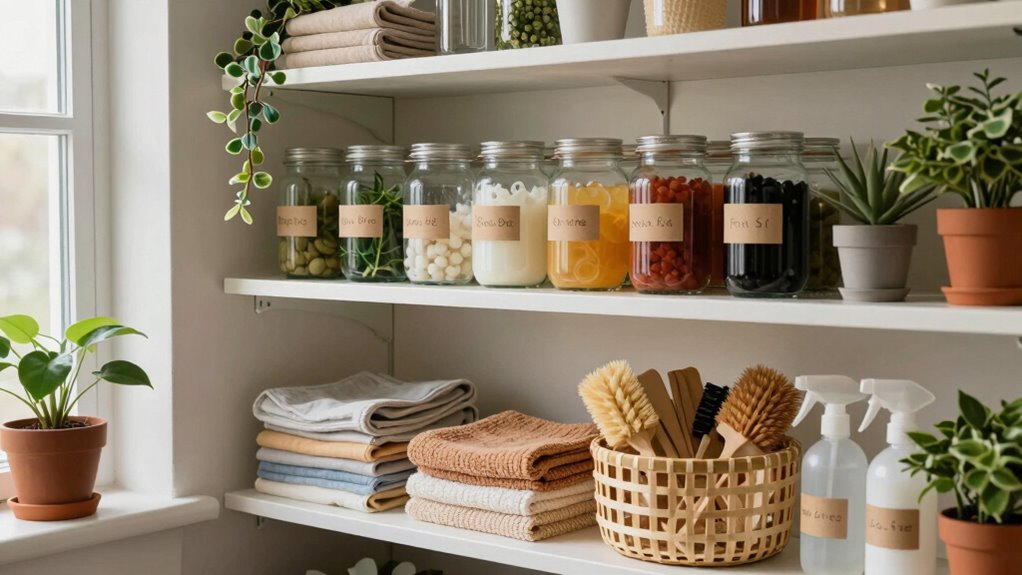

To create a more eco-friendly cleaning closet, start by replacing single-use plastics with reusable glass, bamboo, or recycled containers, and label everything clearly. Opt for natural ingredients like vinegar, baking soda, lemon juice, and castile soap, and consider making homemade solutions to reduce packaging waste. Choose products with minimal or biodegradable packaging, and regularly assess and update your supplies with greener options. Keep your closet organized to make eco-friendly choices easy—exploring these tips further will help you make a lasting impact.

Get garden gear delivered free with Prime
- Fast, free delivery on millions of items
- Prime Video, Amazon Music and more included
- Member-only deals all year
Key Takeaways
- Use sustainable containers like glass, bamboo, or recycled plastics for storage and clearly label all supplies.
- Incorporate natural ingredients such as vinegar, baking soda, lemon juice, and castile soap in cleaning routines.
- Opt for eco-friendly products with minimal, biodegradable, or refillable packaging.
- Regularly evaluate and replace cleaning supplies with more sustainable, high-quality options to reduce waste.
- Keep supplies organized to promote efficient, mindful use and minimize unnecessary consumption.
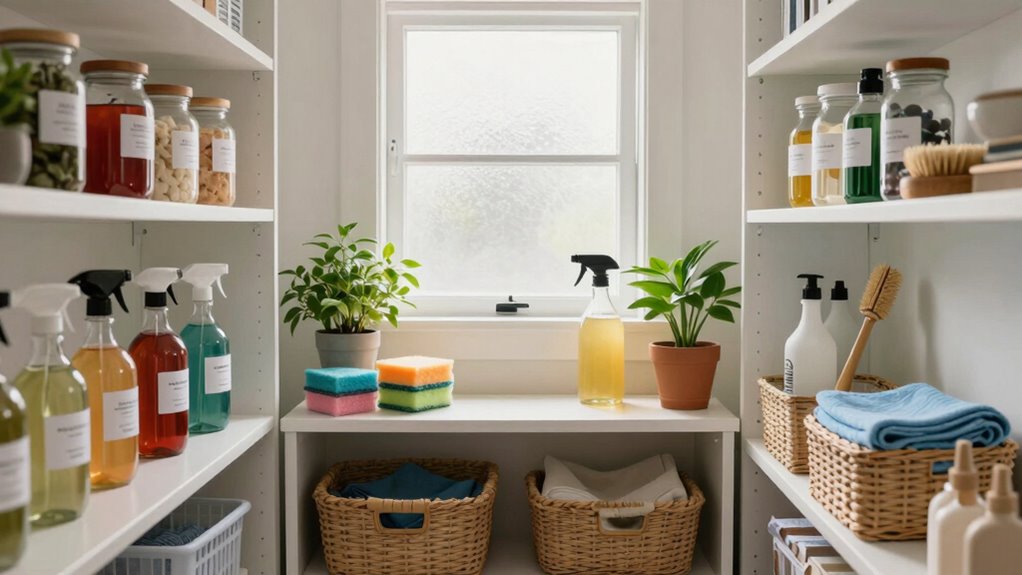
Creating an eco-friendly cleaning closet is a simple yet impactful way to reduce your environmental footprint and promote healthier living spaces. The first step is to focus on sustainable storage that minimizes waste and encourages organization. Choose containers made from glass, bamboo, or recycled plastics, which are durable and easier to reuse or recycle. Avoid single-use plastic bottles and opt for refillable spray bottles and storage jars. Label everything clearly to keep your cleaning supplies organized, so you use only what’s necessary and avoid unnecessary waste. Efficient storage isn’t just about aesthetics; it’s about reducing clutter and making eco-conscious choices accessible and convenient.
Next, prioritize natural ingredients in your cleaning routines. Conventional cleaners often contain harsh chemicals that can pollute your home and the environment. Instead, opt for ingredients like vinegar, baking soda, lemon juice, and castile soap. These natural ingredients are effective, affordable, and safe for your family and pets. For instance, vinegar acts as a powerful disinfectant and de-greaser, while baking soda works wonders on odors and scrubbing surfaces. Using natural ingredients minimizes exposure to toxic chemicals and reduces the amount of plastic waste associated with store-bought cleaners. Plus, these ingredients have a long shelf life, so you can make your own cleaning solutions in bulk, further reducing packaging waste. Incorporating color accuracy in the selection of natural cleaning tools and supplies can ensure you see the true effectiveness of your eco-friendly efforts. Additionally, choosing eco-friendly cleaning methods can help support sustainable practices in your home.
Incorporating eco-friendly cleaning supplies also means choosing products with minimal or biodegradable packaging. Look for brands that prioritize sustainable packaging, such as refillable bottles or boxes made from recycled materials. When possible, make your own cleaning solutions at home, which gives you control over the ingredients and packaging. This not only cuts down on waste but also ensures you’re using safe, natural ingredients. Keep your homemade solutions in clearly labeled containers, stored neatly in your sustainable storage system. Implementing waste reduction strategies can further enhance your efforts and minimize your ecological footprint. This makes it easier to access the supplies you need, encourages regular cleaning routines, and reduces reliance on harmful commercial products. Regularly updating your supplies with eco-friendly alternatives contributes to reducing environmental impact.
Finally, maintain your eco-friendly cleaning closet by regularly evaluating your supplies and replacing items with more sustainable alternatives. Be mindful of your consumption patterns, and always opt for quality over quantity. With intentional organization and a focus on natural ingredients, you create a cleaning closet that’s both environmentally responsible and highly functional. This small change can considerably reduce your ecological impact while providing a healthier environment for you and your loved ones.
As an affiliate, we earn on qualifying purchases.
Frequently Asked Questions
Are DIY Cleaning Solutions Safer Than Store-Bought Products?
DIY cleaning solutions are generally safer than store-bought products because you control the ingredients, enhancing chemical safety. You avoid harsh chemicals often found in commercial cleaners, reducing health risks. Plus, DIY recipes promote ingredient transparency, so you know exactly what’s in your cleaning solutions. This way, you can create effective, eco-friendly cleaners tailored to your needs, ensuring a safer environment for your family and the planet.
How Often Should I Clean and Organize My Eco-Friendly Closet?
You should aim to refresh your cleaning routines and organization schedules every three to six months, allowing your eco-friendly closet to stay in harmony. Regular upkeep keeps supplies current, minimizes clutter, and guarantees your environment remains healthy. As life evolves, so should your system—consider seasonal reviews. This gentle rhythm helps maintain an inviting, efficient space that supports your sustainability goals without overwhelming you.
What Are the Best Storage Options for Eco-Friendly Cleaning Supplies?
You should use reusable containers and natural shelving as the best storage options for eco-friendly cleaning supplies. Reusable containers keep your supplies organized and reduce waste, while natural shelving made from bamboo or reclaimed wood adds an eco-conscious touch. These choices not only promote sustainability but also make your cleaning closet more functional and visually appealing. By choosing these options, you create a greener, more organized space that aligns with eco-friendly practices.
Can I Use Essential Oils in All My Homemade Cleaners?
You can use essential oils in most homemade cleaners, but you should check for fragrance alternatives and oil compatibility. Some oils may damage certain surfaces or react with ingredients like vinegar or baking soda. Always test a small amount first, and choose oils like tea tree, lemon, or lavender, which are safe and eco-friendly. This way, you add natural scent without compromising your cleaning effectiveness or surface safety.
How Do I Dispose of Leftover or Expired Eco-Friendly Cleaning Products?
Remember, “a stitch in time saves nine.” When disposing of leftover or expired eco-friendly cleaning products, don’t just toss them in the trash. Instead, check local chemical disposal guidelines to reduce environmental impact. Many products can be taken to hazardous waste facilities, ensuring safe chemical disposal. This helps prevent contamination of water sources and protects wildlife, making sure your eco efforts truly benefit the planet.
As an affiliate, we earn on qualifying purchases.
Conclusion
By switching to eco-friendly cleaning supplies, you not only reduce harmful chemicals in your home but also contribute to a healthier planet. Did you know that traditional cleaning products can release volatile organic compounds (VOCs) that contribute to indoor air pollution? Embracing sustainable options can cut these emissions considerably. So, take the step today—your eco-friendly cleaning closet makes a difference, and every small change helps protect the environment for future generations.
biodegradable storage containers
As an affiliate, we earn on qualifying purchases.
As an affiliate, we earn on qualifying purchases.
natural cleaning ingredients set
As an affiliate, we earn on qualifying purchases.
As an affiliate, we earn on qualifying purchases.
Fall Picks
fall essentials
As an affiliate, we earn on qualifying purchases.