
TL;DR

Get garden gear delivered free with Prime
- Fast, free delivery on millions of items
- Prime Video, Amazon Music and more included
- Member-only deals all year
Gardening Know How recommends three October steps for coneflowers: leave healthy seedheads for birds, remove heavily diseased foliage and check that roots have suitable soil conditions for winter. The report advises delaying the main cutback until spring, while noting that some cultivars produce less seed than others.
Gardening Know How’s October guidance for coneflowers recommends leaving healthy seedheads standing, removing badly diseased foliage and protecting the root zone rather than cutting the entire plant back for winter. The advice matters to gardeners who want to prepare these perennials for cold weather while preserving seed for birds such as American goldfinches.
The report says coneflower seedheads can provide a food source through fall and winter after the petals fade. It advises against deadheading every spent bloom for tidiness, since dried cones contain seeds that birds can forage. American goldfinches are described as particularly fond of coneflower seeds, though which birds visit will depend on region and the plants growing in a garden. Seedheads can also add structure to a winter border.
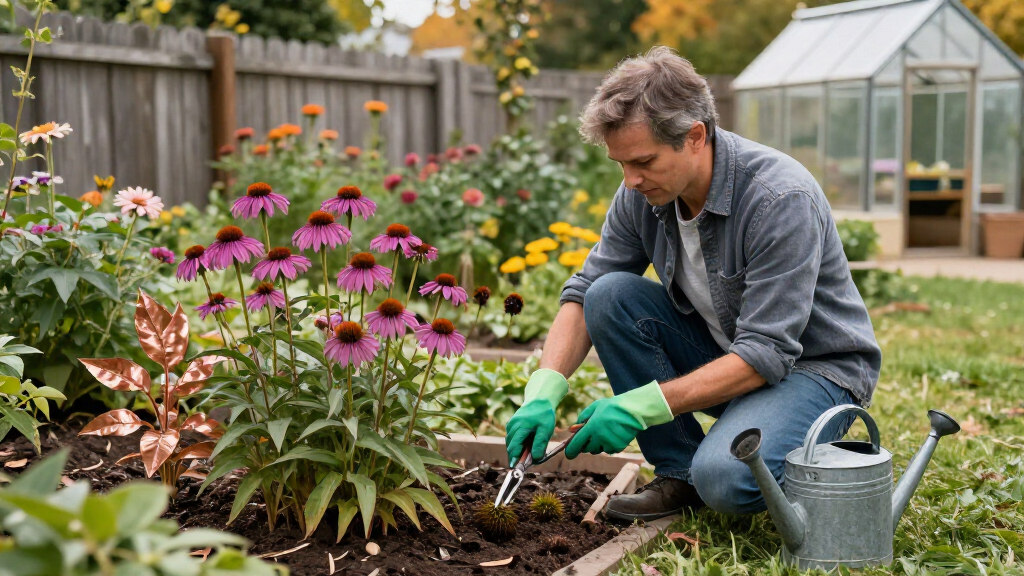
Gardeners are advised to inspect plants for disease, especially powdery mildew, which can appear as a pale, powdery coating on leaves and stems. The report recommends removing badly affected material with clean pruning tools and disposing of it appropriately rather than putting it in a home compost pile. It distinguishes this targeted cleanup from a full cutback: healthy stems and seedheads can remain standing.
For winter preparation, the report recommends checking that water drains away from the plants and does not pool around their crowns. Watering may be useful if the ground is dry before it freezes, and a light mulch can moderate soil temperatures. Mulch should not be piled directly over the crown. The main cleanup, including cutting back old stems, can wait until spring, when new growth begins.
Keeping Seedheads for Winter Birds
The October choices affect more than the appearance of a garden. Leaving seedheads can retain a natural food source for birds when flowers have finished blooming, while standing stems contribute texture through winter. Removing every spent flower in a fall tidy-up would remove that potential food before birds can use it.
At the same time, leaving plants standing does not mean ignoring problems. Removing badly diseased foliage can reduce infected debris around a plant, while keeping healthy growth avoids an unnecessary wholesale cutback. The guidance offers a selective approach: preserve what can serve wildlife, and remove material showing serious disease.
The report also cautions that seed availability differs among coneflower varieties. Some highly bred double-flowered cultivars may produce less viable seed than simpler, single-flowered forms. Gardeners prioritizing bird food may want to consider native purple coneflower and other varieties known to produce seed, though the report does not quantify how much seed different cultivars provide.
bypass pruning shears for removing diseased coneflower foliage
As an affiliate, we earn on qualifying purchases.
As an affiliate, we earn on qualifying purchases.
A Light Fall Routine for Echinacea
Coneflowers, plants in the Echinacea genus, are perennial flowers known for summer blooms. The Gardening Know How report presents them as plants that generally need little complicated fall care. Its October recommendations focus on a few practical checks rather than a fixed, extensive winter-protection routine.
The central distinction is between healthy and diseased plant material. Healthy stems and dried cones can stay in place through winter, but foliage heavily affected by fungal problems should be removed. The report identifies humid conditions and poor air circulation as factors associated with more noticeable powdery mildew late in the growing season; it does not suggest that every discolored or tired leaf requires cutting down the plant.
Established coneflowers are described as hardy perennials that generally do not need extensive protection. The report’s soil advice is conditional: check drainage, water if conditions have been unusually dry before the ground freezes, and apply mulch lightly if desired. It recommends waiting until spring growth appears before completing the main cutback.
“Leave the healthy seedheads standing.”
— Gardening Know How report
garden mulch for protecting perennial roots in winter
As an affiliate, we earn on qualifying purchases.
As an affiliate, we earn on qualifying purchases.
Seed Supply Varies by Cultivar
The report does not quantify how much seed individual coneflower varieties produce or how many birds a planting may support. It says some double-flowered cultivars may offer less viable seed than simpler forms, but gardeners should not assume every plant of a given type provides the same amount of food.
Local conditions also matter. The guidance does not specify a single watering or mulch amount for every climate, soil type or plant age. It recommends checking whether soil is dry and drains well, rather than applying the same winter treatment everywhere. The report also does not identify a particular disposal method for diseased material beyond advising against adding it to a home compost pile.
native purple coneflower seeds for birds
As an affiliate, we earn on qualifying purchases.
As an affiliate, we earn on qualifying purchases.
Leave the Main Cutback Until Spring
For now, gardeners can inspect coneflowers, remove heavily diseased foliage with clean tools, and leave healthy seedheads in place. Before the ground freezes, they can check soil moisture and drainage, watering only if conditions are dry and applying a light mulch without covering the crown.
The next major maintenance step is expected in spring, after the weather warms and new growth begins. At that point, old stems can be cut back if they are in the way. Until then, the report’s guidance is to keep useful healthy growth standing for birds and winter interest.
garden tool disinfectant for pruning shears
As an affiliate, we earn on qualifying purchases.
As an affiliate, we earn on qualifying purchases.
Key Questions
Should coneflowers be cut back in October?
The Gardening Know How report recommends leaving healthy stems and seedheads through winter and delaying the main cutback until spring, when new growth begins.
Which parts of coneflowers should be removed before winter?
Remove foliage that is badly affected by disease, such as severe powdery mildew, using clean pruning tools. The report advises disposing of that material appropriately rather than adding it to a home compost pile.
Do coneflower seedheads feed birds?
The report says dried seedheads can provide seeds for birds in fall and winter, and identifies American goldfinches as especially fond of them. Visits depend on the region and the plants available.
Should coneflowers be mulched in October?
A light layer of mulch may help moderate soil temperatures, according to the report. Keep it away from the plant crown, and check that water drains rather than pooling around the roots.
Do all coneflower varieties provide the same amount of seed?
No. The report says some highly bred double-flowered varieties may produce less viable seed than simpler, single-flowered forms. It suggests considering native purple coneflower or other varieties known to produce seed if supporting birds is a priority.
Source: rss
Fall Picks
fall essentials
As an affiliate, we earn on qualifying purchases.