TL;DR

Get garden gear delivered free with Prime
- Fast, free delivery on millions of items
- Prime Video, Amazon Music and more included
- Member-only deals all year
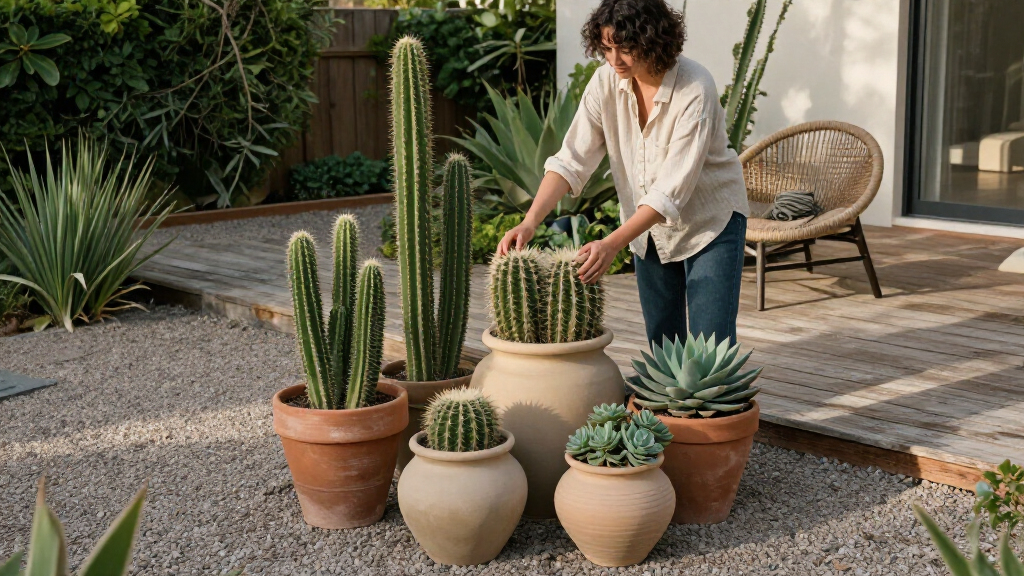
A Gardening Know How report uses the cactus garden visible from Mandy Moore’s former Pasadena home to explain how to create a similar sculptural look. Experts say some cacti, including eastern prickly pear, can grow in colder regions, but success depends on matching varieties to local conditions and providing good drainage.
A Gardening Know How report says gardeners do not need to live in a hot desert climate to create a landscape centered on sculptural cacti, pointing to the garden visible through the windows of Mandy Moore’s former Pasadena home as inspiration. Landscape and property experts cited in the report recommend choosing species for local hardiness and drainage rather than copying a Southern California planting exactly.
The report describes large cacti outside Moore’s living room windows as a strong visual feature, then draws on advice from Marta Pawlik, co-founder and director of property management company Laik, and Noé Lerma, a landscape architect at GreenMex. Their guidance focuses on selecting plants suited to the scale of a garden and giving individual specimens room to stand out.
Pawlik suggests golden barrel cacti for smaller gardens and says they can tolerate temperatures around 20°F (-6°C). For colder places, she points to Opuntia humifusa, or eastern prickly pear, which the report says can tolerate conditions down to USDA zone 4. Lerma names organ pipe, barrel and Pachycereus cacti as options for a stronger visual effect. The report says Moore’s plants may be Euphorbia ammak, a species suited to USDA zones 9b through 11b; the identification is presented as a likelihood, not a confirmed identification.
Both experts caution against crowding large cacti together. Lerma recommends using a cactus as the main focal point, with a limited number of companions such as fountain grass or desert rose. The report also suggests crushed stone as a ground cover, saying it can support drainage and contribute to a desert-inspired appearance. Plant choice and arrangement are not the only considerations: the report stresses that garden size, climate and drainage affect whether a specimen will thrive.
Cold-Hardy Choices Expand the Look
The advice matters to gardeners who like the architectural shape of cacti but assume the plants are only practical in warm regions. The report names eastern prickly pear as a cold-tolerant option, showing that a cactus-led design can be adapted rather than simply replicated from a Southern California property.
That distinction is important: cold tolerance varies by species, and the source does not suggest that every cactus can withstand winter outside a warm climate. A plant’s stated hardiness is one part of the decision; local growing conditions and drainage also matter. A dramatic specimen can be a lasting garden feature, but choosing one unsuited to the site risks poor growth or loss over winter.
The design advice also offers a practical alternative to densely planted borders. As the experts describe it, one well-placed cactus, a small number of softer companions and a restrained ground cover can create a clear focal point. For homeowners, the result may be a distinctive view from indoors as well as an outdoor planting, though the article does not quantify maintenance needs across species or climates.
cold hardy eastern prickly pear cactus live plant USDA zone 4
As an affiliate, we earn on qualifying purchases.
As an affiliate, we earn on qualifying purchases.
From Pasadena Windows to Garden Advice
The report begins with the landscape at Moore’s former Pasadena home, where large cacti were visible through floor-to-ceiling windows. It uses that view to discuss how plants can function as visual architecture, not just seasonal color. The article does not establish which exact cactus species appear at the property; it says Euphorbia ammak is a likely match.
Its advice is attributed to two professionals with different experience: Pawlik discusses cacti used at premium properties, while Lerma offers landscape-design guidance. The article frames their recommendations as ways to adapt the look to different garden sizes and climates. It does not provide a site-specific planting plan, local climate assessment or independent growing trial.
For colder regions, the report advises starting with a preferred desert-garden style and then finding species with a similar appearance that can handle local conditions. This is more reliable than selecting a plant based only on its resemblance to the Pasadena example. The report’s zone references are general guidance, not a guarantee of performance in every garden.
“Cacti serve as great focal points because they fill up the space they occupy without any effort. While most plants ask you to wait for blooms, growth, and seasons, cacti have presence from day one.”
— Marta Pawlik, co-founder and director of Laik
golden barrel cactus live plant cold hardy
As an affiliate, we earn on qualifying purchases.
As an affiliate, we earn on qualifying purchases.
Species and Site Conditions Still Matter
The report does not confirm the species planted at Moore’s former home, and it gives no direct statement from Moore about the garden. The proposed identification of Euphorbia ammak is explicitly tentative. It is also unclear from the source when the home was listed or whether the garden has changed since then.
The article provides hardiness references for selected plants but not detailed growing instructions for each region. It does not specify soil measurements, watering schedules, exposure requirements or how local winter conditions might affect a particular planting. Its description of properties operating with statement cacti without maintenance is Pawlik’s account, not a general guarantee. Gardeners should check species-specific needs and local conditions before planting.
crushed stone garden ground cover for cactus drainage
As an affiliate, we earn on qualifying purchases.
As an affiliate, we earn on qualifying purchases.
Match Plants to Local Conditions
The next step for a gardener interested in the look is to identify the site’s climate and garden scale, then compare suitable species rather than choosing by appearance alone. The report’s examples include golden barrel cacti for smaller spaces and cold-hardy Opuntia humifusa for colder zones, while columnar species offer a taller, more architectural shape where conditions permit.
Before planting, readers can check the plant’s hardiness range and drainage needs with a local nursery or horticultural service. The report offers no announcement of a follow-up or new development; its practical takeaway is to plan around the actual site and leave statement plants enough room to read clearly in the landscape.
ornamental fountain grass live plants for cactus garden
As an affiliate, we earn on qualifying purchases.
As an affiliate, we earn on qualifying purchases.
Key Questions
Can cacti grow outdoors in cold climates?
Some can. The report identifies Opuntia humifusa, or eastern prickly pear, as a cold-hardy example that can tolerate conditions down to USDA zone 4. Hardiness varies by species, and drainage and local conditions also matter.
Which cactus might be growing at Mandy Moore’s former home?
The Gardening Know How report says it may be Euphorbia ammak, typically suited to USDA zones 9b through 11b. The article does not confirm the identification.
How should statement cacti be arranged?
The experts advise against crowding large cacti together. The report recommends letting one cactus serve as the focal point, with a small number of companion plants and, if suitable, a textured ground cover.
Does a cold-hardy cactus need good drainage?
Yes, drainage is part of the report’s advice. Pawlik says hardy Opuntias can withstand harsh winters when drainage is properly installed and maintained; readers should also check the selected species’ specific growing requirements.
Source: rss
Fall yard work Picks
leaf blowers
As an affiliate, we earn on qualifying purchases.