
Switching to more plant-forward meals is easy and rewarding. Start by replacing traditional proteins with beans, lentils, or tofu to boost nutrients and flavor. Experiment with grilling, roasting, or sautéing vegetables to deepen taste, and use herbs and spices to enhance flavor. Focus on seasonal, sustainable ingredients to support eco-friendly choices. As you explore new techniques and ingredients, you’ll discover delicious ways to make meals healthier and more planet-friendly—there’s plenty more to explore beyond this!
Key Takeaways
- Start replacing traditional proteins with beans, lentils, or tofu to easily incorporate plant-based ingredients.
- Experiment with cooking methods like roasting, grilling, and sautéing to develop rich flavors in vegetables.
- Use herbs, spices, and seasonings to enhance natural flavors and create diverse, satisfying plant-forward dishes.
- Focus on seasonal produce for freshness, flavor, and nutritional benefits.
- Source ingredients responsibly from sustainable farms to support eco-friendly practices and responsible eating.
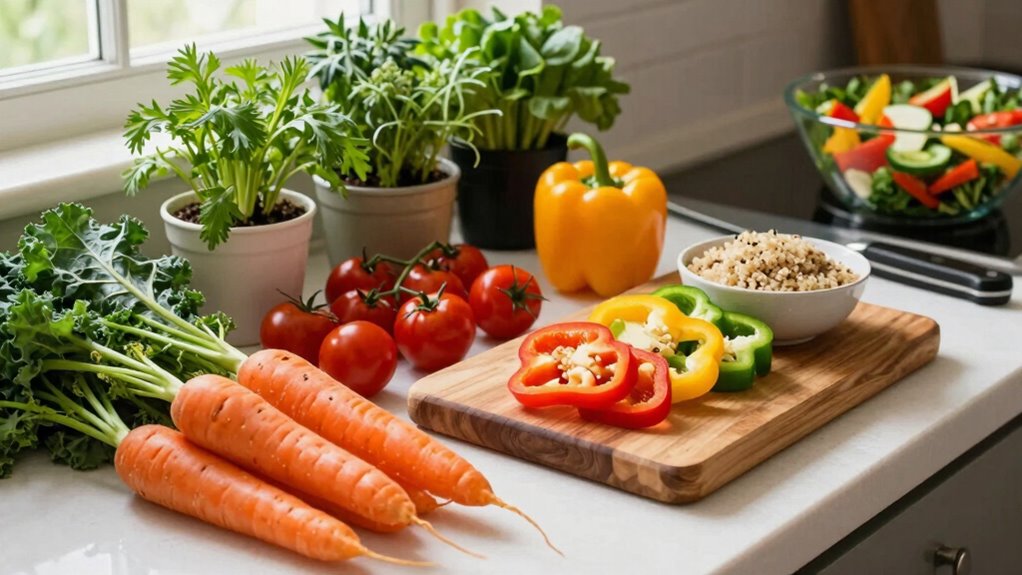
Switching to more plant-forward meals is a simple way to boost your health and reduce your environmental impact. By shifting your focus to vegetables, legumes, grains, and fruits, you not only support sustainable sourcing but also enjoy a diverse range of flavors and textures. Making this change doesn’t mean you have to sacrifice taste; in fact, it opens up exciting opportunities to enhance flavor in your dishes. When you choose ingredients that are sustainably sourced, you’re supporting agricultural practices that protect ecosystems and reduce carbon footprints. This mindful approach to sourcing means your meals are not just nourishing for you but also better for the planet.
Choosing plant-based meals supports health, sustainability, and diverse flavors while protecting ecosystems and reducing your carbon footprint.
To start, think about how you can incorporate more plant-based ingredients into your everyday meals. You might replace some of your usual proteins with beans, lentils, or tofu. These ingredients are versatile, affordable, and packed with nutrients. When cooking, focus on flavor enhancement—using herbs, spices, and seasonings to bring out the natural goodness of plant foods. Roasting vegetables with garlic and a splash of olive oil can deepen their flavor, making them more satisfying. Similarly, adding a squeeze of lemon or a splash of balsamic vinegar can brighten up dishes and make them more appealing. These small tweaks transform simple ingredients into something flavorful and exciting.
Another way to make your plant-forward meals more appealing is to experiment with different cooking techniques. Grilling, sautéing, and roasting can add smoky, caramelized notes that elevate the taste profile of vegetables. You might also try blending ingredients into smoothies or hearty soups, which are excellent ways to incorporate a variety of plant foods without feeling overwhelmed. Incorporating sustainable sourcing as a core principle can help you make more mindful choices and improve the overall quality of your meals. Additionally, understanding nutritional benefits can motivate you to include a broader spectrum of plant ingredients in your diet. Exploring printmaking paper choices and the various textures and weights available can inspire you to approach plant-based cooking with more creativity and confidence. Taking the time to learn about seasonal produce can further enhance your meals by allowing you to enjoy ingredients at their peak flavor and freshness. As you become more comfortable, you’ll discover that plant-based dishes can be just as rich and satisfying as traditional meat-based meals. Plus, with more sustainable sourcing, you’re supporting farmers and suppliers committed to environmentally friendly practices, which benefits the broader community. Embracing digital content and research can further inspire your culinary journey and understanding of sustainable eating. Ultimately, creating more plant-forward meals is about embracing variety and flavor. Use herbs, spices, and cooking methods to enhance the natural taste of your ingredients. Focus on sourcing your ingredients responsibly to guarantee they are sustainable, and you’ll find that eating healthily and reducing your environmental impact go hand in hand. It’s a rewarding shift that not only improves your well-being but also contributes to a healthier planet. As you continue experimenting, you’ll likely discover new favorites that make your meals both delicious and planet-friendly.
As an affiliate, we earn on qualifying purchases.
Frequently Asked Questions
How Can I Ensure Balanced Nutrition in Plant-Forward Meals?
To guarantee balanced nutrition in plant-forward meals, focus on nutrient diversity by including a variety of vegetables, legumes, grains, and nuts. You should also practice meal planning to balance macronutrients and incorporate essential vitamins and minerals. Think about combining protein-rich foods like beans or tofu with whole grains and colorful produce. This approach helps you get the nutrients your body needs while keeping meals delicious and satisfying.
What Are Quick Plant-Based Meal Prep Ideas?
If you think plant-based meal prep takes too long, think again—quick snack ideas and meal prep hacks save time. You can batch cook grains, chop veggies ahead, and prepare versatile dips or salads that last several days. Use frozen fruits and pre-washed greens to speed up prep. These hacks help you assemble nutritious, plant-forward meals fast, making healthy eating easier and more sustainable without sacrificing time.
How Do I Make Plant-Based Meals More Filling?
To make plant-based meals more filling, incorporate meat substitutes like tofu, tempeh, or seitan for added protein and texture. Boost satiety with fiber-rich ingredients such as beans, lentils, and whole grains. Enhance flavor with spices, herbs, and savory seasonings to keep your meals satisfying and enjoyable. Combining these elements guarantees your dish is hearty, flavorful, and keeps you full longer.
Are There Affordable Plant-Based Protein Sources?
Yes, you can find affordable plant-based protein sources like legumes and budget-friendly tofu. Legumes such as lentils, chickpeas, and beans are inexpensive, versatile, and rich in protein. Tofu is also budget-friendly, especially when bought in bulk or store brands. Incorporate these into your meals to boost protein content without breaking the bank. They’re nutritious, easy to prepare, and perfect for filling, plant-based dishes.
How Can I Introduce Kids to Plant-Forward Eating?
You can introduce kids to plant-forward eating by involving them in meal prep, making it fun and interactive. Focus on kids’ taste development by offering colorful, familiar dishes with a twist—like veggie-packed tacos or fruit smoothies. Use family meal strategies like setting a positive example and gradually adding more plant-based ingredients. Over time, children will develop a taste for these healthier options, making plant-forward eating enjoyable and routine.
As an affiliate, we earn on qualifying purchases.
Conclusion
By embracing plant-forward meals, you’re opening the door to vibrant flavors and nourishing your body. Remember, Rome wasn’t built in a day—so take it step by step and enjoy the journey. Every small change adds up to a healthier, more sustainable lifestyle. As you plant seeds of new habits, watch your confidence grow and your kitchen flourish. Keep at it, and soon you’ll find these delicious, wholesome meals become second nature—just like tending to a beautiful garden.
As an affiliate, we earn on qualifying purchases.
sustainable sourcing kitchen tools
As an affiliate, we earn on qualifying purchases.
As an affiliate, we earn on qualifying purchases.