Creating stunning mosaic designs with tiles involves choosing the right materials, such as glass, ceramic, or stone, and considering color harmony to evoke the desired mood. Use contrasting or analogous colors to add vibrancy or harmony, and select tile sizes suited for your pattern’s detail. Combining textures and finishes enhances visual interest, while patience and creativity are essential for success. Keep exploring to discover tips that can elevate your mosaic art projects even further.
Key Takeaways
- Understand color theory to select harmonious or contrasting tiles that enhance your mosaic’s visual impact.
- Choose tile materials, sizes, and finishes suited to your design complexity and desired texture.
- Plan your layout carefully, considering pattern, color placement, and surface to achieve a cohesive look.
- Use proper adhesive and grouting techniques to ensure durability and a polished appearance.
- Incorporate creativity and patience throughout the process to craft unique, eye-catching mosaic art pieces.
Have you ever wondered how to transform everyday materials into stunning pieces of art? One of the most accessible and rewarding ways is through mosaic art projects. Whether you’re decorating a tabletop, creating a wall mural, or designing a personalized gift, mosaics allow you to turn simple tiles into vibrant, eye-catching designs. To get started, understanding color theory and tile selection is vital. These elements set the foundation for a cohesive and visually appealing piece that reflects your style.
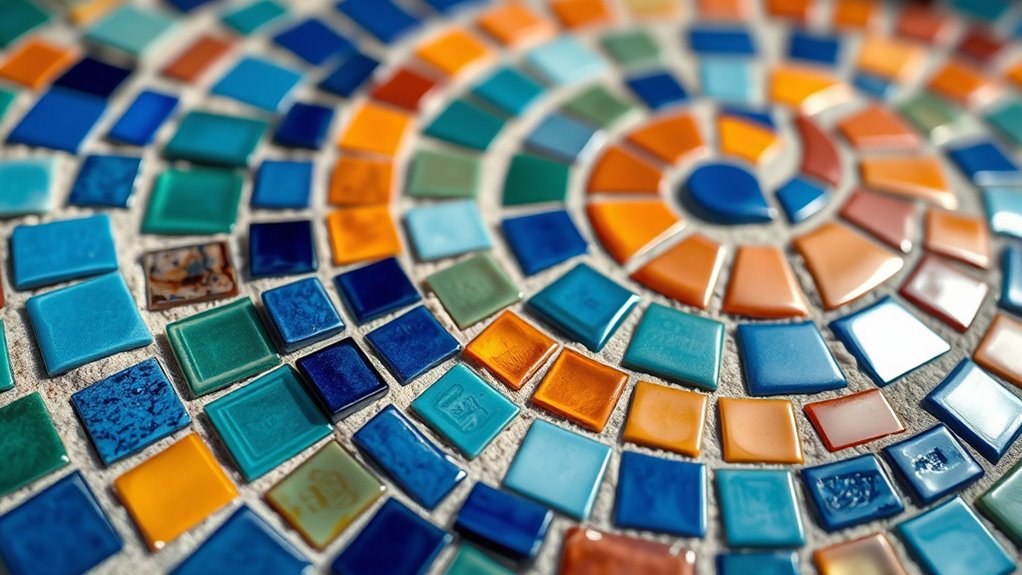
When you consider color theory, you learn how colors interact and influence one another. Bright, contrasting colors can make your mosaic pop, while harmonious, analogous shades create a calming effect. Think about the mood you want to evoke—energetic and lively or serene and subtle—and choose your color palette accordingly. Incorporating color theory helps you balance your design, making certain it doesn’t feel chaotic or dull. For example, using complementary colors like blue and orange can create a striking contrast, drawing attention to specific areas of your design. Conversely, selecting analogous colors like green, teal, and blue can produce a smooth, unified look. Your understanding of color relationships guides your tile selection, making your project more intentional and visually engaging.
Tile selection is just as vital as choosing colors. Look for tiles that suit your project’s scale and style. Small, intricate tiles work well for detailed patterns, while larger tiles are perfect for bold, simple designs. Materials vary—from ceramic and glass to stone—each offering different textures, finishes, and durability. When selecting tiles, consider the surface you’ll be working on and how the tiles will adhere. Smooth, flat tiles are easier to work with, especially if you’re a beginner, but textured tiles can add depth and interest when used thoughtfully. It’s also wise to select tiles with similar thicknesses to guarantee your mosaic remains even and stable. Don’t forget to think about the color and finish—matte vs. glossy—as this impacts the overall look and feel of your final piece.
Additionally, paying attention to natural materials like stone and glass can elevate the authenticity and aesthetic appeal of your mosaic. As you gather your materials, keep in mind that tile selection isn’t just about aesthetics; it’s about functionality and harmony. Mix and match colors and textures purposefully, balancing bold and subdued elements. When you combine your knowledge of color theory with thoughtful tile choices, your mosaic art becomes more than just a collection of pieces—it becomes a cohesive work of art that reflects your vision. With patience and creativity, you’ll soon see how transforming simple tiles into a stunning mosaic is both an art and a rewarding craft.
Frequently Asked Questions
What Are the Best Tools for Cutting Mosaic Tiles?
You should use tile saws and nippers to cut mosaic tiles effectively. Tile saws provide precise, straight cuts, perfect for larger or more complex pieces, while nippers help you shape smaller or irregular tiles with control. Keep your tools sharp and use safety gear like goggles. With these tools, you can achieve clean, accurate cuts, making your mosaic project look professional and polished.
How Long Does a Typical Mosaic Project Take?
A typical mosaic project takes anywhere from a few days to several weeks, depending on your project planning and material selection. If you organize your design and gather all materials beforehand, you’ll work more efficiently. Smaller, simpler designs may take just a few days, while larger or more intricate pieces can stretch out over weeks. Staying organized and clear about your vision helps make certain of timely completion.
Can Mosaic Art Be Created Outdoors?
Yes, you can create outdoor mosaic art. To guarantee mosaic durability outdoors, use weather-resistant tiles like glass or porcelain. Apply outdoor mosaic techniques such as sealing grout and using waterproof adhesives to protect your design from moisture and temperature changes. Properly prepared surfaces and finishes help your mosaic withstand the elements, keeping it vibrant and intact over time. With the right materials and techniques, your outdoor mosaic will remain stunning and durable.
What Are Common Mistakes to Avoid in Mosaic Projects?
A stitch in time saves nine, so avoid common mistakes like poor color selection and sloppy grout application. You might rush choosing colors, which can clash or look dull—test combinations first. Also, don’t skimp on grout or apply it unevenly; this can weaken your design and cause tiles to loosen. Take your time, plan carefully, and guarantee your grout is smooth for a stunning, durable mosaic masterpiece.
How Do I Repair Damaged Mosaic Artwork?
To repair damaged mosaic artwork, start by carefully removing any loose or broken tiles, using gentle mosaic tile cleaning techniques. Then, select the right adhesive to guarantee a strong bond; epoxy or thinset mortar often work well. Apply the adhesive evenly, place the tiles back in their original position, and let it cure fully. Finish by cleaning the mosaic to restore its vibrant appearance, ensuring your repair blends seamlessly.
Conclusion
Now that you know the basics, imagine transforming your backyard wall into a vibrant mosaic scene. For instance, a hobbyist turned professional created a colorful ocean mural that became the neighborhood’s centerpiece. With your creativity and these techniques, you can craft stunning designs that reflect your personality. Don’t hold back—start small, experiment, and watch your mosaic art turn everyday spaces into extraordinary works of art. Your masterpiece is just a tile away!