Macramé 2.0 transforms traditional knots into sleek, minimalist designs, moving away from the 1970s boho vibe. You’ll find clean lines, geometric shapes, and contemporary aesthetics that fit modern interiors perfectly. Eco-friendly materials like organic cotton and recycled jute make your creations stylish and sustainable. This innovative approach blends cultural craftsmanship with fresh, trendy looks, empowering you to craft unique decor pieces. If you want to discover how to go beyond the classic, keep exploring these modern techniques.
Key Takeaways
- Macramé 2.0 features sleek, minimalist designs with clean lines and geometric shapes, moving away from traditional boho aesthetics.
- It combines classic knotting techniques with contemporary styles, creating modern, sophisticated decor pieces.
- Sustainable materials like organic cotton and recycled fibers ensure eco-friendly, stylish knots that suit modern interiors.
- The focus on DIY projects allows for personalized, innovative knots that enhance contemporary spaces.
- Modern Macramé emphasizes innovation and simplicity, transforming traditional craft into trendy, functional art.
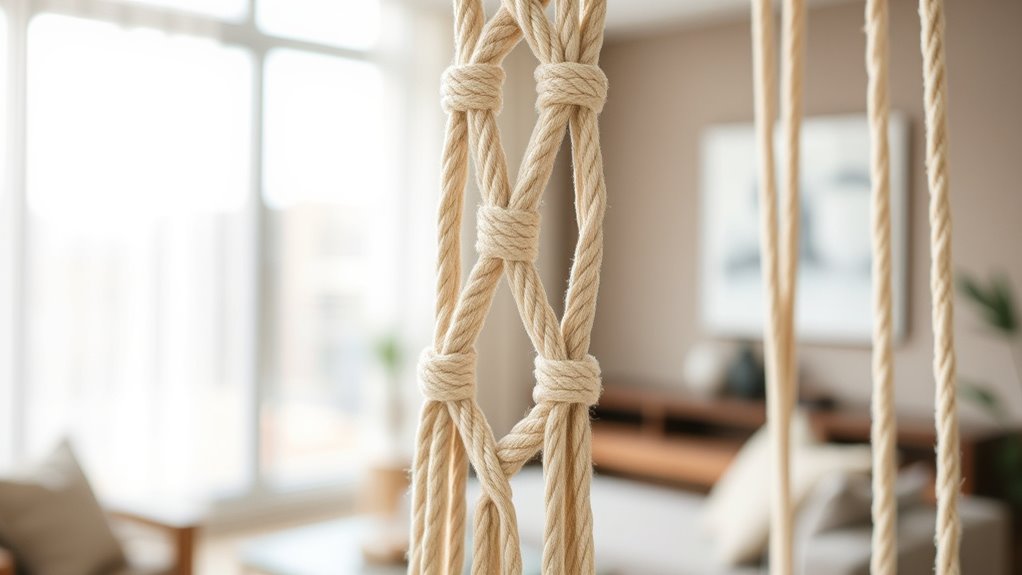
Macramé has evolved beyond traditional knots and wall hangings, giving rise to what’s now called Macramé 2.0. This modern take on the craft blends timeless knotting techniques with contemporary design, making it perfect for your stylish, eco-conscious home. Instead of the typical boho look associated with the 1970s, Macramé 2.0 features sleek, minimalist pieces that elevate your interior decor while staying environmentally friendly. One of the key aspects of this evolution is the emphasis on sustainable materials. You’ll find artisans and DIY enthusiasts choosing organic cotton, recycled jute, or even biodegradable plant fibers for their projects. These options not only reduce your carbon footprint but also add a natural, textured aesthetic to your creations. Using sustainable materials aligns with your desire to make eco-friendly choices, transforming your home into a space that reflects your values.
In the domain of DIY home decor, Macramé 2.0 encourages you to get hands-on and customize your environment. You no longer need to rely solely on store-bought pieces; instead, you can craft your own decorative accents that match your style perfectly. Whether it’s a hanging planter, a modern wall art piece, or a cozy blanket, the possibilities are endless. The process itself becomes a creative outlet, allowing you to experiment with different knots, patterns, and textures. As you learn new techniques, you’ll notice how easy it is to incorporate these elements into your existing decor. Plus, handmade macramé pieces have a unique charm and authenticity that mass-produced items can’t match. Additionally, considering the integration of merchant services can help you streamline your DIY business or craft sales, making it easier to reach customers and manage transactions securely.
Modern macramé also embraces clean lines and geometric shapes, steering away from the overly intricate or overly bohemian look of the past. This shift makes it easier for you to incorporate macramé into contemporary interiors, whether you prefer Scandinavian minimalism or industrial chic. You can start with small projects, like a key holder or a decorative curtain, or immerse yourself in larger statement pieces. The key is to use sustainable materials that suit your aesthetic and to approach your projects with a DIY mindset. This way, you create meaningful, eco-friendly decor that speaks to your personality and values. Ultimately, Macramé 2.0 is about blending tradition with innovation—giving you the tools to craft beautiful, sustainable pieces that look anything but 1970s.
Frequently Asked Questions
What Are the Best Modern Materials for Macramé Projects?
When choosing materials for your modern macramé projects, consider sustainable fibers like organic cotton, jute, or hemp to reduce environmental impact. You might also explore innovative textiles such as recycled polyester or nylon blends that add durability and a contemporary look. These modern materials give your creations a fresh vibe, blending eco-consciousness with style. Using these options guarantees your macramé stands out while supporting sustainability and innovation.
How Do I Start Designing My Own Macramé Patterns?
Imagine your mind as a garden, ready to blossom with pattern inspiration. Start by exploring knot techniques—each one a seed for your design. Sketch rough ideas and play with different knots, blending textures and styles. Don’t be afraid to experiment and break the rules. As you gain confidence, your unique patterns will grow into stunning macramé creations that reflect your personal style and vision.
Can Macramé Be Incorporated Into Outdoor Furniture?
You can definitely incorporate macramé into outdoor furniture, but focus on outdoor durability and weather resistance. Use synthetic cords like polyester or nylon, which withstand moisture, UV rays, and temperature changes better than natural fibers. Incorporate sturdy knots and sealed finishes to prevent fraying. Properly treated, macramé accents can add stylish, functional elements to your outdoor space, creating a unique, breathable design that lasts through the seasons.
What Are Eco-Friendly Options for Macramé Supplies?
You wonder about eco-friendly options for macramé supplies. While traditional fibers are often synthetic, you can choose sustainable fibers like organic cotton, hemp, or jute, which are biodegradable and durable. Recycled materials, such as reclaimed yarns or repurposed fabric strips, add an environmentally conscious touch. By selecting these options, you create beautiful, eco-friendly pieces that reduce waste and support sustainable practices in your macramé projects.
How Do I Care for and Clean Macramé Items?
To care for your macramé, follow simple cleaning tips and maintenance routines. Gently shake or brush off dust regularly, and spot clean with a damp cloth for stains. For a deeper clean, hand wash with mild detergent and cold water, then let it air dry. Avoid harsh chemicals or machine washing, as they can damage the fibers. Proper care keeps your pieces looking fresh and vibrant for years.
Conclusion
As you explore modern macramé, you realize it’s more than just a throwback. By experimenting with new knots and styles, you can create stunning, contemporary pieces that reflect your unique vision. Think of each knot as a visual metaphor, representing your creativity and innovation. When you investigate and test your ideas, you turn abstract concepts into tangible art. Embrace this evolution, and let your craftsmanship visually express your ideas beyond the 1970s aesthetic.