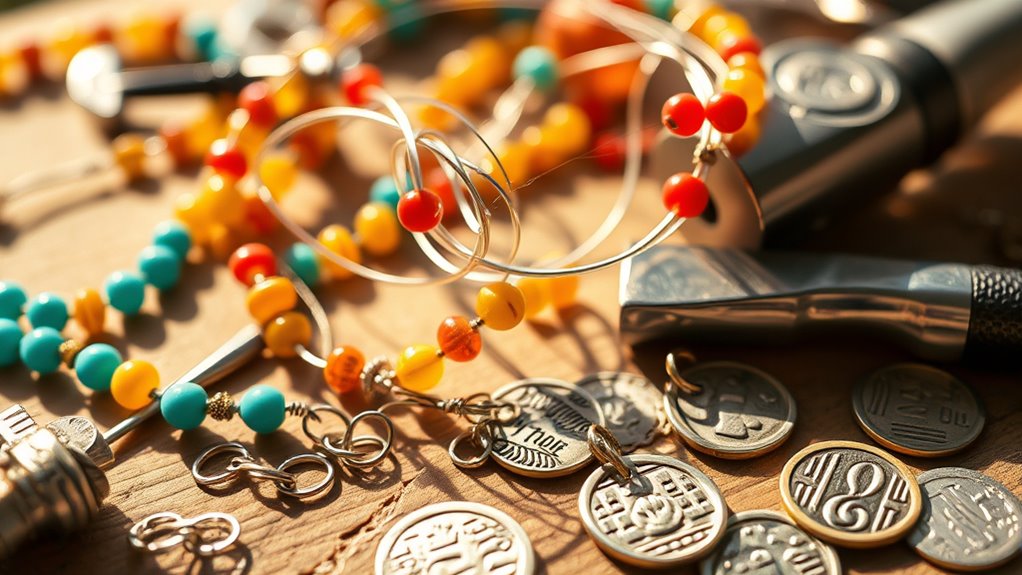

To master jewelry making, you’ll want to focus on beading, wire work, and metal stamping. Choose beads carefully by size, color, and texture to create balanced, eye-catching designs. Use the right wire gauge to guarantee your pieces are durable yet flexible, matching your beads’ material and your style goals. Experimenting with different techniques helps you develop your skills. Keep exploring, and you’ll uncover tips to craft beautiful, long-lasting jewelry that reflects your personal flair.
Key Takeaways
- Selecting the right beads, wire gauges, and materials is essential for creating cohesive and durable jewelry pieces.
- Understanding material properties helps choose appropriate wire and bead combinations for desired aesthetics and longevity.
- Proper wire gauge selection allows for flexibility, shaping, and structural support in various jewelry designs.
- Mixing different bead shapes, colors, and textures adds visual interest while maintaining balance in the design.
- Planning and experimenting with techniques like wire wrapping and metal stamping enhance craftsmanship and personalized style.
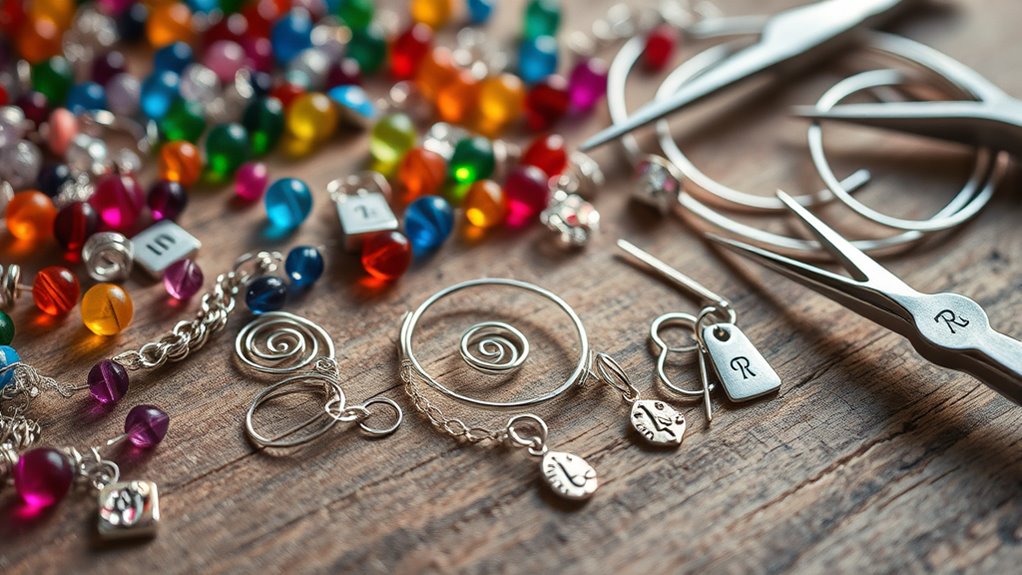
Have you ever wondered how beautiful jewelry is crafted from raw materials? When you start creating your own pieces, one of the first steps is understanding how to choose the right beads. Bead selection is vital because it sets the foundation for your design. You’ll want to consider factors like size, color, texture, and material. For example, glass beads offer vibrant colors and shine, while wooden beads provide a more natural, earthy feel. As you select beads, think about how they’ll interact with each other and the overall look you want to achieve. Mixing different shapes and finishes can add depth and interest, but balance is key. Too many contrasting elements might make the piece feel cluttered, so plan your design carefully before you start stringing.
Once you’ve chosen your beads, it’s time to think about wire work, and a big part of that is understanding wire gauge. The wire gauge determines the thickness and strength of the wire you’ll use for your jewelry. Thinner gauges, like 24 or 26, are flexible and ideal for delicate bead stringing and intricate wire wrapping. Thicker gauges, such as 18 or 20, provide durability and are better suited for structures that need to hold shape or support heavier components. Picking the right wire gauge is essential because it influences how your piece will look and how well it will hold up over time. If you use wire that’s too thin, your jewelry might bend or break easily; too thick, and it can be difficult to work with or may overshadow your beads. Experimenting with different gauges helps you develop a feel for what works best for specific projects. Additionally, understanding the material properties of your wire can help ensure your jewelry is both beautiful and long-lasting.
As you work with wire, you’ll notice that the gauge impacts not just strength but also flexibility, which affects your ability to shape and manipulate the wire into loops, clasps, and other decorative elements. When combined with thoughtful bead selection, choosing the appropriate wire gauge allows you to craft jewelry that’s both beautiful and durable. Remember, the right combination of beads and wire gauge depends on your design goals and the type of jewelry you want to make—whether it’s a dainty bracelet or a bold statement necklace. With practice, you’ll get better at matching beads and wire gauges to create pieces that reflect your personal style and stand the test of time.
Frequently Asked Questions
What Are the Best Beginner Tools for Jewelry Making?
To start jewelry making, you need basic tools like beading pliers, wire cutters, and a bead mat. Selecting a good bead selection guarantees variety and creativity. Don’t forget safety gear, such as protective glasses and gloves, to keep yourself safe while working. These beginner tools make it easy to handle beads and wire, helping you craft beautiful pieces confidently and enjoyably.
How Do I Choose the Right Beads for My Project?
Choosing beads is like picking stars for your night sky; each one adds sparkle to your design. Focus on bead shape selection to match your project’s style, whether round, faceted, or irregular. Think about color coordination to create harmony or contrast. Consider the size and material to guarantee they fit your beads and complement your overall vision. Trust your instincts, and let your creativity guide your choices.
What Safety Precautions Should I Take When Metal Stamping?
You should wear protective gear like safety glasses and gloves to shield your eyes and skin from metal shards and sharp tools. Make sure your workspace is well-ventilated to avoid inhaling fumes or dust. Keep your area organized and free of clutter to prevent accidents. Always work in a safe environment, follow manufacturer instructions, and stay focused to minimize risks during metal stamping.
How Can I Fix Mistakes in Wire Wrapping?
When you need to correct wire wrapping mistakes, think of it as a creative detour. Gently straighten any bent wire with pliers, carefully correcting the bends without damaging your work. If beads come loose, reattach them by threading the wire back through their holes and securing with a small twist or bend. Patience helps; with a little finesse, your piece will look polished and lovely again.
What Are Advanced Techniques for Finishing Jewelry Pieces?
To finish jewelry pieces professionally, you should master polishing techniques to achieve a smooth, shiny surface. Apply patina carefully to add depth and contrast, enhancing the piece’s visual interest. Use fine abrasives or polishing pads for a high-gloss finish, and experiment with different patina colors for unique effects. Combining these advanced techniques elevates your jewelry, giving it a polished, artistic look that stands out.
Conclusion
Now that you know the basics of beading, wire work, and metal stamping, you’re ready to create stunning jewelry pieces. Did you know that the global jewelry market is expected to reach over $480 billion by 2025? Your newfound skills can turn simple materials into beautiful, personalized accessories. Keep practicing, experiment with different techniques, and enjoy the creative journey. Your unique designs could soon be part of this booming industry!