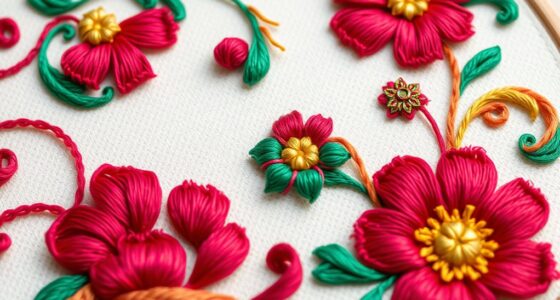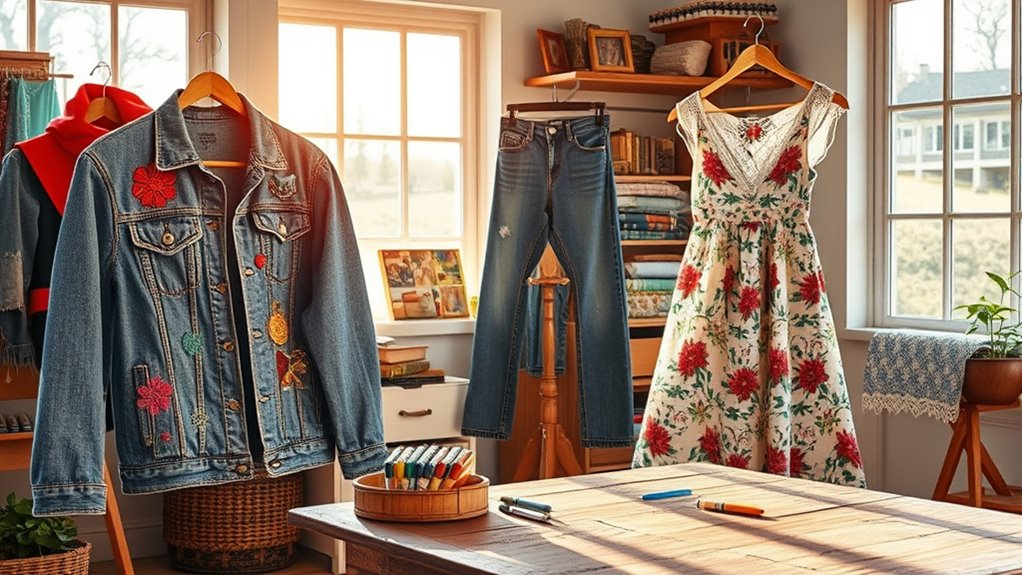

Clothing customization lets you upcycle and restyle your wardrobe with eco-friendly fabrics and creative embellishments. You can express your unique style while supporting sustainable fashion by using organic cotton, recycled materials, or natural dyes. Simple DIY techniques like embroidery, patches, or fabric paint can transform plain or worn-out pieces into statement garments. No expertise required—just some patience and a splash of creativity. Keep exploring to discover how you can make your wardrobe both stylish and environmentally conscious.
Key Takeaways
- Use sustainable fabrics like organic cotton, hemp, or recycled materials to create eco-friendly, personalized garments.
- Add DIY embellishments such as embroidery, patches, or fabric paint to transform and refresh existing clothing.
- Combine eco-conscious fabrics with creative embellishments to extend clothing lifespan and promote responsible fashion choices.
- Start with basic sewing skills or fabric dyeing, utilizing online tutorials and craft communities for inspiration.
- Customize garments to express individual style, support sustainability, and reduce waste through upcycling and restyling techniques.
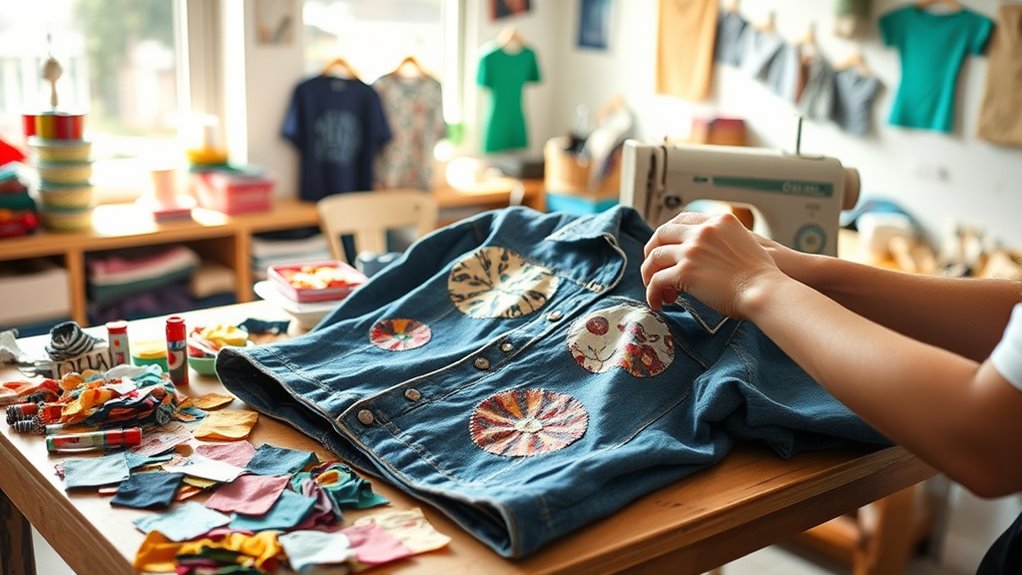
Clothing customization has become a popular way to express your unique style and stand out from the crowd. When you choose to personalize your wardrobe, you’re not only making a fashion statement but also making more sustainable choices. Using sustainable fabrics in your projects helps reduce environmental impact, supporting eco-friendly fashion. These fabrics, often made from organic cotton, hemp, or recycled materials, allow you to create stylish pieces that are better for the planet. Incorporating sustainable fabrics into your DIY projects means you can confidently wear clothes that align with your values, knowing you’re contributing to a more responsible fashion industry.
Getting creative with DIY embellishments is a great way to upcycle and restyle your existing garments. Instead of discarding worn-out or outdated clothes, you can breathe new life into them with simple additions like embroidery, patches, beads, or fabric paint. These embellishments are easy to apply and give your pieces a fresh, personalized look. For instance, adding embroidered patterns or decorative patches transforms a plain denim jacket into a one-of-a-kind statement piece. Not only does this save you money, but it also prevents unnecessary waste by extending the life of your clothes.
When customizing, think about how sustainable fabrics and DIY embellishments work together. You might start by selecting a basic piece made from organic cotton or recycled polyester, then enhance it with hand-sewn details or fabric dyeing. This approach allows you to create a truly unique item that reflects your personality while remaining eco-conscious. Plus, working with sustainable fabrics often feels more rewarding because you’re engaging directly with eco-friendly materials, which encourages mindful consumption.
Additionally, exploring remote hackathons can inspire innovative ways to incorporate sustainable fashion ideas into broader creative projects, connecting you with a global community of makers and thinkers.
You don’t have to be an expert to customize your wardrobe successfully. Basic sewing skills or a little bit of patience with fabric paints and iron-on patches are enough to get started. Online tutorials and craft communities can inspire your projects and teach you new techniques. As you experiment with different DIY embellishments, you’ll develop your own style and learn what works best for your wardrobe. Over time, your customized pieces will become treasures—garments that not only look good but also tell your story and promote sustainability.
No expert needed—simple DIY skills and patience turn old clothes into personalized, sustainable treasures.
In the end, clothing customization is about more than just fashion; it’s a way to express your creativity, support sustainable practices, and reduce waste. By choosing sustainable fabrics and adding DIY embellishments, you turn everyday clothes into meaningful, stylish statements. It’s a fulfilling process that allows you to stand out while making a positive impact on the environment. So, grab your supplies, get inspired, and start transforming your wardrobe today.
Top picks for "cloth customization upcycle"
Open Amazon search results for this keyword.
As an affiliate, we earn on qualifying purchases.
Frequently Asked Questions
How Do I Choose the Right Fabric for Upcycling Projects?
When choosing fabric for your upcycling projects, focus on fabric selection and material considerations. Pick fabrics that complement your design and are easy to work with, like cotton or denim. Check the fabric’s durability, stretch, and texture to guarantee it suits your desired look and function. Avoid delicate or fraying materials unless you’re prepared to reinforce or treat them. This way, your upcycled piece will be both stylish and long-lasting.
What Tools Are Essential for Clothing Restyling at Home?
You’ll need essential tools like sharp scissors, a sewing machine, pins, and a measuring tape for clothing restyling at home. An overview of these tools helps you understand their use, while safety precautions are vital—always keep blades away from fingers and work in a well-lit space. With these tools and safety tips, you can confidently transform your wardrobe, upcycling your favorite pieces creatively and securely.
Can Upcycling Improve Clothing Durability and Longevity?
Absolutely, upcycling can turn your clothes into superhero-levels of durability and longevity! By embracing sustainable fashion and textile recycling, you reinforce fabrics, repair wear and tear, and breathe new life into old garments. This not only saves money but also fights fast fashion’s throwaway culture. So, with a little creativity, you’re making your wardrobe last longer, look cooler, and helping the planet — all at once!
How Do I Avoid Damaging Garments During Customization?
To avoid damaging garments during customization, focus on fabric care and damage prevention. Always test your techniques on a small, hidden area first. Use gentle tools like fabric-safe scissors and avoid excessive force. Follow recommended washing instructions, and consider using proper adhesives or stitches for durability. Taking these precautions helps preserve fabric integrity, prevents tears, and ensures your upcycled pieces stay beautiful and long-lasting.
Are There Eco-Friendly Dyes Suitable for Upcycling Clothes?
Yes, there are eco-friendly dyes suitable for upcycling clothes. You can use natural coloring options like indigo, beetroot, turmeric, and henna, which are safe and biodegradable. These eco-friendly dyes not only reduce environmental impact but also give your garments unique, vibrant hues. When you choose natural coloring methods, you’re making a sustainable choice that helps protect the planet while giving your upcycled clothes a beautiful, personalized touch.
Conclusion
Don’t let fear hold you back from transforming your wardrobe. Upcycling and restyling aren’t just eco-friendly—they’re empowering ways to showcase your unique style. Sure, it might seem intimidating at first, but every stitch and splash of paint is a step toward creativity and sustainability. Imagine the pride you’ll feel wearing something you personalized yourself. So go ahead—embrace the challenge. Your one-of-a-kind wardrobe is just a project away, and you’ll love the journey as much as the result.