Your environment influences your ability to stay disciplined by shaping your habits and minimizing temptations. When your surroundings support your goals, they trigger automatic behaviors and reinforce positive routines without much effort. Removing distractions and placing motivational cues around you makes it easier to focus and resist impulses. Small adjustments, like keeping workout gear visible or turning off notifications, can markedly boost your self-control over time. Keep exploring to discover how tiny changes can make discipline feel natural.
Key Takeaways
- Environmental cues automatically trigger desired behaviors, reducing the need for conscious effort.
- Well-designed surroundings minimize distractions, conserving mental energy for discipline.
- Visible reminders and organized spaces reinforce goal-oriented habits effortlessly.
- Removing temptations and distractions from the environment decreases impulse-driven behaviors.
- Small environmental changes gradually strengthen habits, making discipline feel more natural and less effortful.
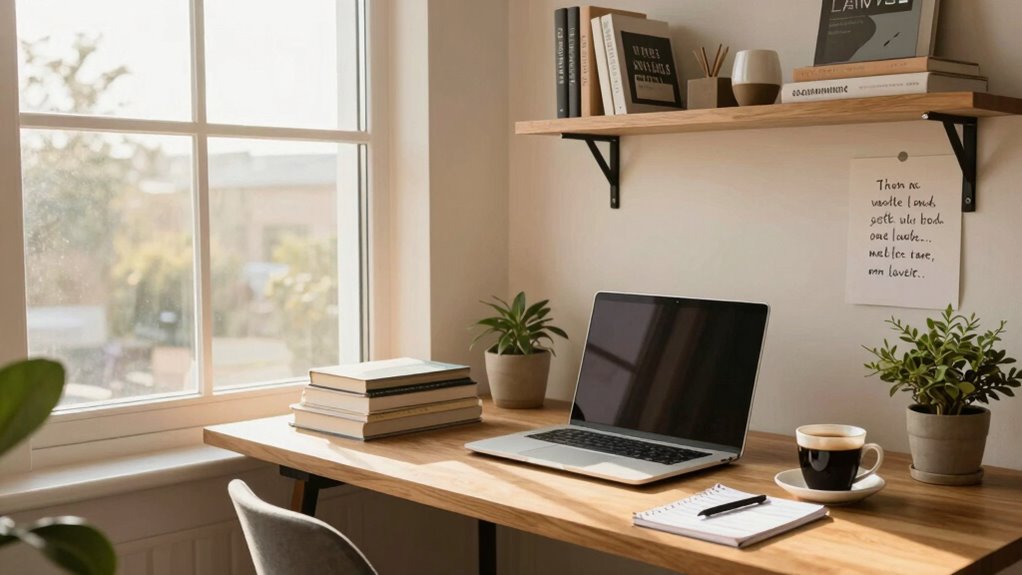
Have you ever wondered how your environment influences your ability to stay disciplined? The truth is, your surroundings play a huge role in shaping your habits and maintaining your self-control. When your environment is aligned with your goals, it becomes easier to practice good habits and avoid temptations. This is because environmental cues—small signals in your surroundings—can trigger specific behaviors, often without you realizing it. For example, if you want to exercise more, placing your workout clothes and gear in plain sight makes it more likely you’ll actually put them on and get moving. These cues act as reminders and motivators, helping you build consistent habits that reinforce your discipline over time.
Environmental cues naturally trigger habits and strengthen discipline when aligned with your goals.
Habit formation is deeply intertwined with environmental cues. When your environment consistently prompts certain behaviors, those actions become automatic. Over time, as you associate specific cues with positive outcomes, your brain begins to link them with discipline. For instance, if you want to read more, keeping a book on your pillow or next to your coffee mug can serve as a visual cue that encourages you to pick it up. The key is to design your environment deliberately so that the cues support your goals. Small tweaks—like turning off notifications during work sessions or keeping junk food out of sight—can profoundly strengthen your ability to stay focused and disciplined. Recognizing the importance of behavioral cues can help you understand how your surroundings influence your actions. Additionally, understanding how your environment impacts your behavioral responses can help you make more informed adjustments to support your self-discipline. Creating an environment that minimizes distractions and maximizes positive signals can also significantly enhance your habit formation process. Incorporating knowledge about visual cues from home theater setups, for example, can help reinforce focus and engagement in various areas of your life. Moreover, adjusting your environment to reduce distractions can help conserve mental energy for more important tasks.
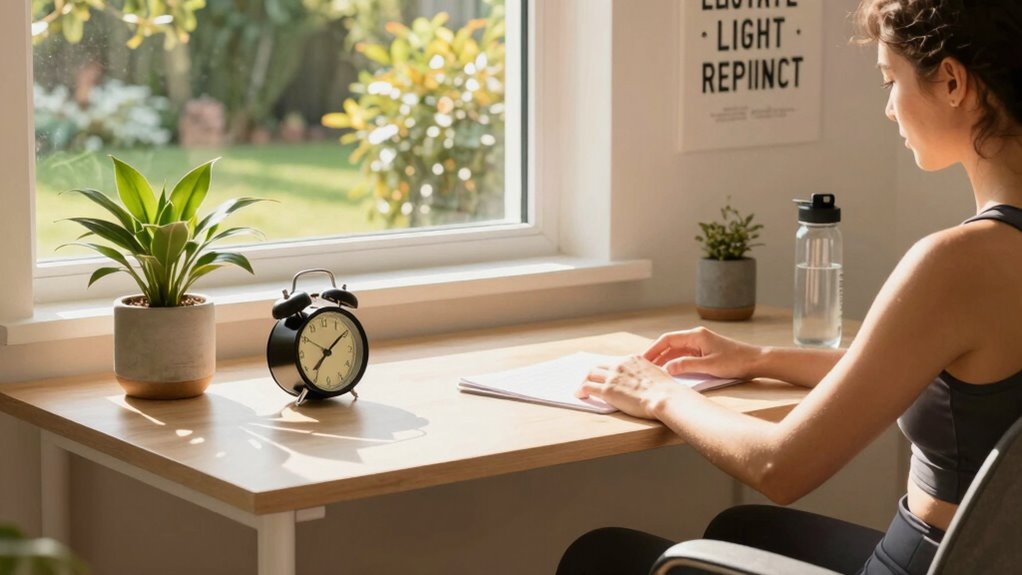
When your environment is set up thoughtfully, you’ll find it easier to resist distractions and temptations. For example, if you’re trying to cut back on social media, uninstalling apps or placing your phone in another room reduces the environmental cues that make it tempting to scroll mindlessly. Conversely, surrounding yourself with items that remind you of your goals—like motivational quotes or achievement charts—can boost your motivation and reinforce your habits. The environment acts as an external partner in your journey toward self-discipline, reducing the mental effort needed to stay on track.
Ultimately, your environment isn’t just a backdrop; it’s an active component in habit formation and discipline. By intentionally shaping your surroundings with cues that promote positive behaviors, you make discipline easier and more automatic. When your environment supports your goals, you spend less mental energy resisting temptations and more focus on taking consistent action. Over time, these small environmental adjustments compound into meaningful change, making self-discipline feel less like a constant struggle and more like a natural part of your daily routine.

3 Tier Dumbbell Rack, Yoga Mat Storage Holder, Home Gym Storage Rack, Workout Equipment Storage Organizer, Weight Storage Holder Rack with Hooks and Wheels
【Large Capacity Workout Equipment Organizer】This workout storage organizer is an ideal addition to home, gym, and yoga studio,…
As an affiliate, we earn on qualifying purchases.
As an affiliate, we earn on qualifying purchases.
Frequently Asked Questions
How Quickly Can Environment Changes Improve Self-Discipline?
Environment changes can considerably boost your self-discipline within days to weeks. By modifying your surroundings, you create stronger habit formation and add motivational triggers that reinforce positive behaviors. For example, removing temptations or setting up cues makes it easier to stay committed. These small adjustments quickly reinforce discipline, making it feel natural over time. With consistent effort, you’ll notice improvements in your self-control faster than you might expect.
Can a Chaotic Environment Ever Support Better Self-Discipline?
A chaotic environment can sometimes push you to develop stronger self-discipline through mindset shifts and emotional resilience. For example, if you’re working in a noisy, unpredictable space, you might learn to focus better and resist distractions. This challenge forces you to adapt, strengthening your mental resilience. Over time, you build discipline by managing emotions and maintaining clarity amid chaos, turning a seemingly negative environment into a catalyst for growth.
What Are Simple Ways to Modify My Environment for Discipline?
To modify your environment for better discipline, start by removing distractions and creating dedicated spaces for your habits. Use motivational cues, like visual reminders or inspiring objects, to trigger positive actions. Incorporate habit formation techniques, such as setting specific routines and cues, to reinforce discipline. Keep your environment consistent, making it easier to stay focused and motivated, ultimately strengthening your self-discipline over time.
Does Environment Influence Different People’s Self-Discipline Equally?
Like a garden responds differently to each gardener, your environment shapes your self-discipline uniquely. Some may find it easier to nurture habits with supportive surroundings, building mental resilience like a sturdy fence. Others might struggle more, needing tailored changes to foster habit formation. Your environment acts as a mirror, amplifying your strengths or exposing vulnerabilities, so understanding its influence helps you adapt and grow stronger in your discipline journey.
How Do I Stay Disciplined if My Environment Can’t Be Changed?
If your environment can’t be changed, focus on mindset shifts and habit formation. You can strengthen your self-discipline by setting clear goals and developing routines that align with your values, regardless of surroundings. Use cues to trigger positive habits and stay consistent, even when temptations arise. Over time, these habits will become automatic, making it easier to maintain discipline despite external challenges. Consistency and mental resilience are key.

iTalkes Clip Busy Light Standard for The Office / 59 inch USB Cable Busy Light Indicator – Workspace Distractions and Boosts Productivity/Do not Disturb Light – Free LED Indicator Light
The taller tube shows your availability to surrounding colleagues in the office so they know when you are…
As an affiliate, we earn on qualifying purchases.
As an affiliate, we earn on qualifying purchases.
Conclusion
When your environment supports your goals, self-discipline becomes less about struggle and more about choice. It’s easy to stay on track when temptation is scarce and encouragement is abundant. But without that support, discipline feels like a constant battle, draining your energy and resolve. The truth is, your surroundings shape your habits just as much as your determination does. By cultivating a space that fosters growth, you make discipline effortless, turning effort into a natural part of who you are.

The Complete Deaf Dog Training Guide: Visual Communication, Hand Signals & Safe Everyday Living: A Step-by-Step Illustrated Guide to Training, … Confidence with Deaf and Hard-of-Hearing Dogs
As an affiliate, we earn on qualifying purchases.
As an affiliate, we earn on qualifying purchases.
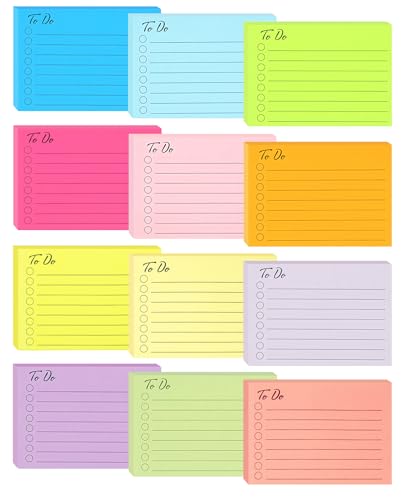
HQCME 12 Pads to Do List Sticky Notes, 504 Sheets, 3×4 Inch with Line Adhesive Memo, 12 Bright Multi Colors Lined Self-Stick Note Pads, to Do List Notepad, Easy to Use for Home, Office, Notebook
To Do List Sticky Notes : 12 pack to do lined sticky notes, 3 x 4 inches, 12…
As an affiliate, we earn on qualifying purchases.
As an affiliate, we earn on qualifying purchases.