
TL;DR

Get garden gear delivered free with Prime
- Fast, free delivery on millions of items
- Prime Video, Amazon Music and more included
- Member-only deals all year
Homes & Gardens has shared seven styling ideas for displaying amaryllis bulbs while their shoots and roots are still developing. Suggestions include clear vases, moss-wrapped kokedama, waxed bulbs, mixed pots, vintage ceramics, paperwhites and low-growing companion plants. The article offers design guidance, not a new horticultural study.
Homes & Gardens has outlined seven ways to display amaryllis bulbs before they flower, suggesting arrangements that showcase their roots, sculptural bulbs and growing stems rather than waiting for their blooms. The ideas range from clear glass and moss-wrapped kokedama to vintage vessels and companion plants, offering seasonal decorating options while the bulbs develop.
The first suggestions make the growing process part of the display. A clear bulb-forcing vase lets viewers see roots developing above a water reservoir, while a clear glass vessel can also be used to hold a planted bulb. Homes & Gardens says moss can add a decorative finish and help retain moisture. For more on growing these bulbs, see how to force amaryllis bulbs indoors. Its second idea, kokedama, wraps a bulb in moss to create a ball that can sit on a surface or hang in a bright window.
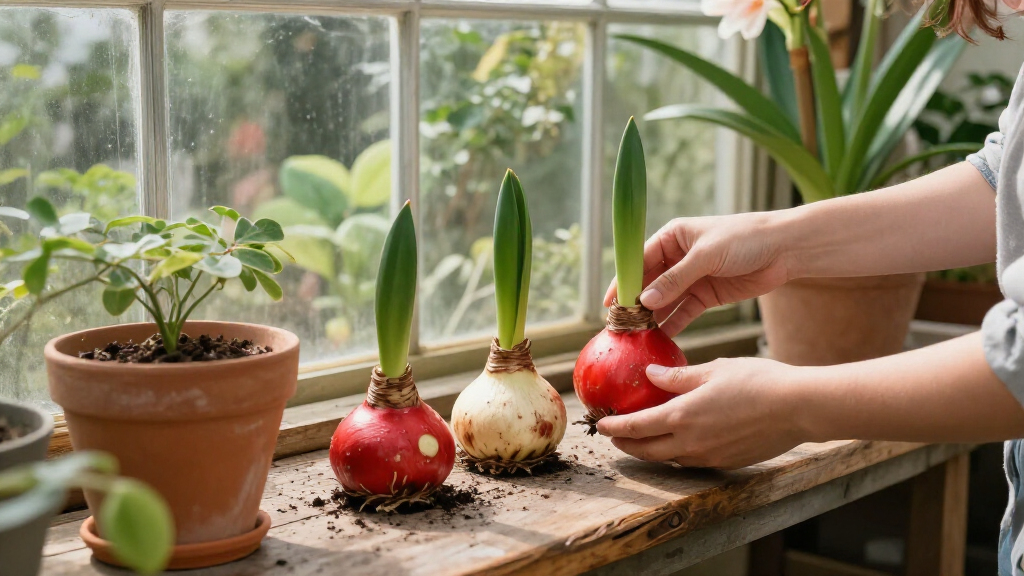
For a simpler arrangement, the report recommends grouping waxed amaryllis bulbs on a table or shelf, or raising them to different heights on wood slices. It describes waxed bulbs as low-maintenance and says they do not need watering because the wax holds moisture. Another option is to plant bulbs in a set of terracotta or clay pots, using varied tones and grouping the containers as a centerpiece or room display; take care to avoid common bulb-planting mistakes.
The final ideas combine amaryllis with other plants or containers. Thrifted ceramics, kitchen pots and decorative tins can serve as planters; paperwhites can be placed alongside amaryllis for flowers that arrive at different times; and moss, ferns, ivy or cyclamen can provide a low-growing backdrop. The article says amaryllis stems typically reach 12 to 24 inches, giving them height in mixed arrangements. These are styling recommendations from the publication, not results from a comparative growing trial.
Making Bulb Growth Part of the Display
The guidance shifts attention from the final flower to the weeks of growth before it appears. That can help people use amaryllis as seasonal decor for longer, while making visible roots and shoots part of an indoor arrangement. For readers already growing bulbs, the suggestions largely involve choosing a container, grouping plants or adding natural materials rather than changing the basic growing plan.
The paperwhite pairing also offers a way to vary the display over time. Homes & Gardens says paperwhites generally flower sooner than amaryllis, so their blooms may appear while the amaryllis stems are still growing. The approach could create a successional indoor display, though bloom timing varies and the article does not promise a particular result.
Products Worth Considering

Philips Hue Essential Starter Kit with Bridge and 4 E26 Smart Bulbs

Philips Hue White and Color Ambiance Smart Light Starter Kit, 2 A19 Bulbs with Hub

Philips Hue Smart LED Candle Bulbs, B39, E12, White and Color Ambiance, 2-Pack
As an affiliate, we earn on qualifying purchases.
Seven Styling Approaches in the Guide
The source is a Homes & Gardens decorating and gardening report focused on how to present unflowered bulbs. Its seven approaches are clear vessels, kokedama, waxed bulbs, grouped terracotta pots, repurposed vintage ceramics, paperwhite pairings and companion planting. The through-line is to use different textures and heights to feature the bulb and its shoots.
For readers aiming to coordinate bloom times, the article recommends planting amaryllis six to eight weeks before the desired flowering period and paperwhites three to four weeks before. It presents those intervals as planning guidance; it does not detail how growing conditions may affect timing. The source also notes that paperwhites typically bloom sooner, which is why the two plants can produce a changing display.
““There is beauty in the bulbs yet to flower.””
— Homes & Gardens
Care Details the Guide Leaves Open
The report is primarily about styling and does not give a full care protocol for every display. It does not specify the watering schedule, light levels or temperature needed for each container arrangement, nor does it explain how those conditions might change flowering dates. Its timing suggestions should not be read as guarantees.
The source also does not compare growth outcomes for planted bulbs, forcing vases and waxed bulbs. Although it says waxed bulbs need no watering, it does not explain what to do if a bulb shows signs of stress or fails to flower. Readers should follow the care instructions supplied with their bulbs or vessels; the article does not establish that every styling method suits every bulb.
Planning the Display and Bloom
Readers can choose a display style first, then plan planting around the desired bloom period. Homes & Gardens suggests starting amaryllis six to eight weeks ahead and paperwhites three to four weeks ahead when aiming for flowers at a particular time. For a staggered effect, its guidance is to place the two types together and let the earlier paperwhite blooms precede the amaryllis.
No follow-up study or additional development is announced in the source material. The practical next step is to monitor the bulbs as they grow, adjust the arrangement as stems lengthen and consult the product’s care instructions for growing conditions not covered in the styling report.
Key Questions
What are the seven ways to display amaryllis before it flowers?
Homes & Gardens lists clear vessels, kokedama, waxed bulbs, grouped terracotta pots, vintage ceramics, paperwhite pairings and companion plants such as moss, ferns, ivy or cyclamen.
How tall do amaryllis stems typically grow?
The report gives a typical height of 12 to 24 inches. Actual growth can vary; the source does not give a range of growing conditions or outcomes.
When should amaryllis and paperwhites be planted?
For a planned bloom period, the report suggests planting amaryllis six to eight weeks beforehand and paperwhites three to four weeks beforehand. These are planning estimates, not guaranteed flowering dates.
Do waxed amaryllis bulbs need watering?
Homes & Gardens says the wax holds moisture and that waxed bulbs do not need watering. The source does not give troubleshooting instructions, so follow any care guidance provided with the bulb.
Source: homesandgardens.com