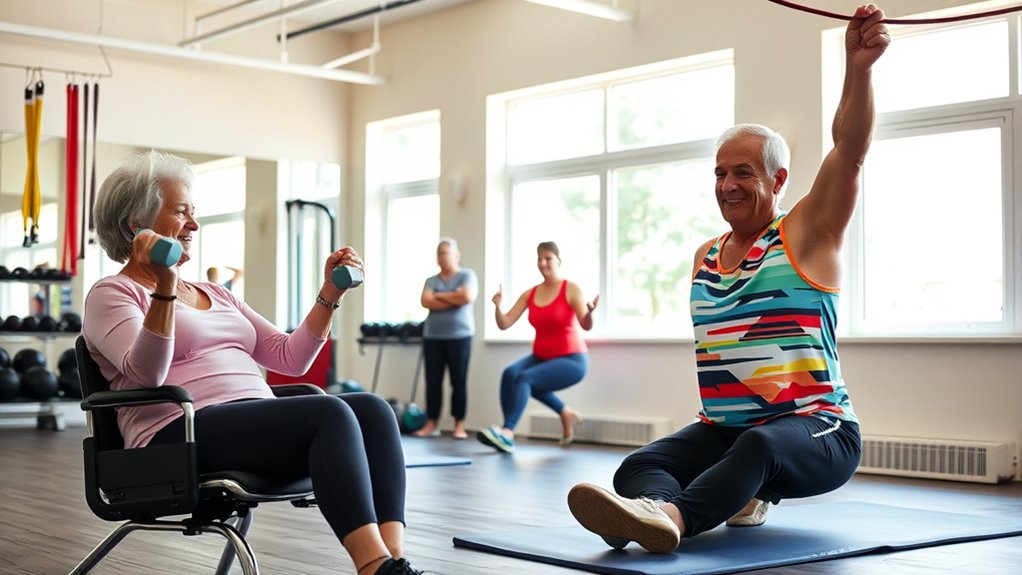
Adaptive exercise programs are crucial for maintaining your health, strength, and independence as you age. They combine balance, strength, and personalized routines to suit your abilities and preferences. These exercises can improve your coordination, reduce fall risks, and boost your overall well-being. Incorporating such programs into your routine guarantees you stay active and confident. Keep exploring to discover how tailored activities can make a meaningful difference in your life.
Key Takeaways
- Adaptive exercise programs improve quality of life, independence, and overall well-being for older adults.
- Balance training enhances stability, coordination, and reduces fall risk through activities like tai chi and standing exercises.
- Strength routines combat muscle loss, support joint health, and assist with daily tasks using bodyweight or resistance tools.
- Programs are personalized for fitness levels and limitations, ensuring safety and engagement for diverse older adult populations.
- Regular adaptive exercise promotes mental health, confidence, and a vibrant, active aging experience.
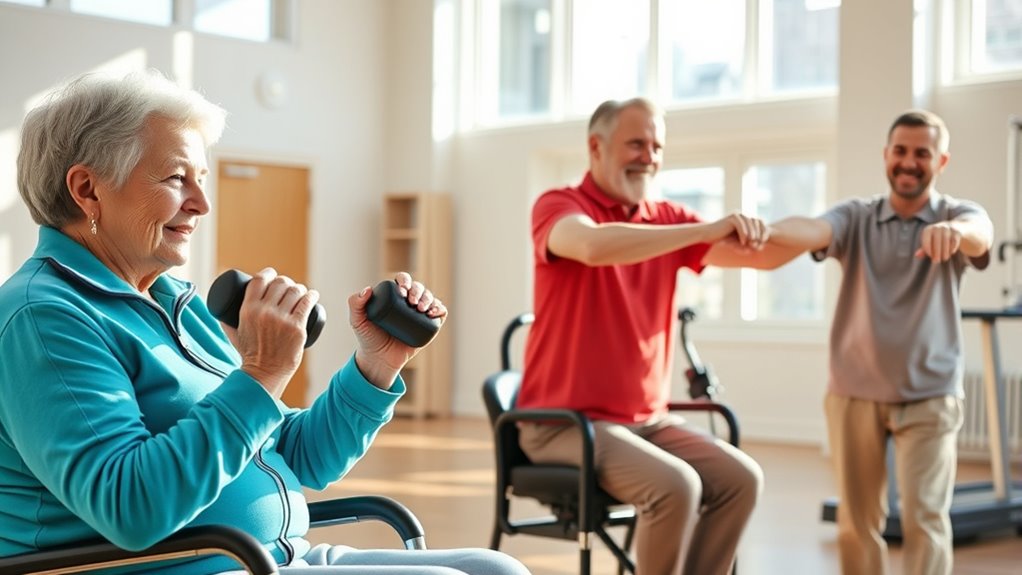
Have you ever wondered how staying active can improve your quality of life as you age? The good news is that engaging in regular exercise tailored to your needs can make a significant difference. One of the most effective ways to stay healthy is through adaptive exercise programs that focus on enhancing your strength and balance. These programs are designed to help you maintain independence, reduce the risk of falls, and boost your overall well-being.
Balance training plays a essential role in these routines. As you get older, your ability to stay steady and coordinated can decline, increasing your chances of falls and injuries. Incorporating balance exercises into your daily routine can help you regain stability. Simple activities like standing on one foot, heel-to-toe walking, or tai chi can be highly effective. These exercises strengthen the muscles responsible for stability and improve your proprioception—your sense of body position—making everyday movements safer and more confident. Over time, you’ll notice better posture, improved coordination, and a greater sense of confidence in your mobility.
Balance exercises like standing on one foot and tai chi improve stability and confidence as you age
Alongside balance training, strength routines are fundamental. Building muscle helps combat the natural loss of strength that comes with aging. You don’t need to lift heavy weights; bodyweight exercises like squats, modified push-ups, or resistance band workouts can be highly effective. These routines help maintain muscle mass, support joint health, and improve your functional abilities, such as climbing stairs or carrying groceries. Consistent strength training also supports bone density, reducing the risk of osteoporosis. When you commit to these routines, you’ll find yourself performing daily tasks more easily, feeling more energized, and experiencing less fatigue.
Adaptive exercise programs are flexible and can be personalized to your fitness level, physical limitations, and preferences. Whether you’re just starting out or looking to challenge yourself further, there’s always a suitable option. Many community centers and senior fitness classes incorporate balance training and strength routines tailored specifically for older adults, ensuring safety and effectiveness. Incorporating mindfulness techniques into your exercise routine can also help improve focus, reduce stress, and enhance your overall mental well-being. Remember, it’s always wise to consult with your healthcare provider before beginning any new fitness regimen, especially if you have existing health conditions.
Incorporating balance training and strength routines into your routine can transform your quality of life. These exercises not only improve physical health but also enhance your confidence and independence. Staying active as you age isn’t just about adding years to your life; it’s about making those years active, fulfilling, and vibrant. So, start small, stay consistent, and enjoy the benefits of a healthier, stronger you.
Frequently Asked Questions
How Can I Start Exercising Safely After a Long Break?
You can start exercising safely after a long break by gradually easing into activity. Begin with gentle warm-up routines to prepare your muscles, and keep hydration tips in mind—drink water before, during, and after exercise. Listen to your body, avoid pushing too hard initially, and consider consulting a healthcare professional. Slowly increase intensity and duration to rebuild strength and endurance safely.
Are There Specific Exercises for Improving Balance in Seniors?
Did you know that falls are the leading cause of injury among seniors? To improve balance, try exercises like heel-to-toe walking, single-leg stands, and gentle tai chi. These activities help with fall prevention and boost your strength training. Make sure to do these exercises safely, perhaps near a chair or wall for support, and gradually increase difficulty as your balance improves.
What Equipment Is Recommended for Adaptive Exercise Programs?
You should consider using resistance bands and adjustable dumbbells for adaptive exercise programs. Resistance bands are excellent for improving strength and flexibility, easily modifying resistance levels to match your ability. Adjustable dumbbells allow you to increase or decrease weight as you progress, ensuring safe and effective workouts. Both pieces of equipment are versatile, lightweight, and suitable for home use, making them ideal choices for maintaining fitness safely and comfortably.
How Often Should Older Adults Exercise for Optimal Health?
You should aim for at least 150 minutes of moderate exercise weekly, spreading it out over most days. Maintaining consistent workout frequency helps improve your strength, flexibility, and overall health. Regular activity boosts your energy levels and reduces health risks. To stay on track, schedule your workouts and make them a regular part of your routine. Remember, consistency is key to gaining long-term benefits and staying healthy as you age.
Can Adaptive Exercises Help With Chronic Pain Management?
Adaptive exercises can definitely help you manage chronic pain and improve mobility. By focusing on gentle movements tailored to your needs, these exercises promote pain relief and enhance your range of motion. You’ll find that consistent, customized activity reduces discomfort and strengthens muscles, making daily tasks easier. Adaptive exercises are a safe and effective way to stay active, support your overall health, and regain greater comfort in your everyday life.
Conclusion
As you embrace adaptive exercise programs, you gently nurture your body’s resilience and grace. These tailored routines help you stay vibrant and connected, softly guiding you toward a healthier, more fulfilling life. Remember, every small step you take is a quiet victory, paving the way for continued strength and well-being. With patience and perseverance, you’ll find that aging can be a graceful dance, filled with moments of joy and renewed energy.