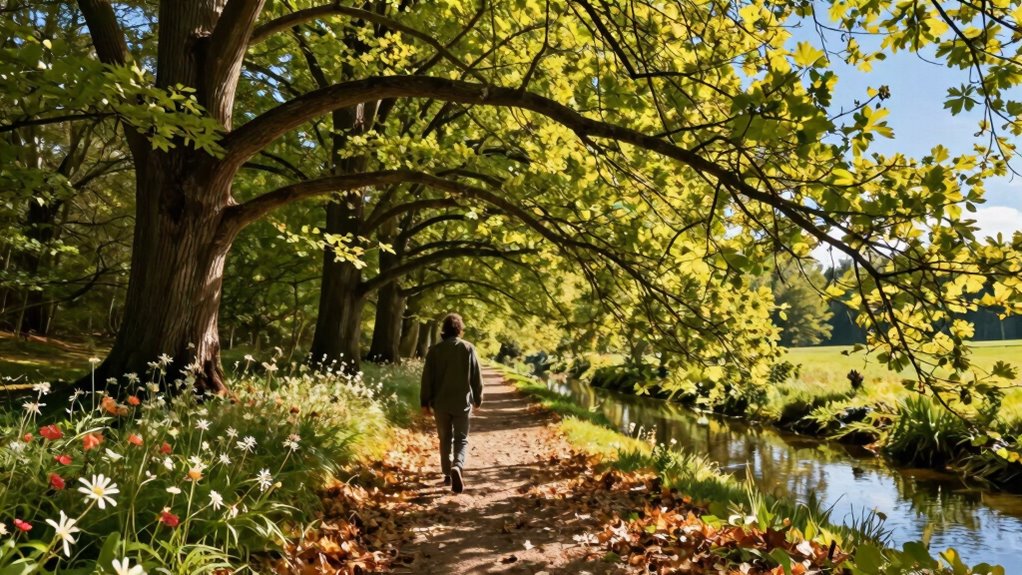

During stressful weeks, try mindful walking by slowing your pace and focusing on your breath with each step. Engage all your senses by noticing textures underfoot, observing colors around you, listening to sounds, and smelling fresh air or flowers. Gently redirect your thoughts to the present whenever they drift. Setting this awareness as a daily habit can help you stay grounded and calm. Keep exploring simple ideas to deepen your mindfulness practice and find even more calm.

Get garden gear delivered free with Prime
- Fast, free delivery on millions of items
- Prime Video, Amazon Music and more included
- Member-only deals all year
Key Takeaways
- Incorporate focused breathing exercises with each step to stay grounded and calm during walks.
- Engage all senses by observing sights, sounds, textures, and smells to deepen present-moment awareness.
- Set gentle intentions to surrender control and fully experience the walk without rushing.
- Keep a relaxed pace and include natural elements like trees and flowers for sensory enrichment.
- Practice daily, even for just 10 minutes, to build resilience and reduce stress over time.
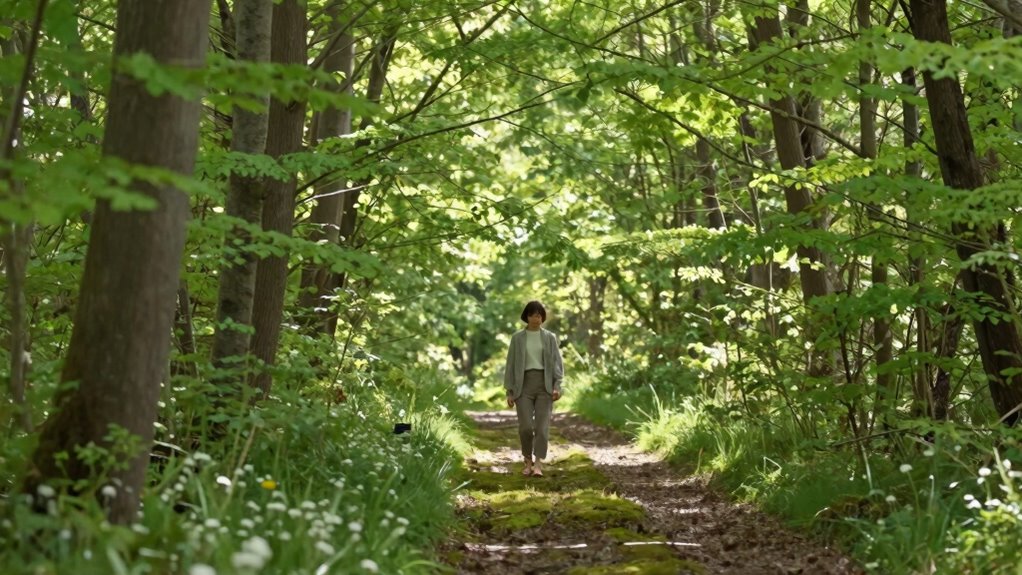
Walking mindfully can transform a simple daily activity into a powerful practice for calming your mind and reconnecting with the present moment. When life feels overwhelming, turning your walk into a mindful experience helps reduce stress and restore clarity. One way to deepen this practice is by focusing on breathing exercises. As you walk, pay close attention to your breath—inhale slowly through your nose, feeling the air fill your lungs, then exhale gently through your mouth or nose. This simple act anchors your awareness, grounding you in the present rather than letting your mind drift to worries or deadlines. Combining breathing exercises with each step ensures your mind remains centered, making your walk a calming ritual rather than just a routine.
Walking mindfully by focusing on your breath transforms a routine into a calming, grounding practice.
Another essential element of mindful walking during stressful weeks is cultivating sensory awareness. Engage all your senses to heighten your experience of the moment. Notice the texture of the ground beneath your feet—whether it’s gravel, grass, or pavement—and feel how it responds to your steps. Observe the colors and shapes around you, whether it’s the vibrant green of leaves or the muted hues of nearby buildings. Listen to the sounds in your environment—the chirping of birds, the rustling of leaves, or distant traffic. Smell the fresh air or the scent of blooming flowers. By consciously tuning into your senses, you draw your attention away from racing thoughts and into the present, creating a calming effect that counters stress. Additionally, incorporating landscaping elements like trees and plants can enhance your sensory experience and promote relaxation.
During stressful weeks, it’s helpful to set an intention before starting your walk. Remind yourself to stay present, to notice each step, each breath, and each sensation. Don’t rush or try to control your experience; instead, surrender to the flow of your walk. If your mind wanders, gently bring it back to your breathing or sensory input. This gentle redirection trains your brain to stay focused and cultivates resilience against stress. The mindfulness technique of observing your environment without judgment can deepen this practice further. Research shows that color accuracy in visual perception can impact how vividly you experience your surroundings, which can enhance your mindfulness practice. Developing an awareness of your environment’s visual details can also foster a greater sense of connection with nature, further supporting relaxation. Keep your pace relaxed, and allow yourself to fully immerse in the environment around you. Even a short 10-minute walk can become a nourishing break if approached with mindfulness.
Finally, consistency is key. Make mindful walking a daily practice, especially during especially hectic weeks. Over time, you’ll notice how this simple activity helps you manage stress more effectively, providing a mental reset whenever you need it most. By integrating breathing exercises and sensory awareness into your walks, you create a powerful tool for soothing your mind, cultivating calm, and reconnecting with the present moment amid life’s chaos.
mindful walking meditation guide
As an affiliate, we earn on qualifying purchases.
As an affiliate, we earn on qualifying purchases.
Frequently Asked Questions
Can Mindful Walking Replace Other Stress Relief Techniques?
Mindful walking can’t fully replace other stress relief techniques, but it’s a valuable alternative relaxation method. It combines gentle movement with breathing techniques, helping you center yourself and reduce stress. While activities like meditation or deep breathing offer specific benefits, mindful walking adds physical activity and sensory awareness. Incorporate it into your routine along with other techniques for a well-rounded approach to managing stress during hectic weeks.
How Long Should Each Mindful Walk Last?
Think of each mindful walk like a gentle breeze—short but invigorating. Aim for 10 to 20 minutes, allowing you to settle into your walking pace and focus on breathing techniques. During this time, you’ll find your mind drifting away from stress and into the present moment. Longer walks can deepen your relaxation, but even brief sessions offer significant benefits. Just make sure to stay mindful and enjoy each step.
Is Prior Experience Necessary for Effective Mindful Walking?
No, prior experience isn’t necessary for effective mindful walking. You can start with simple meditation techniques and focus on your breathing exercises during your walk. These practices help you stay present and calm, regardless of your experience level. As you practice regularly, you’ll naturally improve your mindfulness skills. Just remember to breathe deeply and pay attention to your surroundings, making each walk a relaxing and grounding experience.
Can Mindful Walking Be Done Indoors?
Yes, you can practice mindful walking indoors. Indoor environments like hallways, living rooms, or dedicated spaces work well for this. Focus on your walking techniques, such as slow, deliberate steps and paying attention to each movement. Use your senses to notice sounds, textures, and sensations around you. This practice helps reduce stress and enhances mindfulness, even without stepping outside.
What Should I Do if My Mind Keeps Wandering?
Imagine your mind as a curious butterfly, flitting from flower to flower. When it wanders during your walk, gently guide it back like you’d softly catch that butterfly. Focus on your walking posture and breathing techniques, feeling each step and breath. This anchor keeps your attention present. Be patient; over time, your mind will learn to settle, and your walk becomes a peaceful journey rather than a wandering adventure.
As an affiliate, we earn on qualifying purchases.
Conclusion
By incorporating these mindful walking ideas into your busy week, you create moments of calm amidst chaos. Each step becomes an opportunity to breathe, observe, and reconnect with yourself. So, why not make mindful walking a daily ritual? Isn’t it worth taking a few minutes to nurture your mental well-being and find clarity, even in the midst of stress? Remember, sometimes the simplest actions can lead to the most profound peace.
As an affiliate, we earn on qualifying purchases.
stress relief walking accessories
As an affiliate, we earn on qualifying purchases.
As an affiliate, we earn on qualifying purchases.
Fall yard work Picks
leaf blowers
As an affiliate, we earn on qualifying purchases.