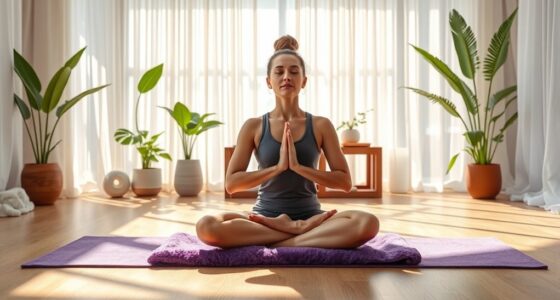

Starting a daily meditation practice is simple and rewarding. Find a quiet spot and sit comfortably, focusing on your breath or bodily sensations. When your mind wanders, gently bring your attention back without judgment. Even just five minutes a day can reduce stress and boost focus. As you stick with it, you’ll notice increased calmness and clarity. Keep practicing regularly, and you’ll open more tips to deepen your experience.
Key Takeaways
- Start with just 5 minutes daily, gradually increasing as you become more comfortable.
- Find a quiet, comfortable space and adopt a relaxed, upright sitting posture.
- Focus on your breath, observing inhalations and exhalations without judgment.
- Gently redirect your attention to your breath whenever your mind wanders.
- Maintain consistency by practicing daily, cultivating patience, and exploring different meditation styles.
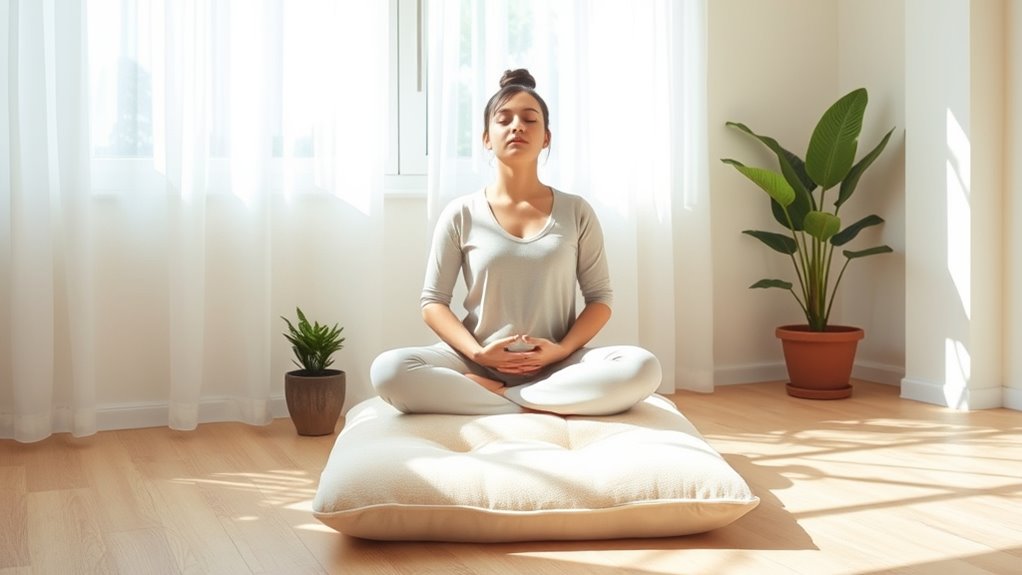
Have you ever wondered how to start meditating but feel overwhelmed by where to begin? You’re not alone. The idea of sitting quietly, focusing your mind, or trying to clear your thoughts can seem intimidating at first. Luckily, you don’t need to be an expert to get started. Beginning with simple mindfulness techniques can make the process approachable and effective. These techniques help you anchor your attention in the present moment, whether it’s focusing on your breath, sensations in your body, or sounds around you. By practicing mindfulness regularly, you’ll start noticing the meditation benefits—like reduced stress, improved focus, and a greater sense of calm—that make meditation worthwhile.
Starting meditation can feel daunting, but simple mindfulness practices make it easy and rewarding.
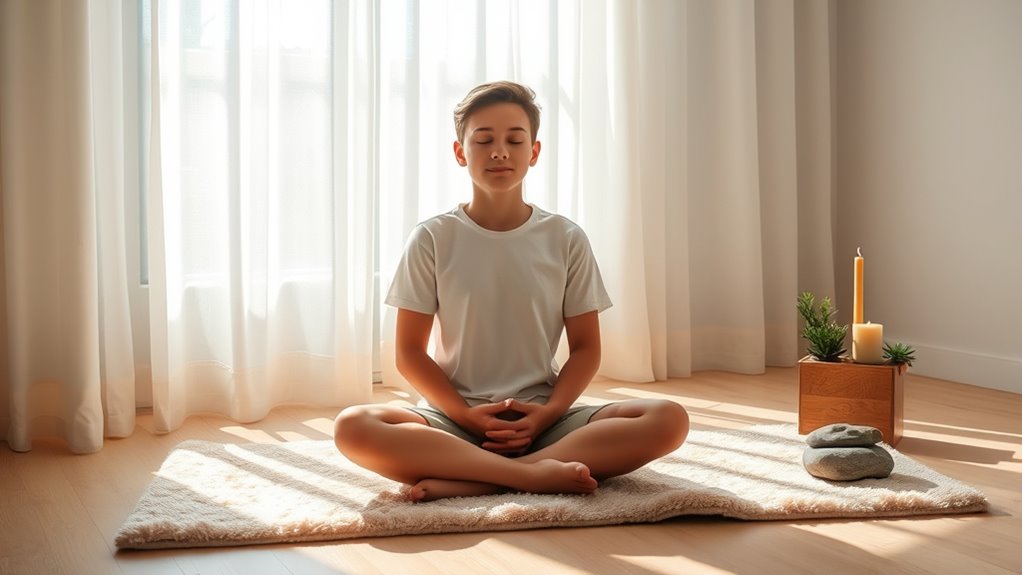
To start, find a quiet, comfortable spot where you won’t be disturbed. Sit or lie down in a relaxed position, keeping your back straight but not stiff. Close your eyes if that feels comfortable, or keep a soft gaze directed downward. Begin by taking slow, deep breaths—inhale through your nose, filling your lungs, then exhale gently through your mouth or nose. As you breathe, pay attention to the sensation of air moving in and out, or notice the rise and fall of your chest or belly. This simple act of observing your breath is a fundamental mindfulness technique that anchors you in the present moment. Don’t worry if your mind wanders—that’s natural. When you notice your thoughts drifting, gently bring your focus back to your breath without judgment. Incorporating Progressive Relaxation Techniques can also enhance your experience by systematically releasing physical tension and heightening awareness of bodily sensations.
Consistency is key when starting a meditation practice. Even just five minutes daily can make a difference. Over time, as you become more comfortable with these mindfulness techniques, you might find it easier to extend your sessions or explore different meditation styles. Remember, meditation benefits aren’t just about relaxation; they also include enhanced emotional resilience, better sleep, and increased awareness of your habits and reactions. These benefits motivate many beginners to stick with their practice, knowing that even brief daily sessions can lead to significant improvements in your mental and physical well-being.
The most important thing is to approach meditation with patience and openness. Don’t aim for perfection or try to clear your mind completely—that’s a common misconception. Instead, focus on being present and observing whatever arises without judgment. Over time, this gentle, consistent effort will help you build a sustainable meditation habit, making it an integral part of your daily routine. With patience and practice, you’ll discover that meditating becomes less of a challenge and more of a welcoming refuge amid the stresses of everyday life.

Retrospec Sedona Zafu Meditation Cushion with Buckwheat Hull Fill – Adjustable Yoga & Pilates Equipment Support – 17in Crescent Cotton Cover
NATURAL COMFORT & SUPPORT: Filled with sustainable buckwheat hulls, this meditation cushion elevates your practice by aligning your…
As an affiliate, we earn on qualifying purchases.
As an affiliate, we earn on qualifying purchases.
Frequently Asked Questions
How Long Should My Daily Meditation Sessions Be?
You should start with a meditation duration of about five to ten minutes each session. As you become more comfortable, gradually increase your session length to 15 or 20 minutes. Consistency is key, so focus on maintaining a regular practice rather than the perfect session length. Over time, longer sessions can deepen your experience, but starting small helps build a sustainable habit without feeling overwhelmed.
What if I Can’t Quiet My Mind?
If your mind won’t quiet, don’t worry—it’s normal. Use mindfulness techniques like focusing on your breath or a calming image to manage distractions. When your thoughts drift, gently bring your attention back without judgment. Consistent practice helps improve distraction management over time. Remember, meditation isn’t about stopping thoughts but observing them calmly, so be patient and kind to yourself as you develop your focus skills.
Is It Necessary to Meditate in a Specific Location?
Think of your meditation environment as your personal sanctuary—no need for a perfect spot, just somewhere peaceful. You don’t have to meditate in an ideal location; your practice can thrive anywhere that feels safe and quiet. Whether it’s a cozy corner or a park bench, what matters is creating a space that invites calmness. Your mind’s journey isn’t confined by location, but by your intention to find stillness wherever you are.
Can Meditation Help With Anxiety or Stress?
Yes, meditation can help reduce anxiety and stress. By practicing mindfulness techniques and breathing exercises, you can calm your mind and body. When you focus on your breath or stay present in the moment, it becomes easier to manage overwhelming feelings. Regular meditation trains your mind to respond more calmly to stressors, making it a powerful tool for improving mental health and emotional resilience.
How Do I Stay Motivated to Meditate Daily?
To stay motivated to meditate daily, set small goals and use mindfulness techniques to stay present. Incorporate meditation apps into your routine for guided sessions and reminders. Remind yourself of the benefits, like reduced stress and increased focus, to keep your commitment strong. Create a dedicated space and schedule time each day, making meditation a natural part of your daily habits. Consistency will help maintain your motivation over time.

Mindsight 'Breathing Buddha' Slow-It-Down Sloth Guided Visual Meditation Tool for Mindfulness | Slow Your Breathing & Calm Your Mind for Stress & Anxiety Relief | Perfect for Adults & Kids
🧠 SLOW-IT-DOWN SLOTH: Daily guided breathing to help calm & focus your mind during the day or promote…
As an affiliate, we earn on qualifying purchases.
As an affiliate, we earn on qualifying purchases.
Conclusion
Starting your meditation journey is like planting a tiny seed; with daily care, patience, and consistency, it will grow into a strong, calming tree. Remember, you don’t need to be perfect—just show up each day and nurture your practice. Over time, you’ll notice your mind becoming clearer and your stress easing. Keep tending to your inner garden, and you’ll discover a peaceful sanctuary within, blooming beautifully with each mindful moment you embrace.

Mindsight 'Original Breathing Buddha' Guided Visual Meditation | 3 Modes to Slow Your Breathing & Calm Your Mind | Stress & Anxiety Relief | Wellness Gift | Adults, Kids, Classrooms | USB Rechargeable
🧠 WHAT IT'S FOR: Daily guided breathing to help calm & focus your mind during the day or…
As an affiliate, we earn on qualifying purchases.
As an affiliate, we earn on qualifying purchases.

Leemeexaa Meditation Bench,Adjustable Metal Kneeling Chair,Non-Slip Meditation Chair with Cushion,Ergonomic Meditation Chairs or Yoga Stool, Seiza Chairs for meditations, Home Studios, Yoga Rooms.
ADJUSTABLE DESIGN FOR PERSONALIZED COMFORT: Our meditation stool focuses on ergonomics and is adjustable in height to ensure…
As an affiliate, we earn on qualifying purchases.
As an affiliate, we earn on qualifying purchases.