The best perennial plants depend on your climate, garden conditions, and how quickly you want flowers: for the strongest all-around mix of ready-to-plant convenience and pollinator appeal, I’d start with the potted pink coneflower. Caradonna salvia plugs stand out for a structured border, while mixed hostas suit shady beds where flowers are not the main goal. The main tradeoff is between established plants, which cost more to ship and plant but give you a head start, and seeds or bulbs, which offer more variety but need patience and may be less predictable. Hardiness, drainage, mature size, and whether a plant is truly perennial in your region matter as much as bloom color. Read on for my full comparison of all 15 options and how to match them to your garden.

Get garden gear delivered free with Prime
- Fast, free delivery on millions of items
- Prime Video, Amazon Music and more included
- Member-only deals all year
Complete the kit


Key Takeaways
- Plant form changes the wait: the coneflower, gardenia, chrysanthemum, ajuga, and lavender arrive as live plants, while several seed picks require germination and time before a mature display.
- Shade has its own standouts: the 6-pack mixed hostas and 9-pack hostas target foliage-focused shade planting; the sun-loving salvia and lavender are poor substitutes for a low-light bed.
- Seeds trade predictability for quantity: the large Sweet William and New England aster counts can cover more ground, but germination, timing, and growing conditions affect the result.
- “Perennial” depends on location: gardenia, calla lily, and gladiolus may need protection or be treated as seasonal plants in colder areas, unlike reliably hardy choices suited to local conditions.
- Match the plant to its job: ajuga is the ground-cover pick, lavender adds fragrance, salvia suits upright borders, and hostas fill shade with foliage rather than continuous blooms.
| Perfect Plants Frostproof Gardenia Live Plant, 1-Gallon Pot |  | Best Fragrant Shrub | Plant type: Gardenia shrub | Pot size: 1 gallon | Mature height: About 5 feet | VIEW LATEST PRICE | See Our Full Breakdown |
| CarpetC1000+ Obedient Plant Seeds for Planting, Native Perennial Long-Lasting Low Maintenance for Cut Flowers, Pollinator Gardens, Borders and Meadows |  | Best for Pollinator Gardens | Plant type: Obedient plant (Physostegia virginiana) | Seed count: 1,000 | Plant height: About 30 inches | VIEW LATEST PRICE | See Our Full Breakdown |
| Mixrug Sweet William (Dianthus) Flower Seeds, 5,000+ Count |  | Best for Colorful Seed Sowing | Seed count: 5,000+ | Plant type: Biennial or perennial | Height: 12–24 inches | VIEW LATEST PRICE | See Our Full Breakdown |
| Mixed Hosta Perennials – 6 Pack Bare Root Shade Plants |  | Best for a Multi-Plant Hosta Start | Brand: Willard & May | Quantity: 6 plants | Plant type: Hosta perennial | VIEW LATEST PRICE | See Our Full Breakdown |
| Gardeners Basics Perennial Flower Seed Collection, 5 Varieties |  | Best for a Mixed Perennial Bed | Varieties: Russell strain lupine, blue columbine, purple coneflower, Black-Eyed Susan, and Alaska Shasta daisy | Packet contents: Lupine: 1 g; blue columbine: 300 mg; purple coneflower: 800 mg; Black-Eyed Susan: 500 mg; Shasta daisy: 500 mg | Expected blooming period: Spring to fall | VIEW LATEST PRICE | See Our Full Breakdown |
| 600 New England Aster Heirloom Flower Seeds, Purple (Aster novae-angliae) |  | Best for Late-Season Pollinator Gardens | Seed count: 600 | Plant: New England aster (Aster novae-angliae) | Color: Purple | VIEW LATEST PRICE | See Our Full Breakdown |
| Coneflower (Echinacea) – Pink Blooms, Live Pollinator-Friendly Flowering Perennial, 12″ Tall x 6″ Wide, 2 Qt Pot |  | Best for Beginner-Friendly Pollinator Planting | Plant type: Live Echinacea | Color: Pink | USDA hardiness zones: 3–9 | VIEW LATEST PRICE | See Our Full Breakdown |
| Red Bloom Chrysanthemum Live Fall Perennial, 15″ Tall x 12″ Wide, 3 qt Pot |  | Best for Ready-to-Plant Fall Color | Plant type: Live chrysanthemum | Color: Red | USDA hardiness zones: 5–9 | VIEW LATEST PRICE | See Our Full Breakdown |
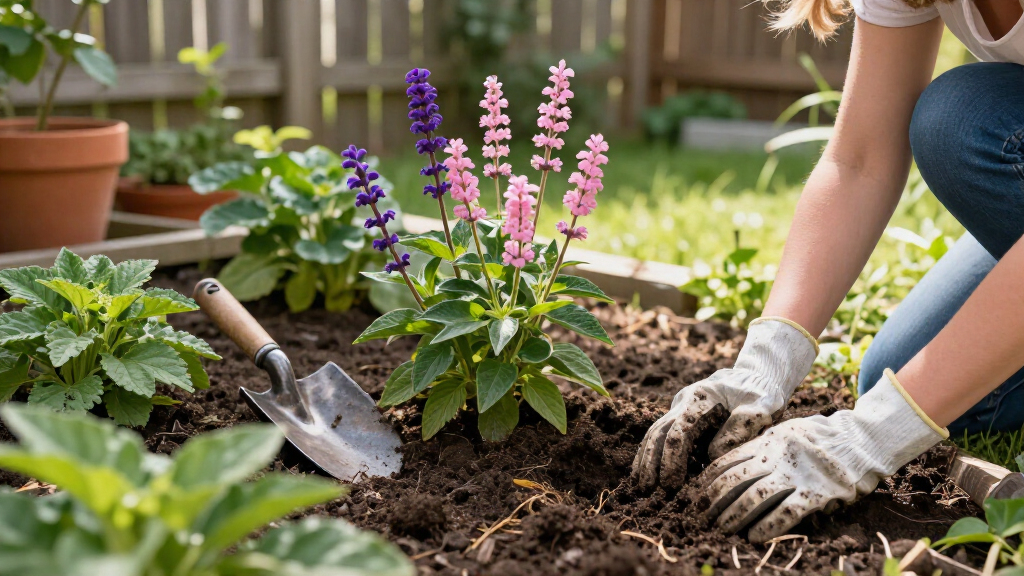
| Caradonna Salvia Live Plant Plugs, Salvia nemorosa, 3 Pack |  | Best for Borders and Mass Plantings | Botanical name: Salvia nemorosa | Quantity: 3 live plugs | Flower color: Deep violet-purple | VIEW LATEST PRICE | See Our Full Breakdown |
| 100 Pcs Calla Lily Seeds – Mixed Color Perennial Flowers |  | Best for Color Variety on a Seed-Growing Project | Seed count: 100 | Color: Mixed colors | Expected bloom period: Spring to fall | VIEW LATEST PRICE | See Our Full Breakdown |
| 25 pcs Blue Pink Purple Hydrangea Seeds – Hardy Perennial Flowers |  | Best for Color-Mix Seed Growing | Seed count: 25 | Plant height: 3 feet | Sunlight: Full sun | VIEW LATEST PRICE | See Our Full Breakdown |
| Ajuga (2-Pack) Live Flowering Ground Cover Perennial, 8″ Tall x 5″ Wide, 1 Qt Pot |  | Best for Shade-Tolerant Ground Cover | Pack quantity: 2 plants | Pot size: 1 quart | Height: 6 inches | VIEW LATEST PRICE | See Our Full Breakdown |
| 9-Pack Hosta Bare Root Perennial Plants |  | Best Value for Filling Shady Beds | Pack quantity: 9 bare-root plants | Botanical name: Hosta | USDA hardiness zones: 3–8 | VIEW LATEST PRICE | See Our Full Breakdown |
| Lavender (2 Pack) – Purple Blooms, Live Fragrant & Aromatic Perennial, 10″ Tall x 5″ Wide, 1 Qt Pot |  | Best for Fragrance and Containers | Quantity: 2 plants | Pot size: 1 quart each | Initial size: 10–12 inches tall and 5 inches wide | VIEW LATEST PRICE | See Our Full Breakdown |
| 10 Gladiolus Bulbs, Mixed Colors – Sword Lily, Easy-to-Grow Perennial Garden or Container Flowers |  | Best for Tall Summer Cut Flowers | Quantity: 10 corms | Plant height: Up to 48 inches | Bloom period: Summer | VIEW LATEST PRICE | See Our Full Breakdown |
| perennial plant | Sunlight | USDA hardiness zones |
|---|---|---|
| Perfect Plants Frostproof Gard | — | — |
| CarpetC1000+ Obedient Plant Se | — | — |
| Mixrug Sweet William | Full sun | — |
| Mixed Hosta Perennials | — | — |
| Gardeners Basics Perennial Flo | — | 3–11 |
| 600 New England Aster Heirloom | Full sun | 2–8 |
| Coneflower | Full sun | 3–9 |
| Red Bloom Chrysanthemum Live F | Full sun to partial shade | 5–9 |
| Caradonna Salvia Live Plant Pl | Full sun | 3–10 |
| 100 Pcs Calla Lily Seeds | Full sun | — |
| 25 pcs Blue Pink Purple Hydran | Full sun | — |
| Ajuga | Partial shade to full sun | 4–9 |
| 9-Pack Hosta Bare Root Perenni | — | 3–8 |
| Lavender | Full sun | 5–9 |
| 10 Gladiolus Bulbs | — | 7–10 |
More Details on Our Top Picks
Perfect Plants Frostproof Gardenia Live Plant, 1-Gallon Pot
I’d choose this live gardenia when fragrance and evergreen-looking structure matter as much as perennial flowers. Its white blooms arrive in spring and summer, while the shrub can grow to about 5 feet tall and 4 feet wide—more presence than the seed-grown flowers elsewhere in this group. It suits a border, low hedge, or focal spot, and deer resistance may help in gardens where browsing is an issue. Compared with the obedient plant seeds, this is a single established shrub rather than a large sowing project, but it offers less flexibility for filling a broad meadow. Plan around its preference for full sun to partial shade, and note that it does not ship to California or Arizona. It’s a poor fit for deep shade or gardeners seeking a compact plant.
Pros:- Fragrant white flowers bloom in spring and summer.
- Mature shrub size gives borders and low hedges lasting structure.
- Deer-resistant feature may suit gardens with browsing pressure.
- Supplied in a 1-gallon pot with plant food.
Cons:- Shipping is unavailable to California and Arizona.
- Needs full sun to partial shade, limiting use in deeply shaded beds.
- Takes substantially more space than low-growing or compact perennial options.
Best for: Gardeners who want a fragrant, flowering shrub for a sunny or partly shaded border, hedge, or focal point.
Not ideal for: Gardeners in California or Arizona, or those with deep shade or limited space for a shrub that can reach 5 feet tall and 4 feet wide.
- Plant type:Gardenia shrub
- Pot size:1 gallon
- Mature height:About 5 feet
- Mature width:About 4 feet
- Flower color:White
- Blooming period:Spring to summer
- Sunlight exposure:Full sun to partial shade
- Special features:Fragrant; deer resistant
- Shipping restriction:Does not ship to California or Arizona
Our verdict“Choose this potted gardenia if you want a fragrant, deer-resistant shrub and have room for its mature size.”
CarpetC1000+ Obedient Plant Seeds for Planting, Native Perennial Long-Lasting Low Maintenance for Cut Flowers, Pollinator Gardens, Borders and Meadows
For a sunny bed that should feed pollinators well into fall, I’d put obedient plant seeds ahead of the Sweet William seeds in this group. Its white flower spikes bloom from mid-summer to early fall, and bees, butterflies, and hummingbirds are drawn to them; the flowers can also be repositioned on the stem for cut-flower arrangements. The listed 1,000 seeds make this a better fit for planting an area than the potted Frostproof Gardenia, though seeds require more patience and establishment work than a live shrub. Once established, the plant is described as low maintenance, but it spreads through underground rhizomes and may need division every two to three years. Skip it for deep shade or a small, tightly controlled planting where spreading would be unwelcome.
Pros:- Blooms from mid-summer through early fall.
- Flowers attract bees, butterflies, and hummingbirds.
- Flower positions can be adjusted on the spike for visual interest and cutting.
- Low maintenance once established and suited to zones 3–9.
Cons:- Spreads by underground rhizomes and may need division every two to three years.
- Seed-grown plants take more time and care to establish than a potted live plant.
- Performs poorly in deep shade and calls for moderate watering.
Best for: Gardeners with sunny, moderate-moisture borders or meadows who want late-season blooms and pollinator activity.
Not ideal for: Gardeners with deep shade, dry sites, or small beds where a rhizomatous plant would be hard to contain.
- Plant type:Obedient plant (Physostegia virginiana)
- Seed count:1,000
- Plant height:About 30 inches
- Bloom period:Summer to fall
- Flower color:White
- Sunlight exposure:Full sun to partial shade
- Soil type:Loam or sandy soil
- Moisture needs:Moderate watering
- Hardiness zones:3–9
Our verdict“Choose obedient plant seeds for a sunny, pollinator-focused planting if you can manage their spreading habit.”
Mixrug Sweet William (Dianthus) Flower Seeds, 5,000+ Count
The 5,000-plus Sweet William seeds make this the volume pick for gardeners who want varied color across beds, borders, or cutting patches. Flowers may be white, pink, purple, red, or violet, with fragrance and pollinator appeal adding more than color alone. Compared with the five-variety Gardeners Basics collection, this packet focuses on one flower type, so it offers a more unified look but less variety in plant form and bloom character. The tradeoff is patience: Sweet William may not flower until the year after sowing, and it needs full sun and well-drained soil. The supplied hardiness information also conflicts, listing zones 3–9 in the title and 4–10 in the description. I’d avoid relying on it for a precise zone match without checking local growing guidance.
Pros:- More than 5,000 seeds can cover a broad planting area.
- Produces fragrant flowers in several listed colors.
- Attracts pollinators and can supply cut flowers.
- Can be started indoors or sown outdoors in spring or early autumn.
Cons:- May bloom the year after planting rather than in the first season.
- Needs full sun and well-drained soil.
- Hardiness guidance conflicts between zones 3–9 and 4–10.
Best for: Gardeners who want to sow a large, colorful patch of fragrant Dianthus for borders, pollinators, or cut flowers.
Not ideal for: Anyone needing flowers in the first season, gardening in poorly drained soil, or choosing plants strictly by a confirmed hardiness zone.
- Seed count:5,000+
- Plant type:Biennial or perennial
- Height:12–24 inches
- Width:6–12 inches
- Bloom period:Mid-spring to mid-summer
- Flower colors:White, pink, purple, red, and violet
- Sunlight:Full sun
- Soil:Well-drained; sandy soil listed
- Hardiness zones:Conflicting listings: 3–9 in title; 4–10 in description
Our verdict“Choose Sweet William for a large, colorful sowing if delayed flowering and uncertain zone guidance are acceptable.”
Mixed Hosta Perennials – 6 Pack Bare Root Shade Plants
This six-plant pack is the lineup’s dedicated choice for gardeners seeking hostas in quantity, though its care details need a closer check before buying. The listing calls these shade plants and describes hostas as low maintenance, yet the supplied sunlight spec says full sun; that mismatch makes placement less clear than with the seed-grown options. The plants arrive bare root, so they need careful handling and prompt planting rather than the ready-to-place convenience of the potted Frostproof Gardenia. In return, the pack gives you six starts, each listed with an 18-inch growth diameter, plus a stated growth guarantee. The reported summer-to-fall bloom period is unusual for a hosta listing that gives fall as the expected bloom period, so I would not choose this pack primarily for flowers. Verify growing instructions before planting.
Pros:- Includes six bare-root hosta plants for a multi-plant bed.
- Listed with an 18-inch growth diameter per plant.
- Low-maintenance perennial choice with a stated growth guarantee.
- Described as organic.
Cons:- Sunlight details conflict: the product is described as a shade plant but lists full sun.
- Bare roots need careful handling during planting.
- Bloom timing varies between the summer-to-fall description and fall spec.
Best for: Gardeners who want six hosta starts for an outdoor planting and are comfortable handling bare roots and confirming site requirements.
Not ideal for: Buyers who need clear shade-specific care instructions, a potted plant ready for placement, or reliable bloom timing information.
- Brand:Willard & May
- Quantity:6 plants
- Plant type:Hosta perennial
- Growth diameter:About 18 inches
- Sunlight exposure:Full sun listed; description also identifies the plants as shade plants
- Moisture needs:Moderate watering
- Material feature:Organic
- Expected bloom period:Fall listed; description says summer through fall
- Planting period:Summer
Our verdict“Choose this pack if you want six hostas and can confirm their light and planting needs before setting them out.”
Gardeners Basics Perennial Flower Seed Collection, 5 Varieties
I’d choose this collection over the single-variety Sweet William packet when the goal is a mixed perennial bed rather than a large patch of one flower. It includes lupine, blue columbine, purple coneflower, Black-Eyed Susan, and Shasta daisy in individually labeled packets, giving gardeners several plants to plan across borders or pollinator areas. The listed bloom window runs from spring to fall, but that range describes the collection, not a guarantee that every variety blooms throughout the season. Unlike the ready-to-plant Frostproof Gardenia, these seeds call for planning and follow-up care, and the packet sizes differ by variety. Growing needs and performance also vary by plant and location, so this is a flexible starter set rather than a uniform, predictable planting.
Pros:- Includes five distinct flower varieties in individually labeled packets.
- Heirloom and GMO-free seed traits are listed.
- Offers several options for beds, borders, and pollinator gardens.
- Collection has a stated spring-to-fall expected bloom period.
Cons:- Sowing and care requirements vary by variety.
- Blooming and winter survival depend on local conditions.
- Regular watering is listed, and seed-grown plants require establishment time.
Best for: Gardeners planning a varied perennial bed or pollinator planting who are willing to follow separate sowing and care instructions for each flower.
Not ideal for: Buyers who want one consistent plant with predictable placement, or a live perennial that can be planted without seed-starting decisions.
- Varieties:Russell strain lupine, blue columbine, purple coneflower, Black-Eyed Susan, and Alaska Shasta daisy
- Packet contents:Lupine: 1 g; blue columbine: 300 mg; purple coneflower: 800 mg; Black-Eyed Susan: 500 mg; Shasta daisy: 500 mg
- Expected blooming period:Spring to fall
- Sunlight exposure:Full sun
- Expected planting period:Spring to summer
- USDA hardiness zones:3–11
- Moisture needs:Regular watering
- Seed traits:Heirloom; GMO-free
Our verdict“Choose this collection if you want variety for a planned perennial bed and can manage different growing needs.”
600 New England Aster Heirloom Flower Seeds, Purple (Aster novae-angliae)
I’d choose these New England aster seeds when fall color and pollinator food matter more than getting instant garden impact. The plants are described as reaching 48 inches and blooming in fall, a taller, later-season counterpoint to the pink summer-to-fall Coneflower (Echinacea). A packet of 600 seeds offers room for a generous bed, but this is a project rather than a ready-to-plant purchase: seeds need eight weeks of cold stratification, and seedlings need regular watering. The wide hardiness range, zones 2–8, suits many gardens, while the heirloom, GMO-free seed description may appeal to gardeners who prefer open-grown plants. Skip it if you want flowers this season or prefer low-preparation planting; the live Caradonna salvia plugs are a more direct route to established plants.
Pros:- 600 seeds give gardeners the potential to sow a broad planting.
- Fall blooms extend color after many summer-flowering perennials fade.
- Flowers attract bees and butterflies.
- Heirloom and GMO-free material features are specified, and a growing guide is included.
Cons:- Eight weeks of cold stratification adds planning and preparation.
- Regular watering is needed, making it less suited to dry, hands-off sites.
- Seed-grown plants take more time to establish than the live salvia plugs.
Best for: Gardeners planning a large fall-blooming border who have time to stratify seeds and raise seedlings.
Not ideal for: Buyers seeking an established plant, quick first-season color, or a low-effort option that does not need regular watering.
- Seed count:600
- Plant:New England aster (Aster novae-angliae)
- Color:Purple
- USDA hardiness zones:2–8
- Expected height:48 inches
- Sunlight:Full sun
- Planting period:Fall to spring
- Cold stratification:8 weeks
- Spacing:18–24 inches
Our verdict“Choose these asters for a sizable, pollinator-friendly fall display if you are willing to stratify seeds and wait for plants to mature.”
Coneflower (Echinacea) – Pink Blooms, Live Pollinator-Friendly Flowering Perennial, 12″ Tall x 6″ Wide, 2 Qt Pot
This live pink coneflower is the most straightforward choice here for someone who wants a perennial without seed-starting steps. It offers summer-to-early-fall flowers, attracts bees, butterflies, and hummingbirds, and can tolerate drought once established. Compared with the New England aster seeds, it gives the buyer a plant rather than a stratification schedule; compared with the Caradonna salvia plugs, it is sold as a single potted specimen rather than a three-plug set. The stated hardiness range of zones 3–9 is broad, and winter seed heads can feed birds. There is a size discrepancy to keep in mind: the title says 12 inches tall, while the listed expected mature height is 36 inches. It also needs careful handling on arrival, and full sun and well-draining soil are best.
Pros:- Live potted plant avoids the seed stratification required by New England aster.
- Pink flowers provide color from summer into early fall.
- Attracts bees, butterflies, and hummingbirds.
- Drought tolerant once established and leaves seed heads that feed birds in winter.
Cons:- The 12-inch title size conflicts with the listed mature height of up to 36 inches.
- Live plants need careful handling during shipping and after arrival.
- Requires full sun and well-draining soil for suitable growing conditions.
Best for: New perennial gardeners who want a live, pollinator-friendly plant and can provide a sunny, well-drained spot.
Not ideal for: Shoppers who need a precisely sized compact plant or cannot accommodate a live plant that may reach 36 inches.
- Plant type:Live Echinacea
- Color:Pink
- USDA hardiness zones:3–9
- Expected mature height:36 inches
- Blooming period:Summer to fall
- Sunlight:Full sun
- Soil:Well draining
- Moisture needs:Moderate watering
- Unit count:1
Our verdict“Pick this coneflower for an easy-entry live perennial with pollinator appeal, provided its eventual size fits your garden.”
Red Bloom Chrysanthemum Live Fall Perennial, 15″ Tall x 12″ Wide, 3 qt Pot
For a buyer who wants red fall color now, this live chrysanthemum is a more immediate choice than either the New England aster seeds or the calla lily seeds. It arrives in a 3-quart pot and is described as ready to plant, so there is no seed-starting stage. Its listed mature dimensions—about 24 inches tall and wide—make it a substantial garden accent, though the title’s smaller 15-by-12-inch dimensions may describe the shipped plant rather than its mature size. Unlike the drought-tolerant coneflower, this mum calls for regular moisture and well-draining soil. Its zones 5–9 range is narrower than the Caradonna salvia’s 3–10, and its outdoor focus makes it less flexible for indoor displays. I’d favor it for a sunny or partly shaded bed with room and reliable watering.
Pros:- Live 3-quart plant offers a quicker route to garden color than seed-grown options.
- Red blooms bring a strong fall accent.
- Can grow in full sun or partial shade.
- Listed for USDA zones 5–9.
Cons:- Needs regular moisture and well-draining soil.
- Title dimensions differ from the listed mature size of about 24 inches tall and wide.
- Designed primarily for outdoor use rather than indoor display.
Best for: Gardeners in zones 5–9 who want an established red-flowering plant for an outdoor fall bed or border.
Not ideal for: People seeking a drought-tolerant perennial, an indoor plant, or a compact specimen with clearly stated shipped dimensions.
- Plant type:Live chrysanthemum
- Color:Red
- USDA hardiness zones:5–9
- Expected height:24 inches
- Expected spread:24 inches
- Pot size:3 qt
- Sunlight:Full sun to partial shade
- Soil:Well draining
- Moisture needs:Regular watering
Our verdict“Choose this chrysanthemum for immediate outdoor fall color if you can water regularly and have space for a roughly two-foot plant.”
Caradonna Salvia Live Plant Plugs, Salvia nemorosa, 3 Pack
The advantage of Caradonna salvia is its combination of dramatic flower spikes and a useful three-plug format. Deep violet-purple blooms and dark stems give borders more vertical definition than the rounded red chrysanthemum, while three plants make a small grouping easier to plan than the single coneflower. Its stated zones 3–10 cover a wide range, and the flowers attract pollinators. The tradeoff is that these are plugs, not a large established specimen: they need regular watering while roots settle, plus full sun and well-drained soil. That makes them less immediate than the potted chrysanthemum, which is described as ready to plant. Bloom timing is given as summer to winter, but local climate and care can affect how long flowers persist. I’d pick this set for a sunny border or mass planting, not a shaded bed.
Pros:- Three live plugs make it easier to start a coordinated grouping than a single-plant option.
- Violet-purple spikes and dark stems provide strong border structure.
- Attracts bees, butterflies, and other pollinators.
- Hardiness range spans USDA zones 3–10.
Cons:- Needs full sun, limiting placement in shaded gardens.
- Requires regular watering while plugs establish.
- Smaller plugs take time to fill a border compared with the ready-to-plant chrysanthemum.
Best for: Gardeners building a sunny cottage-garden border or pollinator planting who want three matching perennial plugs.
Not ideal for: Those with shaded or poorly drained beds, or buyers who want a large, established plant at arrival.
- Botanical name:Salvia nemorosa
- Quantity:3 live plugs
- Flower color:Deep violet-purple
- Blooming period:Summer to winter
- USDA hardiness zones:3–10
- Sunlight:Full sun
- Soil type:Loam
- Soil moisture:Moderate watering
Our verdict“Choose the salvia plugs for a sunny, repeatable border planting if you are prepared to water them through establishment.”
100 Pcs Calla Lily Seeds – Mixed Color Perennial Flowers
These mixed-color calla lily seeds suit gardeners who value variety and the process of raising plants more than a guaranteed quick display. The pack includes 100 seeds, and the described plants may reach about two feet with blooms from spring through fall. That season is broader than the fall-focused New England aster and chrysanthemum, while mixed colors offer a less uniform look than the single-color Caradonna salvia or red mum. The listing says pre-soaking supports germination, but the supplied information also warns that germination can be slow and erratic; seedlings need thinning and careful transplanting. Full sun, sandy soil, and regular watering are specified. Indoor and outdoor use is listed, but growing these from seed still demands patience and space for young plants. Choose them for experimentation, not for instant established perennial coverage.
Pros:- 100 seeds offer many planting opportunities.
- Mixed colors add variety compared with the single-color aster, salvia, and chrysanthemum.
- Listed for indoor and outdoor growing.
- Pre-soaking is described as helpful for germination.
Cons:- Germination can be slow and erratic.
- Seedlings require thinning and careful transplanting.
- Regular watering and full sun are needed, so this is not a low-attention seed project.
Best for: Patient seed growers who want mixed-color flowers and have room to raise and transplant seedlings for indoor or outdoor displays.
Not ideal for: Buyers who need predictable germination, established plants, or a fast-filling perennial bed.
- Seed count:100
- Color:Mixed colors
- Expected bloom period:Spring to fall
- Expected height:About 2 feet
- Sunlight:Full sun
- Soil type:Sandy
- Moisture needs:Regular watering
- Growing use:Indoor and outdoor
Our verdict“Choose these calla lily seeds if you enjoy raising seedlings and want mixed-color blooms, not if you need quick or predictable garden coverage.”
25 pcs Blue Pink Purple Hydrangea Seeds – Hardy Perennial Flowers
For gardeners who want a mix of bloom colors and enjoy starting plants from seed, these 25 hydrangea seeds offer a different route from the ready-to-plant Ajuga or Lavender options. The listed colors—blue, pink, and purple—promise variety, while the perennial habit can bring flowers back in later seasons once plants establish. The listing also describes the seeds as GMO-free and selected for a high germination rate, though it does not give a germination percentage or time to bloom. The tradeoff is a narrower site fit: these are specified for full sun and outdoor growing, and the seed format requires more patience than buying live plants. Choose them for a sunny bed and seed-starting interest; skip them if you need instant ground cover or indoor flowers.
Pros:- Pack of 25 seeds gives room to start several plants.
- Blue, pink, and purple colors offer a varied planting scheme.
- Described as hardy perennials that can return in later years.
- GMO-free seed listing.
Cons:- Seed-grown plants require more time and care than live potted alternatives.
- Full-sun requirement limits placement options.
- No germination percentage or bloom timeline is provided.
Best for: Gardeners with a sunny outdoor bed who enjoy starting flowers from seed and want a mix of blue, pink, and purple blooms.
Not ideal for: Buyers seeking established plants, indoor flowers, or a hydrangea for a shaded planting spot.
- Seed count:25
- Plant height:3 feet
- Sunlight:Full sun
- Soil type:Loam
- Watering needs:Moderate
- Colors:Blue, pink, and purple
- Growing use:Outdoor
- GMO-free:Yes
Our verdict“Choose these seeds if you want to grow a colorful hydrangea planting from scratch in a sunny outdoor bed.”
Ajuga (2-Pack) Live Flowering Ground Cover Perennial, 8″ Tall x 5″ Wide, 1 Qt Pot
This two-plant Ajuga pack is the strongest fit here for gardeners trying to cover shaded ground rather than build a border of upright blooms. Its evergreen foliage and blue spring flowers provide interest beyond the flowering period, while a dense, spreading habit can help crowd out weeds. Compared with the seed-grown hydrangeas, these arrive as live plants in 1-quart pots, so they offer a more direct start; compared with the nine bare-root Hostas, they are better suited to forming a low carpet than adding large-leaf texture. Ajuga tolerates partial shade to full sun, but the listing warns against very dry conditions and calls for well-drained, consistently moist soil. It is also limited to zones 4–9, so gardeners outside that range should choose a better-matched perennial.
Pros:- Two live plants arrive in ready-to-plant 1-quart pots.
- Evergreen foliage adds visual coverage outside the spring bloom period.
- Low, dense growth can suppress weeds.
- Handles partial shade as well as some sun.
Cons:- Needs well-drained soil that does not become excessively dry.
- Hardiness is limited to USDA zones 4–9.
- Its spreading ground-cover habit is not suited to gardeners seeking an upright focal plant.
Best for: Gardeners in USDA zones 4–9 who want ready-to-plant, low-growing cover for a partly shaded border, slope, or woodland garden.
Not ideal for: Gardeners with very dry beds, sites outside zones 4–9, or those who want tall flowers rather than spreading foliage.
- Pack quantity:2 plants
- Pot size:1 quart
- Height:6 inches
- USDA hardiness zones:4–9
- Sunlight:Partial shade to full sun
- Soil:Well-draining
- Moisture needs:Moderate watering
- Bloom and foliage:Blue spring flowers; evergreen dark foliage
Our verdict“Pick Ajuga for live, low-growing coverage in a suitably moist garden where Hostas would leave more open ground.”
9-Pack Hosta Bare Root Perennial Plants
With nine plants in one pack and tolerance for full shade to partial sun, these Hostas are a practical choice for filling low-light areas where sun-loving Lavender or Gladiolus would struggle. Their rich green, heart-shaped foliage does most of the work in the garden; purple or white bell-shaped flowers arrive in midsummer, but the listed bloom period lasts about two weeks. Compared with the two live Ajuga plants, Hostas offer a larger foliage presence and a broader planting quantity, while Ajuga is the better pick for a close, weed-suppressing carpet. These arrive bare root rather than potted, so they need prompt planting after delivery. The supplied soil guidance calls for sandy soil, which may also narrow the fit for gardeners whose beds do not drain well.
Pros:- Nine plants provide substantial coverage for a shaded planting area.
- Tolerates full shade and partial sun.
- Hardy across USDA zones 3–8.
- Rich green foliage is complemented by purple or white midsummer flowers.
Cons:- Bare roots need prompt planting after arrival.
- Flowers are listed as lasting about two weeks, so foliage supplies most of the season-long interest.
- Sandy soil guidance may not suit every garden bed.
Best for: Gardeners who need multiple shade-tolerant plants to bring leafy texture to a USDA zone 3–8 bed.
Not ideal for: Buyers who want long-lasting flowers, ready-potted plants, or a low ground-cover carpet like Ajuga.
- Pack quantity:9 bare-root plants
- Botanical name:Hosta
- USDA hardiness zones:3–8
- Light:Full shade to partial sun
- Bloom period:Mid to late summer
- Flower color and form:Purple or white; bell-shaped
- Foliage:Rich green, varied textures
- Soil type:Sandy soil
Our verdict“Choose this nine-pack when foliage and broad shade coverage matter more than extended flowering or the convenience of potted plants.”
Lavender (2 Pack) – Purple Blooms, Live Fragrant & Aromatic Perennial, 10″ Tall x 5″ Wide, 1 Qt Pot
These two live Lavender plants are the lineup’s clearest choice for adding fragrance to a sunny border or container. Unlike the seed-grown hydrangeas, they arrive as established plants, and their stated low moisture needs after establishment suit gardeners who prefer not to keep watering through the season. Mature plants are listed at 18–24 inches tall and wide, giving them more presence than a low ground cover such as Ajuga. That size also means they need room: they are not tiny permanent container accents once mature. Lavender is restricted to zones 5–9 and needs well-draining soil, so it is a poor match for wet beds or colder climates. The summer bloom window and purple flowers are appealing, but buyers prioritizing broad shade coverage should choose the Hostas instead.
Pros:- Two live plants arrive in 1-quart pots.
- Strong fragrance adds an aromatic element to borders and containers.
- Low moisture needs once established.
- Purple flowers bloom from late spring into summer.
Cons:- Requires full sun and well-draining soil.
- Hardiness is limited to USDA zones 5–9.
- Mature spread of 18–24 inches can outgrow small containers or tight planting spaces.
Best for: Gardeners in USDA zones 5–9 seeking fragrant, live perennials for a sunny, well-drained border or roomy container.
Not ideal for: Gardeners with shaded or waterlogged sites, climates outside zones 5–9, or containers too small for mature plants reaching 18–24 inches wide.
- Quantity:2 plants
- Pot size:1 quart each
- Initial size:10–12 inches tall and 5 inches wide
- Mature size:18–24 inches tall and wide
- USDA hardiness zones:5–9
- Sunlight:Full sun
- Soil and moisture:Well-draining soil; low moisture needs once established
- Bloom period and color:Late spring to summer; purple
Our verdict“Choose this Lavender pair for sunny, well-drained spaces where fragrance matters more than shade tolerance or compact mature size.”
10 Gladiolus Bulbs, Mixed Colors – Sword Lily, Easy-to-Grow Perennial Garden or Container Flowers
Gladiolus earns its place for gardeners who want tall, colorful summer flower spikes rather than ground cover or foliage-led interest. This pack includes 10 corms and lists plants reaching up to 48 inches, giving beds and borders vertical impact that the lower-growing Ajuga and Lavender cannot match. The mixed-color range is also broader than the single purple hue of the Lavender plants. The tradeoff is a site-specific growing brief: Gladiolus needs full sun and sandy, well-drained soil, and the stated hardiness range is zones 7–10. That makes it less broadly suited to cold climates than the zone 3–8 Hostas. Buyers should also treat it as a summer display, not a compact perennial edging plant; its height can call for a position where tall stems have room.
Pros:- Ten corms can create a substantial summer display.
- Flower spikes reach up to 48 inches for strong vertical presence.
- Mixed colors provide more variety than the purple-only Lavender option.
- Can be planted in garden beds, borders, or containers.
Cons:- Hardiness is limited to USDA zones 7–10.
- Requires full sun and sandy, well-drained soil.
- Tall stems are less suited to compact borders and low-growing ground-cover schemes.
Best for: Gardeners in USDA zones 7–10 who have a sunny, well-drained bed or container and want tall summer blooms for display or cutting.
Not ideal for: Gardeners in colder zones, shaded gardens, or small borders that cannot accommodate flower spikes up to 48 inches tall.
- Quantity:10 corms
- Plant height:Up to 48 inches
- Bloom period:Summer
- USDA hardiness zones:7–10
- Sun exposure:Full sun
- Soil type:Sandy, well-drained
- Water needs:Moderate
- Available colors:Blue, red, green, yellow, white, purple, pink, orange, and magenta
Our verdict“Choose these Gladiolus corms for a sunny, warm-zone planting where tall mixed-color summer flowers are the goal.”

How We Picked
I compared the 15 listings by plant form, intended garden use, and the information available about size and growing role. A live plant or plug can give a more immediate starting point than seed, while bare roots and bulbs may suit gardeners willing to wait for establishment. I also weighed whether each option fills a distinct need—such as shade foliage, ground cover, fragrance, pollinator planting, or seasonal color—rather than treating every flower as interchangeable.
The order favors options with a clear use and a relatively direct path to planting, while recognizing that no single plant suits every climate or garden. Listings with broad or potentially confusing perennial claims, especially for frost-sensitive plants and seed-grown varieties, rank lower because buyers need to verify local hardiness and growing instructions before relying on them as lasting garden plants. I did not treat seed counts as a guarantee of germination or mature plants, and I flag where the listing gives limited information.
| perennial plant | Sunlight |
|---|---|
| Perfect Plants Frostproof Gard | — |
| CarpetC1000+ Obedient Plant Se | — |
| Mixrug Sweet William | Full sun |
| Mixed Hosta Perennials | — |
| Gardeners Basics Perennial Flo | — |
| 600 New England Aster Heirloom | Full sun |
| Coneflower | Full sun |
| Red Bloom Chrysanthemum Live F | Full sun to partial shade |
| Caradonna Salvia Live Plant Pl | Full sun |
| 100 Pcs Calla Lily Seeds | Full sun |
| 25 pcs Blue Pink Purple Hydran | Full sun |
| Ajuga | Partial shade to full sun |
| 9-Pack Hosta Bare Root Perenni | — |
| Lavender | Full sun |
| 10 Gladiolus Bulbs | — |
Factors to Consider When Choosing Best Perennial Plants
Before choosing by flower color, I’d match a plant to the site and the job it needs to do. These listings span seeds, live plants, plugs, bare roots, and bulbs, so the purchase format affects both effort and timing. The following checks help prevent a perennial that looks right online from becoming a poor fit in the bed.
Check hardiness before trusting the perennial label
A perennial returns for multiple years only when its roots survive the conditions in your garden, and the same plant may behave differently across climates. Check the plant’s hardiness range against your local winter lows and look for advice about winter wet, summer heat, and protection. Frost-sensitive options such as gardenia, calla lily, and gladiolus may need to be grown in containers, lifted for winter, or treated as annuals in colder regions. A plant surviving in a mild climate does not prove it will overwinter in yours. When a listing does not state a hardiness range, consult a reliable local growing source before buying a large quantity.
Match sunlight and soil to the actual site
Count the hours of direct sun where the plant will grow, rather than using the light conditions of a nearby part of the garden. Hostas are commonly chosen for shade and foliage, while lavender and many salvias need sunny conditions and well-drained soil to perform well. Heavy, waterlogged soil can be a bigger problem than cold for plants that dislike wet roots. If your bed has mixed light, choose for the least favorable part of the planting area or group plants by conditions. Improving drainage or using a raised bed can help, but it cannot make a deep-shade site suitable for a sun-loving plant.
Choose seed, bulb, bare root, plug, or potted plant by your timeline
Seeds generally ask for more planning: germination conditions, sowing time, and a wait before plants reach flowering size. Bulbs and bare roots also need establishment, and their appearance on arrival may seem less substantial than a potted plant. Plugs occupy a middle ground, giving you a small living start that can fill out after planting. A larger potted plant is a better match when you want a visible focal point sooner, though it still needs time to settle in. Buy according to the garden’s deadline, not just the quantity shown in a listing.
Plan for mature spread, not the shipping size
A compact plant in a small pot can spread or grow taller once established, while a group of small plugs may take time to make a continuous border. Check the mature height and width, then space plants for airflow and the eventual size of their neighbors. Ground covers such as ajuga can expand beyond the original planting area, so decide where you want that coverage to stop. Hostas and other foliage plants also need room to show their shape rather than being crowded into gaps. If mature dimensions are missing, research the named species or cultivar before ordering several plants.
Treat seed counts as potential, not a finished garden
A high number of seeds does not tell you how many will germinate or how many seedlings you can grow successfully. Seed viability, storage, sowing depth, temperature, moisture, and thinning all affect the final stand. Large seed packets can be useful for meadow-style planting or for gardeners who have space to raise extras, but they may be excessive for a small border. Check whether the listing names the species and provides sowing instructions suited to your climate. For a defined layout or a near-term display, live plants or plugs can give a more predictable starting point.
Budget time and upkeep along with the planting
Perennials are not maintenance-free simply because they return. Some need regular watering while establishing, others benefit from deadheading or division, and plants grown in unsuitable soil can demand repeated correction. Consider whether you can water containers and new plantings during dry spells, and whether you want to cut back stems at the end of the season. A low-maintenance goal usually favors plants suited to the site over a collection chosen only for color. Spending more on a live plant may save germination work, but it does not remove the need for care or guarantee winter survival.
Frequently Asked Questions
Which of these plants is the safest choice for a garden with both sun and shade?
No single option on this list is a dependable answer for every mixed-light bed; the planting area should be divided by its actual conditions. Hostas are the clearest fit for the shadier section, while lavender and salvia are better suited to sunny, well-drained spots. The coneflower is a stronger candidate for an open, sunny pollinator bed than for deep shade. If one area receives only a few hours of sun, do not buy a sun-loving plant expecting nearby shade to be harmless. Measure light across the day and place each plant where its needs are met.
Should I buy seeds or live plants if I want flowers this season?
Live plants and plugs usually offer a head start over seeds, but none can promise immediate blooms because shipping condition, planting date, and establishment all matter. Seed-grown plants may need a full growing cycle before they flower, and germination is not guaranteed. A potted coneflower or chrysanthemum is a more direct route to an established plant than starting a large seed packet from scratch. If flowering this season is the priority, check the plant’s current size and condition as well as its expected bloom period. Planting early enough for roots to settle can matter as much as the format.
Can I keep gardenia, calla lily, or gladiolus as a perennial in a cold-winter area?
That depends on the plant’s hardiness and your winter conditions, so do not assume each listing will return outdoors everywhere. In cold regions, a gardenia may need a protected container location, while calla lilies and gladiolus may require lifting or indoor storage depending on the variety and local climate. Such extra steps add work and storage needs, even if they let you reuse the plant or bulbs. Check the specific plant’s hardiness guidance before ordering and compare it with your local winter temperatures. If you want an outdoor plant that returns with less intervention, choose a species suited to your region instead.
Are the hosta 6-pack and 9-pack interchangeable for filling a shade bed?
Both listings target shade planting, but pack count alone does not tell you how much area either option will cover. Compare the number and size of roots, the hosta varieties included, and their mature spread before deciding. Bare-root plants may arrive without the leafy presence of established potted hostas, then need time to grow and fill space. A mixed selection can create variety, while a uniform grouping may give a more consistent look. Measure your bed and use mature spacing guidance rather than planting every root close together to make it appear full right away.
What should I check before buying a large packet of perennial seeds?
Look for the exact species, sowing season, germination guidance, and whether the plants are suited to your hardiness zone. A high seed count can be useful for a meadow or multiple planting areas, but it can create more seedlings than a small garden can accommodate. Ask whether the flowers need stratification, indoor starting, or a particular period of cold before germinating. Also consider whether the listing identifies the seed source and gives a realistic planting plan; quantity does not confirm viability. If you need a specific layout or dependable spacing, fewer live plants may be easier to manage.
Conclusion
For the best overall balance of a ready-to-plant start and pollinator-friendly appeal, I’d choose the potted pink coneflower, provided the site is sunny and the local climate suits it. For best value in coverage, the large Sweet William or New England aster seed packets may suit gardeners who can start seeds and have room to grow extras; they are less fitting when quick, predictable results matter. The best premium-style convenience goes to the potted plants, especially the coneflower or gardenia, though gardenia is a better fit for buyers prepared to check winter protection needs. For beginners, I’d favor a clearly labeled live plant or plug matched to local light and hardiness over a large packet of seed. For specific needs, choose hostas for shade, ajuga for ground cover, lavender for fragrance, and salvia for a sunny border. My final filter is simple: buy for your conditions first, then choose the flower or foliage you want.