
TL;DR

Get garden gear delivered free with Prime
- Fast, free delivery on millions of items
- Prime Video, Amazon Music and more included
- Member-only deals all year
A gardener writing for Amateur Gardening says prolonged heat and drought in South East England damaged many crops, despite years of soil improvement and hand-watering. Figs, grapes and some container-grown or carefully watered crops did better, and he plans to plant more perennial fruit next year.
A gardener identified as Bob says summer heat and drought in South East England damaged many of his crops, while figs, grapes and some container-grown plants produced better results. In a report for Amateur Gardening, he says he plans to grow fewer annual vegetables and flowers next year and add more perennial fruit, while acknowledging that conditions may differ in the next season.
Bob describes a season in which keeping plants watered became difficult even before a hosepipe ban took effect. He says he carried large amounts of water to his vegetable plot, but that it did little to prevent the surrounding soil from drying out. Despite years of improving the soil, applying mulch and hand-watering, he eventually abandoned some crops and flowers, a challenge also addressed by these lawn recovery tasks.
In his account, containers were among the season’s successes because they retained water better than the surrounding ground. In garden beds, tomatoes and squashes did better when he directed water to their roots using plastic bottles as funnels, much like the drought-aware approaches in drought-tolerant gardening. He says this helped those plants, but did not stop nearby soil from drying and limiting their growth.
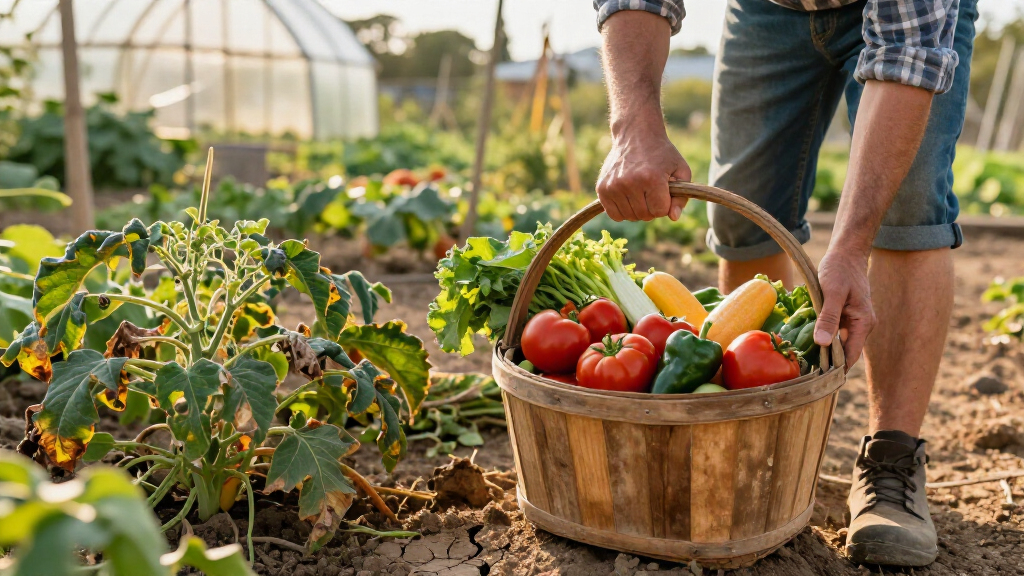
The harvest varied by crop and timing. Bob reports that onions, garlic and the earliest potatoes did reasonably well, helped by moisture left from a wetter winter. Early berries and currants were good, but later blackberries were about a month early and in poor condition. Early apricots, peaches and cherries fared better than later plums; apples and pears remained small and were described as worm-eaten. His strongest results were figs and grapes, which he says were abundant and largely unaffected by flies or wasps.
The Harvest Points to New Planting Choices
Bob’s report offers a practical account of how a dry, hot season affected one garden, rather than a controlled comparison of crop performance. Its value for readers is in the detail: water availability and delivery shaped which plants he could keep alive, and containers gave him more control than open ground in his conditions.
His plans also reflect a decision gardeners may face after a difficult season: whether to repeat the same annual crops or put more space into plants that return year after year. Bob says he will reduce annual vegetables and flowers except for early crops or those he can grow in containers, and plant more perennial fruit. That is his response to this season, not a guarantee that the same varieties will succeed in other gardens or weather.
Products Worth Considering

eufy Security SoloCam E42 4-Camera Kit, 4K Solar Security System

Levoit Core 300S-P Smart Air Purifier

Google Nest Cam Indoor/Outdoor Battery Security Camera
As an affiliate, we earn on qualifying purchases.
How Weather Shaped This Season’s Crops
The account describes conditions in the South East of England, where Bob says extreme heat and drought made watering unusually demanding. A hosepipe ban added to the pressure, although he says the garden was already struggling before it began. The report does not provide rainfall totals, temperatures, dates or measurements of yields, so it documents the gardener’s experience rather than a region-wide assessment.
Timing mattered in his harvest. Bob says a wetter winter left enough moisture for some early crops, including onions, garlic and the first potatoes. Later fruit crops had different outcomes: early stone fruit did well, while later plums, apples and pears were less successful. This distinction is central to his account; it does not suggest that every crop of a particular type responded the same way everywhere.
Bob recommends planting more perennial fruit, including currants, berries, apricots and grapes. He specifically names the grape varieties ‘Siegerrebe,’ ‘Suffolk Red,’ ‘Regent’ and ‘Boskoop Glory’. These are his recommendations based on his own experience and outlook, not an independent test of their drought tolerance.
““The figs, the figs were sublime, the grapes, the more so.””
— Bob, an Amateur Gardening contributor
What One Garden Cannot Establish
The report does not give the season’s year, exact weather readings, crop yields, garden location beyond the South East, or the amount of water used. It is a single gardener’s account, so it cannot establish how common these results were across the region or prove that containers and perennial fruit will outperform other options in future seasons.
Bob notes that next year may not bring the same weather, while suggesting that similar or worse conditions may occur more often. The article does not provide climate data or a forecast to test that expectation. It also does not specify which crops he will plant in what quantities, or how he will manage watering and soil conditions next season.
Planting Plans for the Coming Year
Bob says he intends to plant more perennial fruits, including currants, berries, apricots and grapes, and to limit annual crops to early varieties or plants he can grow in containers. The report says autumn is a suitable time to plant some fruit, but gives no detailed planting schedule or care instructions for individual varieties.
His plans remain personal rather than a formal growing recommendation. The next season’s weather and the results from the new plantings will show whether the changes suit his garden; no follow-up results are included in the report.
Key Questions
Which crops did Bob say did best?
He singled out figs and grapes as his strongest successes. He also reported good results from onions, garlic and the earliest potatoes, as well as early berries and currants.
Why did container-grown plants fare better in his garden?
Bob says containers held water better than the surrounding soil during the drought. He also directed water to the roots of tomatoes and squashes using plastic bottles, though he says the nearby soil still dried out.
What does Bob plan to grow next year?
He plans to grow fewer annual vegetables and flowers, apart from early crops or those kept in containers, and to add more perennial fruit such as currants, berries, apricots and grapes.
Does the report show that these crops will withstand future droughts?
No. It records one gardener’s experience in one season and does not provide comparative trials, weather measurements or yield data. Results may vary with local conditions and care.
Source: rss