
To build a more sustainable kitchen over time, start by using eco-friendly materials like bamboo and recycled wood, and switch to energy-efficient appliances and LED lighting. Implement waste separation bins for plastics, glass, and compostables, and rinse recyclables properly. Save water by fixing leaks and running full loads in dishwashers. Incorporate reusable containers and bags to cut plastic waste. Keep exploring simple changes to make your kitchen greener and more efficient every day.

Get garden gear delivered free — and shop member deals
- Fast, free delivery on millions of items
- Access to Prime Big Deal Days deals on October 6–7
- Prime Video, Amazon Music and more included
Key Takeaways
- Gradually replace appliances with ENERGY STAR-rated models to improve efficiency and reduce energy consumption.
- Incorporate reusable containers, bags, and cloth towels to minimize single-use plastics and waste.
- Switch to LED lighting and install smart technology to monitor and cut energy use over time.
- Set up clearly labeled recycling and compost bins to promote proper waste separation.
- Fix leaks and use water-efficient fixtures to save water and reduce environmental impact.
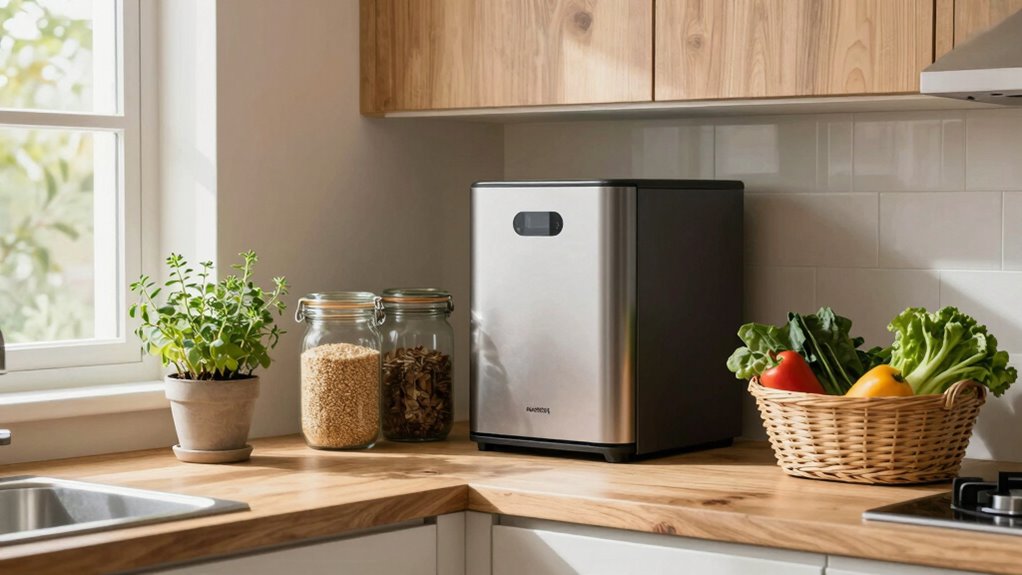
Creating a more sustainable kitchen doesn’t have to happen all at once; small, consistent changes can make a big difference over time. One of the easiest ways to start is by adopting simple recycling tips. Set up clearly labeled bins for plastics, glass, metals, and compostables. This makes it easy for everyone in your household to separate waste correctly, reducing landfill contributions and encouraging reuse. Consider rinsing recyclables to prevent contamination and avoid throwing away items that could be repurposed or recycled. Over time, these habits become second nature, gradually reducing your environmental footprint.
Next, look into replacing older appliances with energy-efficient models. Energy-efficient appliances use less electricity, which not only lowers your utility bills but also reduces greenhouse gas emissions. When shopping for new kitchen equipment, prioritize ENERGY STAR-rated products, such as refrigerators, dishwashers, and ovens. While the initial investment might be higher, the long-term savings on energy costs make it worthwhile. These appliances often come with advanced features that optimize power use, making your kitchen more eco-friendly without sacrificing performance. Embracing energy-efficient appliances is one of the most impactful steps you can take toward sustainability.
Another simple step is to be mindful of your cooking and cleaning routines. Using lids on pots and pans helps food cook faster and conserves energy. When possible, cook multiple dishes at once to maximize oven use. Switching to eco-friendly cleaning products also benefits the environment. Look for biodegradable or plant-based options that don’t contain harsh chemicals, which can harm water systems and wildlife. Additionally, using cloth towels instead of paper towels reduces waste and can be washed and reused many times. Incorporating sustainable kitchen materials like bamboo or recycled wood can further reduce your ecological impact. You might also explore energy-efficient lighting options to further enhance your kitchen’s sustainability. Installing smart home technology can help monitor and reduce energy consumption more effectively.
You can also make a difference by choosing sustainable materials for your kitchen updates. Opt for bamboo or recycled wood cutting boards, stainless steel or glass storage containers, and reusable produce bags. These choices cut down on single-use plastics and support eco-conscious manufacturing. Incorporating eco-friendly lighting, such as LED bulbs, further reduces energy use. Switching out traditional bulbs for LEDs can slash your lighting energy consumption by up to 75%. Additionally, selecting durable, eco-friendly materials encourages long-term use and less waste.
Finally, be conscious of water use. Fix leaky faucets, install aerators on taps, and use water-efficient dishwashers. Small adjustments like running full loads and avoiding pre-rinsing dishes can save gallons of water daily. Incorporating energy-efficient lighting and projector technology can also enhance your home’s sustainability by reducing overall energy consumption. Over time, these practices not only conserve resources but also cultivate a more mindful approach to your kitchen habits. By integrating these simple, sustainable practices gradually, you’ll create a kitchen that’s better for the environment and more efficient for your daily life.
As an affiliate, we earn on qualifying purchases.
Frequently Asked Questions
How Can I Reduce Water Usage in My Kitchen?
You can reduce water usage in your kitchen through water conservation habits and leak prevention. Turn off the tap while washing dishes or brushing your teeth, and only run full loads in your dishwasher and washing machine. Regularly check for leaks under sinks and around appliances, repairing them promptly. Installing water-efficient fixtures like aerators and low-flow faucets also helps, saving water and energy over time.
Are Energy-Efficient Appliances Worth the Investment?
Yes, energy-efficient appliances are worth the investment. They save you money through lower utility bills, reduce your carbon footprint, and promote a greener lifestyle. Green appliances use less energy, conserve resources, and offer better performance. By choosing energy-efficient models, you enhance your kitchen’s sustainability, cut costs over time, and contribute to environmental preservation. It’s a smart, impactful way to make your kitchen more eco-friendly and financially efficient.
What Sustainable Materials Are Best for Kitchen Countertops?
You should consider recycled materials like reclaimed wood or glass for eco-friendly countertops. Natural stone, such as granite or marble, is also a sustainable choice if sourced responsibly, as it’s durable and long-lasting. Both options reduce environmental impact—recycled materials reuse waste, while natural stone offers longevity. By choosing these sustainable materials, you create a stylish, eco-conscious kitchen that’s built to last and minimizes your carbon footprint.
How Can I Compost Effectively in a Small Kitchen?
You can compost effectively in a small kitchen by choosing a compact, odor-free compost bin placed discreetly on your countertop or under the sink. Bust kitchen composting myths by knowing it’s simple and doesn’t attract pests. Keep the bin near your prep area for convenience, and remember to regularly empty it. This way, you turn scraps into rich soil without cluttering your space, making sustainability seamlessly part of your daily routine.
What Are Eco-Friendly Ways to Dispose of Kitchen Waste?
You can dispose of kitchen waste eco-friendly by participating in local recycling programs and composting organic scraps. Use biodegradable packaging whenever possible to reduce plastic waste. Separate recyclables like glass, paper, and plastics, and guarantee they’re clean before recycling. Avoid single-use plastics, and consider reusable containers for leftovers. These practices help minimize your environmental impact and promote a more sustainable kitchen over time.
reusable silicone food storage containers
As an affiliate, we earn on qualifying purchases.
As an affiliate, we earn on qualifying purchases.
Conclusion
Think of your kitchen as a garden that needs nurturing. Each small step you take—like choosing eco-friendly products or reducing waste—is like planting a seed. Over time, these seeds grow into a lush, sustainable haven, thriving with mindful choices. Just as a garden flourishes with patience and care, your efforts will blossom into a greener, more resilient kitchen. Keep tending to it, and watch your sustainable sanctuary flourish, one mindful choice at a time.
As an affiliate, we earn on qualifying purchases.
As an affiliate, we earn on qualifying purchases.
Fall yard work Picks
leaf blowers
As an affiliate, we earn on qualifying purchases.