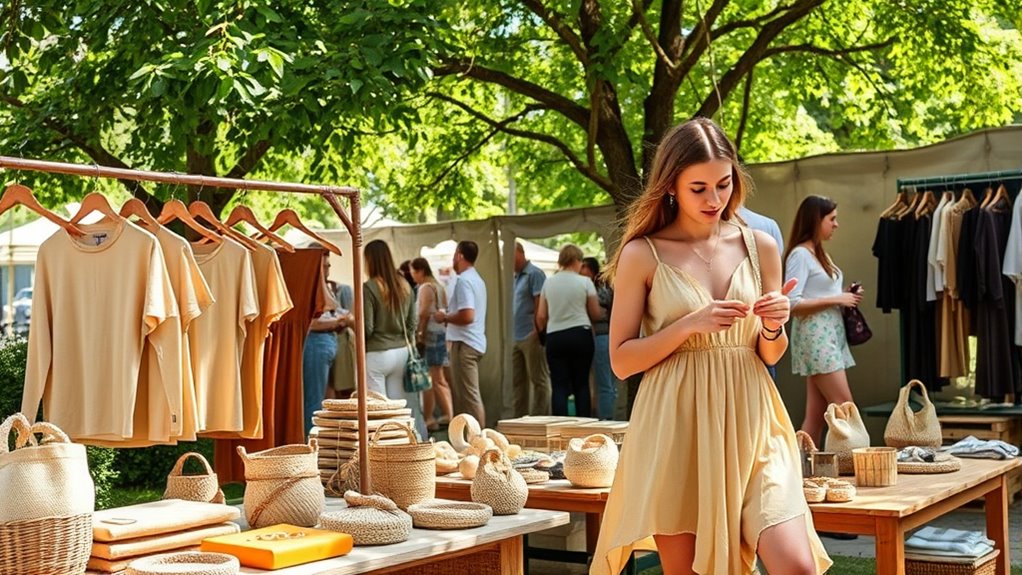

To choose ethical and eco-friendly clothing, focus on fabrics like organic cotton, hemp, Tencel, and recycled fibers that diminish environmental harm. Support brands with transparent sourcing and fair trade certifications to guarantee fair wages and safe working conditions. By making mindful purchases and prioritizing quality, you help promote sustainability and social responsibility in fashion. Continual awareness and informed choices can transform your wardrobe into a statement of your values and the planet’s health.

Get garden gear delivered free with Prime
- Fast, free delivery on millions of items
- Prime Video, Amazon Music and more included
- Member-only deals all year
Key Takeaways
- Opt for clothing made from eco friendly fabrics like organic cotton, hemp, Tencel, or recycled fibers to reduce environmental impact.
- Choose brands with transparency, fair trade certifications, and ethical manufacturing practices to ensure fair wages and safe conditions.
- Support sustainable fashion by investing in durable, high-quality pieces that last longer and reduce waste.
- Research brand sustainability commitments and prioritize those that minimize water, chemical use, and carbon footprint.
- Shift mindset from fast fashion to conscious shopping, aligning wardrobe choices with environmental and social values.

Have you ever wondered how your wardrobe choices impact the planet? Every time you shop for clothes, you have the power to make a difference. One way to do that is by choosing garments made from eco friendly fabrics. These materials are produced with sustainability in mind, often using fewer chemicals, less water, and reduced energy compared to conventional textiles. Organic cotton, hemp, Tencel, and recycled fibers are excellent options that minimize environmental harm. When you opt for these fabrics, you’re supporting a more sustainable fashion industry and reducing your carbon footprint.
Choosing eco friendly fabrics helps protect the planet and supports sustainable fashion.
Beyond the fabrics themselves, it’s important to look for brands that hold fair trade certifications. These certifications ensure that the workers involved in producing your clothes work under safe conditions and receive fair wages. Fair trade standards promote ethical practices, empowering communities and encouraging environmentally responsible manufacturing. Choosing products with fair trade certifications means you’re not just buying a piece of clothing; you’re supporting social justice and sustainable livelihoods for the people who make your clothes. It’s a way to guarantee your shopping aligns with your values, fostering a more equitable fashion industry.
When shopping consciously, it’s helpful to do a little research. Not all brands clearly disclose their sourcing or manufacturing practices, but many now highlight their use of eco friendly fabrics and fair trade partnerships. Take the time to read labels and explore brand websites to find those committed to transparency and sustainability. Sometimes, investing a bit more upfront can lead to longer-lasting, higher-quality garments that don’t need frequent replacing—saving you money and reducing waste in the long run.
Incorporating eco friendly fabrics and supporting fair trade certifications are simple yet impactful steps toward more sustainable fashion choices. It’s about shifting your mindset from fast, disposable fashion to thoughtful purchasing that benefits the planet and the people behind your clothes. Your wardrobe can be a reflection of your values, promoting environmental health and social justice simultaneously. Every purchase becomes a statement, showing that you care about the impact of your fashion choices. Additionally, understanding the environmental impact of different fabrics can help you make more informed decisions that contribute to a healthier planet.
organic cotton eco friendly clothing
As an affiliate, we earn on qualifying purchases.
As an affiliate, we earn on qualifying purchases.
Frequently Asked Questions
How Can I Identify Truly Sustainable Fashion Brands?
You can identify truly sustainable fashion brands by checking their supply chain transparency and commitment to fair labor practices. Look for brands that openly share their sourcing details and ensure fair wages and safe working conditions for workers. Do some research on their sustainability policies and certifications. When brands are transparent about their processes and prioritize ethical practices, you’ll know they’re genuinely committed to sustainability.
What Eco-Friendly Materials Are Best for Clothing?
You should look for clothing made from organic fibers like organic cotton, hemp, or linen, as they’re grown without harmful chemicals. Recycled textiles are also great—they repurpose materials like polyester from plastic bottles, reducing waste and energy use. When shopping, check labels for these eco-friendly materials to guarantee you’re choosing sustainable options that minimize environmental impact and promote ethical fashion practices.
Are Secondhand Clothes Always More Sustainable?
Secondhand clothes aren’t always more sustainable, but they often are, like a treasure chest filled with recycling benefits. Vintage shopping extends a garment’s life, reducing waste and the demand for new resources. While some secondhand items may have a bigger carbon footprint if they require extensive cleaning or repairs, generally, choosing pre-loved clothing supports eco-friendly practices and cuts down on environmental harm, making your wardrobe a little greener.
How Does Fast Fashion Impact the Environment Long-Term?
Fast fashion notably impacts the environment long-term by increasing environmental pollution and water consumption. You contribute to pollution through the release of microplastics and toxic chemicals during production and disposal. Additionally, fast fashion brands use vast amounts of water, depleting resources and harming ecosystems. By purchasing fast fashion, you unintentionally support practices that damage the planet, emphasizing the importance of choosing more sustainable, eco-friendly clothing options to reduce your environmental footprint.
Can Sustainable Fashion Be Affordable for Everyone?
You can find affordable sustainable fashion with some effort. For example, consider brands that prioritize eco-friendly materials and fair labor practices while offering budget-friendly options. Cost considerations are essential, but shopping during sales or choosing versatile, durable pieces can help you stay within your budget. While it might take more time to find these options, sustainable fashion can definitely be accessible and affordable for everyone.
fair trade certified sustainable fashion
As an affiliate, we earn on qualifying purchases.
As an affiliate, we earn on qualifying purchases.
Conclusion
By choosing ethical and eco-friendly clothing, you hold the power to nurture the planet like a gentle gardener tending to fragile blooms. Every conscious purchase is a seed of hope, growing into a future where fashion and nature thrive side by side. When you wear sustainable fashion, you’re not just dressing yourself—you’re wrapping the world in kindness and care, lighting the path toward a greener, more harmonious tomorrow. Your choices become the brushstrokes on a brighter Earth’s canvas.
As an affiliate, we earn on qualifying purchases.
ethical and eco-friendly wardrobe staples
As an affiliate, we earn on qualifying purchases.
As an affiliate, we earn on qualifying purchases.
Halloween Picks
halloween
As an affiliate, we earn on qualifying purchases.