
TL;DR

Get garden gear delivered free with Prime
- Fast, free delivery on millions of items
- Prime Video, Amazon Music and more included
- Member-only deals all year
Gardening Know How describes three ways to reuse plastic storage totes in a garden: as a mini greenhouse, a seed-starting tray and a small raised bed. The ideas can repurpose containers gardeners already own, but the article cautions that totes need ventilation, drainage and sufficient depth for the plants being grown.
Gardening Know How has outlined three ways to reuse old plastic storage totes in a garden: as a mini greenhouse, a seed-starting tray or a small raised bed. The suggestions offer gardeners a way to repurpose containers they already have, with modifications ranging from none at all to drilling drainage holes.
The simplest option is a mini greenhouse made from a clear tote. The article says to turn the container upside down over seedlings or tender plants, then prop up one side with a brick or rock so air can circulate and heat can escape. The opening can be closed at night and reopened in the morning. A tote lid can serve as a base or water-catching tray; without a lid, the container can sit directly on the ground.
Smaller totes can become seed-starting trays after drainage holes are made in the bottom. Gardening Know How recommends using a drill or a heated metal skewer, and cautions against making holes with a knife or scissors because they can increase the risk of injury or cracking the plastic. A lid placed underneath can catch water or help with bottom watering. A second tote set over the top can provide a sheltered space for seedlings.
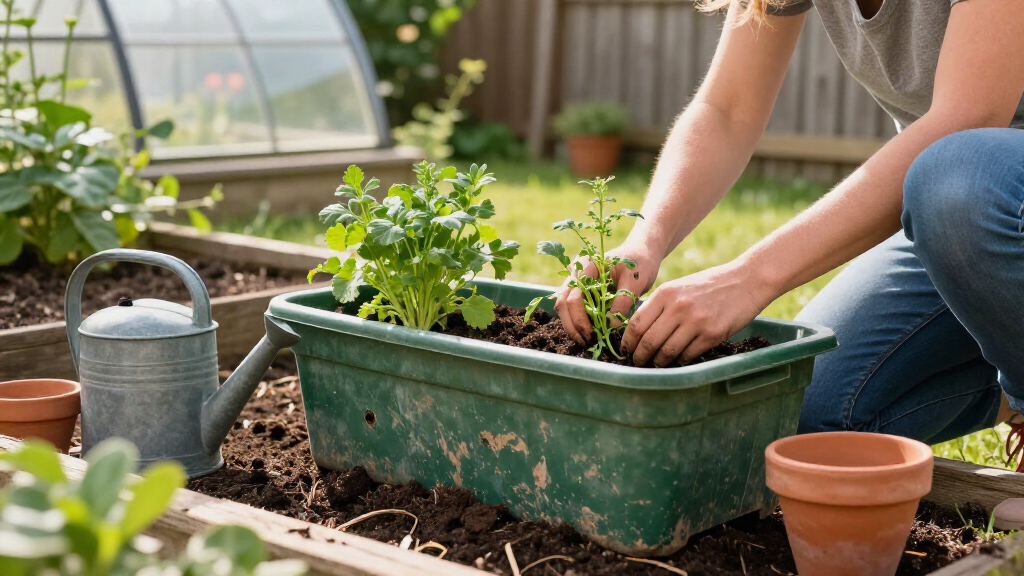
For larger containers, the article suggests making a small raised bed by drilling drainage holes, adding growing mix and planting. It says this can work on a porch, patio, balcony or in a backyard, and that potatoes grow well in containers. The source recommends a tote around 15 inches deep to give roots room, while noting that outdoor plastic containers may last only a few years in the sun.
Reuse Cuts the Cost of Garden Gear
Repurposing a tote can reduce the need to buy separate equipment for starting seeds or sheltering young plants. The advice is particularly relevant to gardeners with limited space or budgets: a small container can sit on a windowsill or balcony, while a larger one can hold plants where a conventional garden bed will not fit.
The savings depend on having a suitable container and using it safely for the intended plants. The article presents the ideas as low-cost alternatives, but gives no price comparisons or measurements of yield. Its practical value is in showing how an item that might otherwise be stored or discarded can serve another purpose with little preparation.
Three Uses, Different Tote Needs
The report appears in Gardening Know How’s Dirt Cheap Gardening series and focuses on reusing household storage containers. The projects have different requirements: the greenhouse needs a clear tote so light reaches plants, while the seed tray and raised bed can use opaque containers.
The amount of work also varies. The greenhouse needs no physical changes to the tote, according to the article. Seed trays and raised beds need holes for drainage. For the raised bed, the source recommends a sufficiently large and deep container; its stated depth guidance is approximately 15 inches. The report does not provide a specific model, material grade or test results for tote longevity.
““This is my favorite way to use a plastic storage tote in the garden.””
— Gardening Know How contributor
Performance Depends on Conditions
The report does not quantify how much money gardeners might save, how much earlier plants can be started, or how yields compare with purpose-built equipment. It also does not identify which tote plastics are suitable for growing edible crops. The article’s recommendations describe reuse practices, but do not establish a universal safety or durability standard for every storage container.
Greenhouse temperatures will depend on sunlight and weather, and the source gives no temperature range or fixed ventilation schedule. Gardeners will need to check conditions and avoid leaving plants sealed inside in direct sun. The article also does not specify how many drainage holes are needed beyond advising that seed trays have several, with a handful per square foot as a guide.
Check Fit Before Planting
Gardeners considering the ideas can start by matching the tote to the project: use a clear container for the mini greenhouse, a smaller tote for seedlings, and a large, deep tote for crops that need more root space. Before planting in a modified tote, they can add drainage holes and place it where excess water can drain or be caught.
For the greenhouse, the next step is regular monitoring: prop the container open during the day to release heat and close it at night when protection from cold is needed. As seedlings grow, the report says they can be carried outdoors in the tote for planting. The source gives no follow-up schedule or further results for the three methods.
Key Questions
What are the three suggested uses for old plastic totes?
Gardening Know How suggests using them as a mini greenhouse, a seed-starting tray or a small raised bed.
Does the mini greenhouse need a clear tote?
Yes. The article says to use a clear tote so light can reach the plants. It recommends propping up one side to let air circulate and heat escape.
Do totes need drainage holes for every use?
The seed-starting tray and raised bed need holes in the bottom for drainage. The mini greenhouse method does not require modifying the tote.
How deep should a tote raised bed be?
The report recommends a tote around 15 inches deep to give plants room for root growth. The required depth can vary by crop.
How long will a plastic tote last outdoors?
The article says outdoor totes may last only a few years in the sun, and describes them as less durable than metal or wooden raised beds.
Source: rss
Fall yard work Picks
leaf blowers
As an affiliate, we earn on qualifying purchases.