
TL;DR
A Gardener’s Path report outlines fall care for boysenberries in colder growing zones: remove spent fruiting canes, thin first-year canes, and protect the plant with straw mulch. In USDA Zones 4 and 5, the guide also recommends laying dormant canes near the ground and covering them, while noting that local conditions affect winter survival.
Boysenberry growers in colder climates can reduce winter exposure by pruning spent canes and insulating the plant with straw, according to a Gardener’s Path guide. For plants in USDA Zones 4 and 5, the report recommends an additional step: gently laying dormant canes close to the ground and covering them with soil and straw.

Get garden gear delivered free with Prime
- Fast, free delivery on millions of items
- Prime Video, Amazon Music and more included
- Member-only deals all year
Boysenberries are a hybrid berry that the report says typically grows best in USDA Zones 5 to 9. The guide focuses on extra winter preparation for growers in Zones 4 to 7, where cold can pose a challenge. It says the plants can tolerate some frost after they have acclimated to shorter, cooler days, but that acclimation has limits.
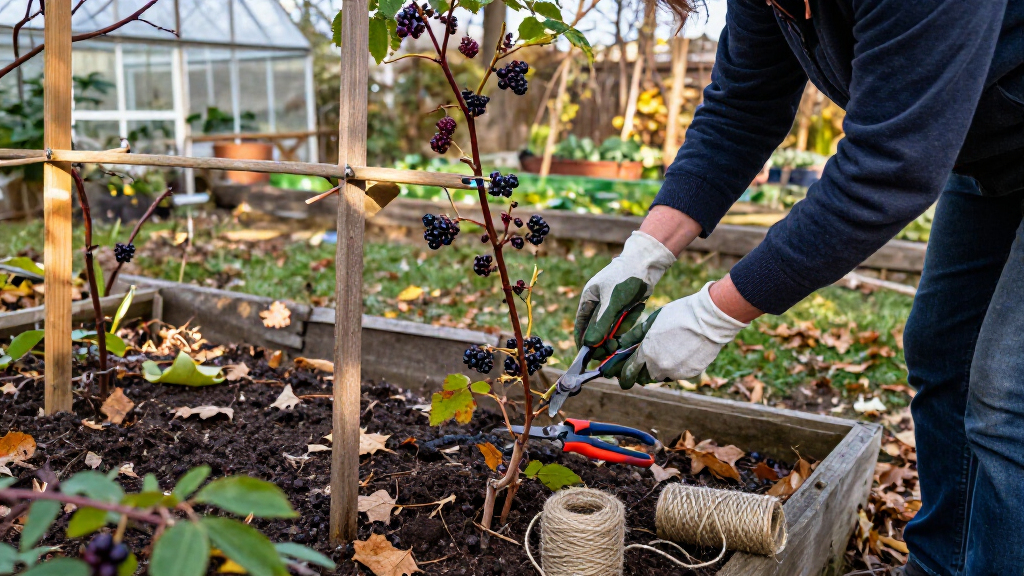
The guide advises pruning in early fall, before the first frost. Boysenberry roots are perennial, while the canes have a two-year cycle: primocanes grow in their first year and do not fruit; they overwinter and become fruit-bearing floricanes the following season. Once floricanes have finished fruiting, the report says to remove them. It recommends keeping five to seven primocanes per plant and trimming their side branches, known as laterals, to 12 inches or less.
For insulation, the report recommends spreading at least eight inches of straw around the root and cane area. In Zones 4 and 5, growers may also gently bend primocanes toward the ground, cover them with soil to hold them in place, and then cover them with straw. It advises marking the plants’ locations so they are not accidentally stepped on, and gently uncovering and lifting the canes after the soil thaws in spring.
Winter Protection for Next Season’s Crop
Boysenberries fruit on second-year canes, so damage to canes during winter may affect the next season’s crop. Removing canes that have already fruited also helps distinguish them from the younger growth that needs to be retained. The report says correct pruning can support plant health and productivity, though it does not provide a measured survival rate or yield increase for the listed steps.
Straw serves more than one purpose in the guide’s advice: it insulates the plant, helps limit soil displacement from rain and melting snow, and retains moisture. For gardeners in colder zones, the added task of covering canes offers another layer of protection. These measures can be especially relevant where winter cold is more severe than the plant’s usual growing range.
Wildlife is another concern identified in the report. Deer, rabbits, squirrels and other mammals may feed on exposed canes when food is scarce. The guide suggests a mammal repellent or pest-resistant netting over the straw, but gardeners should follow product directions for any repellent they choose.
Products Worth Considering

iRobot Roomba 105 Combo Robot Vacuum and Mop with AutoEmpty Dock

Dyson V8 Cyclone Cordless Vacuum

Philips Hue Festavia Permanent Outdoor String Lights, 80 Lights, 150 ft
As an affiliate, we earn on qualifying purchases.
Understanding Boysenberry Cane Growth
The care schedule depends on the plant’s biennial cane cycle. Primocanes are the current year’s new growth; after winter dormancy, they develop into floricanes, which bear fruit on lateral shoots. The floricanes are spent after fruiting, while the primocanes are the growth to preserve for the following year.
The report describes boysenberries as a hybrid of blackberries, raspberries, loganberries and dewberries. Although related berries such as raspberries may grow readily in some cold regions, the guide cautions that boysenberries have particular growing needs, including full sun and organically rich, loose, well-draining soil. The winter recommendations are presented as additional care, not a guarantee that plants will survive every winter condition.
Local Conditions Affect Winter Survival
The guide does not give a specific temperature threshold for when cane burial is needed beyond its recommendation for Zones 4 and 5, and it does not quantify how much the steps improve survival or harvest size. USDA zone is only one part of a garden’s conditions; the report does not address every local factor, such as a site’s exposure, snow cover or soil drainage.
It also does not specify a single date for pruning or covering plants. The timing is tied instead to early fall and the period before the first frost, with canes uncovered after the soil thaws in spring. Gardeners should adjust the schedule to local weather and avoid treating the guidance as a guarantee against winter damage.
Fall Work and Spring Cane Recovery
For growers following the guide, the next steps are to identify first- and second-year canes, prune after fruiting and before the first frost, and apply straw around the plant. Gardeners in Zones 4 and 5 can decide whether to add the recommended cane-covering step based on their site and winter conditions. Where mammals are a concern, the report suggests using netting or a repellent product according to its label.
After the soil thaws, the covered canes should be uncovered gently and raised so they can resume normal growth. The report does not provide a fixed spring date or a forecast of how a particular plant will fare; growers will need to check for winter damage as plants emerge.
Key Questions
When should boysenberry bushes be pruned for winter?
The Gardener’s Path guide recommends pruning in early fall before the first frost. Remove spent floricanes and thin the new primocanes that will produce fruit the following season.
How many primocanes should be left on each plant?
The report recommends keeping five to seven primocanes per plant. It also advises trimming their laterals to 12 inches or shorter.
How much straw mulch should I use?
The guide calls for at least eight inches of straw around the root and cane area. It says straw can insulate the plant and help retain soil moisture.
Should I bury boysenberry canes?
The report says growers in USDA Zones 4 and 5 may gently lay primocanes near the ground, cover them with soil to hold them, and then add straw. It advises marking the plant’s location and uncovering the canes gently after the soil thaws.
How can I protect boysenberries from animals in winter?
The guide suggests pest-resistant netting or a mammal repellent. Follow the chosen product’s label directions, and check netting periodically to make sure it remains in place.
Source: rss