
To start composting at home, choose a suitable bin that maintains moisture and airflow, such as a plastic or wooden container with vents. Fill it with bedding like shredded newspaper or coconut coir, dampen it, then add kitchen scraps like fruit and vegetable peels, avoiding meats or dairy. Turn the bedding regularly to keep worms active and maintain the right environment. By following these steps, you’ll create rich compost, and if you keep exploring, you’ll discover more tips for success.
Key Takeaways
- Choose a suitable compost bin with proper ventilation and easy access for maintenance.
- Use bedding materials like shredded newspaper and dampen to a moist, sponge-like consistency.
- Add kitchen scraps such as fruit and vegetable peels, avoiding meat, dairy, and oily foods.
- Maintain proper moisture and aerate the compost regularly to promote decomposition.
- Consider worm composting (vermicomposting) with red wigglers for low-maintenance, odor-free composting.
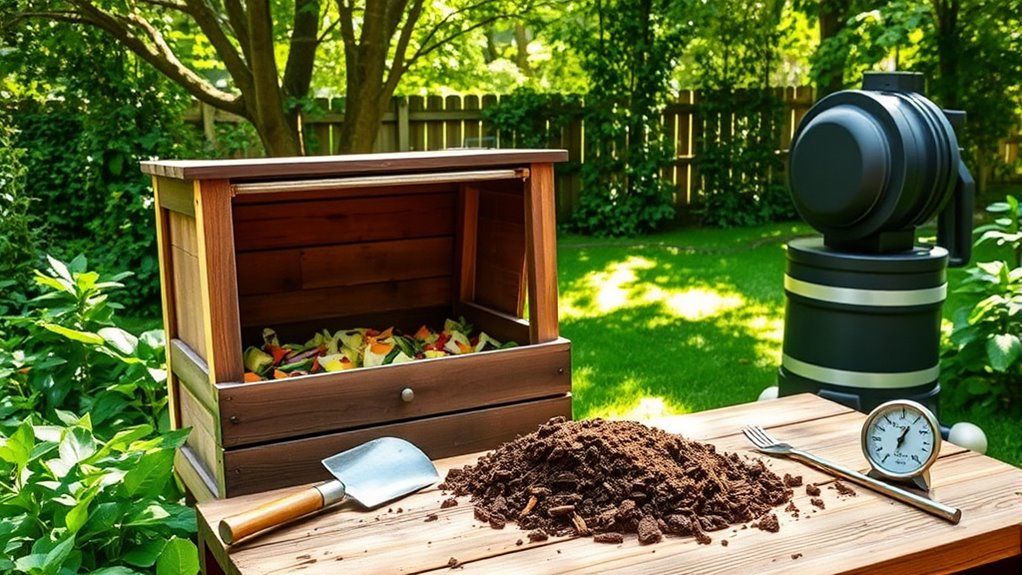
Have you ever wondered how to turn kitchen scraps and yard waste into nutrient-rich soil? One of the simplest and most eco-friendly methods for beginners is worm composting, also known as vermicomposting. It’s an effective way to recycle organic waste while producing a valuable soil amendment. To get started, you’ll need to make a good choice in compost bin selection. Picking the right bin is essential because it influences how smoothly your worm composting process will run. You’ll want a container that maintains proper moisture and aeration, is escape-proof to keep worms in, and is easy to access for adding scraps and harvesting compost. Many beginners choose plastic or wooden bins with lids that can be drilled with small holes for ventilation. Some people prefer commercial worm composting bins designed specifically for vermiculture, which often come with features like built-in trays for harvesting worm castings. Whichever you select, make sure it’s sturdy and fits your space and budget.
Once you’ve chosen your compost bin, setting it up is straightforward. Place the bin in a location that’s out of direct sunlight but not too cold, as worms thrive in temperatures between 55 and 77 degrees Fahrenheit. Fill the bin with bedding material like shredded newspaper, cardboard, coconut coir, or peat moss. Dampen the bedding so it’s moist but not soaked—think of a wrung-out sponge. Add your worms, which are usually red wigglers, not earthworms, as they’re more efficient at composting. You can find these worms at bait shops or online. Once your worms are in, start feeding them small amounts of kitchen scraps such as fruit and vegetable peels, coffee grounds, and crushed eggshells. Be sure to avoid meat, dairy, oily foods, and citrus, as these can cause odors and attract pests.
Regular maintenance involves adding scraps gradually, maintaining moisture levels, and gently turning the bedding to aerate it. Over time, you’ll notice the worms consuming the waste and producing rich castings, which you can harvest as compost. Worm composting is a low-maintenance, odor-free way to recycle organic waste and create healthy soil for your garden. Choosing the right compost bin is the foundational step toward success, as it sets the stage for a thriving worm ecosystem. Additionally, understanding the importance of contrast ratio can help you optimize the environment inside your bin for better worm health and activity. With patience and attention, you’ll soon be turning kitchen scraps into garden gold, all from the comfort of your home.
Frequently Asked Questions
How Long Does It Take to Compost at Home?
You can expect composting at home to take anywhere from a few months to a year. To speed up the process, make sure to manage temperature control by keeping your compost bin in a warm, sunny spot and turning it regularly. Proper compost bin placement helps maintain ideal conditions, ensuring faster decomposition. With consistent effort, you’ll have rich compost in less time, usually around 3 to 6 months.
Can I Compost Meat and Dairy?
Think of composting meat and dairy as trying to tame a wild stallion—challenging but doable with the right approach. You can compost meat decomposition and dairy disposal if you balance greens and browns and keep the bin aerated. Use a sealed, dedicated bin to prevent odors and pests. Properly managed, your compost can handle these scraps, turning waste into rich soil, just like transforming chaos into beauty.
What Are Common Pests Attracted to Compost Bins?
You’ll often attract pests like flies, ants, and rats to your compost bin, especially if it contains meat or dairy. To prevent this, use pest prevention strategies like securing lids and avoiding attracting pests with food scraps. Trap methods, such as placing bait or setting traps nearby, can help control pests. Regularly turning your compost and maintaining a balanced mix also discourage pests from taking over your compost bin.
How Do I Maintain Proper Moisture Levels?
To maintain proper moisture levels, you should regularly monitor moisture levels in your compost using moisture monitoring tools or by feeling the compost’s texture. Keep it damp like a wrung-out sponge, not too wet or dry. Use watering techniques like lightly misting or adding water gradually if it feels dry. If it’s too wet, turn the pile to aerate and help excess moisture evaporate, ensuring ideal composting conditions.
Is Composting Suitable for Small Apartments?
Think of apartment composting as nurturing a tiny garden in your living room. Indoor composting is perfect for small apartments because it doesn’t require much space or outdoor access. You can use a compact bin to handle kitchen scraps, making it convenient and odor-free. Many city dwellers successfully do apartment composting, turning food waste into black gold without sacrificing their limited space. It’s an eco-friendly, simple way to live sustainably indoors.
Conclusion
By starting your composting journey today, you’re not only reducing waste but also nurturing your garden naturally. Remember, the journey of a thousand miles begins with a single step—so don’t wait for perfect conditions. With patience and consistent effort, composting becomes second nature, turning scraps into rich soil. Embrace the process, and you’ll find that small actions truly make a big difference for your environment and your home garden.