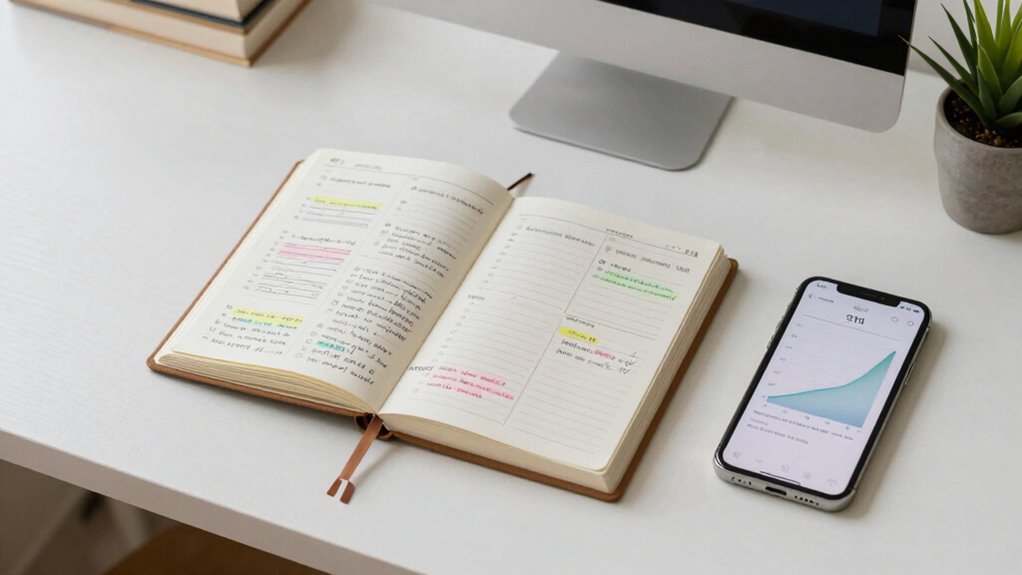

To track your progress without obsessing, focus on mindful reflection and balanced goals. Regularly evaluate your journey with honesty and compassion, celebrating small wins and recognizing growth areas. Use simple tools like journals or weekly check-ins to monitor meaningful indicators rather than every detail. Keep your approach light and sustainable, emphasizing positivity and progress over perfection. Continue exploring ways to make your journey enjoyable while staying motivated and balanced.
Listen free for 30 days with Audible
Thousands of audiobooks and originals — cancel anytime.
As an affiliate, we earn on qualifying purchases.
Key Takeaways
- Focus on meaningful, manageable indicators like weekly feelings or accomplishments instead of obsessing over every detail.
- Establish a simple, consistent reflection routine to review progress with honesty and compassion.
- Celebrate small wins regularly to foster motivation and a positive mindset.
- Use light tracking methods, such as journaling or digital tools, to avoid overwhelm.
- Prioritize overall well-being and sustainability over perfection, adjusting goals as needed.

Tracking your personal progress can often feel overwhelming, especially when you become fixated on every small detail. It’s easy to get caught up in the urge to measure every step perfectly, which can lead to frustration or burnout. Instead of obsessing over each minor change, consider adopting a method centered around mindful reflection and balanced tracking. This approach helps you stay motivated without feeling overwhelmed or discouraged.
Mindful reflection involves intentionally stepping back to evaluate your progress with clarity and compassion. Rather than fixating on perfect outcomes, you focus on understanding your journey, appreciating small wins, and recognizing areas for growth. This practice encourages you to be present and honest with yourself, which ultimately fosters sustainable habits. When you take time to reflect mindfully, you’re less likely to get caught in the trap of negative self-judgment, and more likely to maintain a positive outlook that fuels your progress.
Mindful reflection helps you stay honest, compassionate, and motivated on your journey without falling into negative self-judgment.
Balanced tracking means setting realistic, manageable goals and choosing the right tools to monitor them. Instead of logging every single detail obsessively, you identify key indicators that truly matter to your overall growth. For example, if you’re working on fitness, tracking your weekly workouts or how you feel during the day might be more meaningful than obsessing over every calorie burned or every mile run. This balance prevents you from becoming overwhelmed by data, while still providing enough insight to guide your efforts. Incorporating spinal alignment into your routines can also support overall well-being and progress, especially when it comes to maintaining good posture and reducing discomfort.
You can incorporate both mindful reflection and balanced tracking into your routine by establishing a simple review process. For instance, once a week, take a few minutes to review your progress. Ask yourself what’s working, what’s challenging, and what adjustments you might need. Use a journal or a digital tool that feels comfortable, but don’t let it become a source of stress. Keep your tracking light and focused, emphasizing progress rather than perfection. This way, you maintain a clear view of your goals without becoming consumed by every detail.
Ultimately, the most useful way to track personal progress is to view it as a supportive tool rather than an obligation. When you embrace mindful reflection and balanced tracking, your journey becomes more sustainable and enjoyable. You develop a healthier relationship with your progress, celebrating your growth step by step, without the pressure to be perfect. Incorporating consistent habits and a compassionate approach are key to long-term success. Remember, focusing on mindful reflection can also help you stay grounded and prevent burnout, making your fitness journey more enjoyable and sustainable.
As an affiliate, we earn on qualifying purchases.
Frequently Asked Questions
Can Tracking Progress Become a New Source of Stress?
Tracking progress can become stressful if you’re not mindful of your approach. It’s easy to get caught up in perfectionism or comparison, which can strain your emotional resilience. To avoid this, practice mindful awareness—focus on your growth rather than setbacks. Remember, progress isn’t linear. Use tracking as a tool to motivate, not to judge yourself harshly. This mindset helps you stay balanced and resilient throughout your personal development journey.
How Often Should I Review My Progress?
You should review your progress weekly or biweekly, striking a balance that keeps you motivated without becoming obsessed. Regular check-ins help with goal setting and habit formation, keeping you on track while avoiding burnout. Think of it as a steady rhythm, not a sprint. Use these reviews to celebrate wins and adjust your plans, ensuring your journey remains positive and productive without adding unnecessary stress.
What Tools Are Best for Discreet Tracking?
You should consider using digital journals and habit trackers for discreet tracking. Digital journals let you record your progress privately, often with password protection, so you can update and review entries without drawing attention. Habit trackers, available as apps, quietly monitor your daily routines and goals, offering a subtle way to stay accountable without obsessing. These tools keep your progress visible only to you, helping you stay motivated discreetly.
How Do I Stay Motivated Without Becoming Obsessed?
Imagine you’re journaling your progress, focusing on mindful reflection rather than perfection. To stay motivated without obsessing, set small, achievable goals and celebrate each win. A balanced approach helps you recognize progress without pressure. Regularly reviewing your journey keeps you inspired, but avoid overanalyzing. Embrace gentle self-compassion, reminding yourself growth takes time. This way, motivation stays steady, and obsession stays at bay.
Is It Okay to Take Breaks From Tracking?
Yes, it’s perfectly okay to take breaks from tracking. Incorporate mindful pauses to give yourself space and avoid burnout. Setting healthy boundaries helps prevent obsession, making tracking more sustainable and enjoyable. Sometimes, stepping back allows you to reflect on your progress without pressure. Remember, progress isn’t just about constant monitoring—it’s about balance. Taking breaks can rejuvenate your motivation and help you maintain a positive relationship with your goals.
As an affiliate, we earn on qualifying purchases.
Conclusion
Tracking your progress is about finding a balance that motivates you without causing stress. By using simple, consistent methods, you can stay inspired without obsessing over every detail. Remember, progress isn’t a race—it’s your journey. So, why not focus on what truly matters and celebrate small wins along the way? Keep it gentle, keep it steady, and enjoy the growth. After all, isn’t the real goal to become the best version of yourself?
As an affiliate, we earn on qualifying purchases.
As an affiliate, we earn on qualifying purchases.
Fall yard work Picks
leaf blowers
As an affiliate, we earn on qualifying purchases.