
TL;DR

Get garden gear delivered free with Prime
- Fast, free delivery on millions of items
- Prime Video, Amazon Music and more included
- Member-only deals all year
A Homes & Gardens report advises homeowners to inspect trees after leaves begin falling and before winter storms arrive. Arborists cited in the report say to look for dead or hanging branches, cracks, fungal growth, weak trunk unions and signs of root movement; larger or dangerous problems should be assessed by a qualified professional.
Homeowners should inspect trees before winter storms for dead limbs, cracks and other signs of weakness, according to arborists quoted in a Homes & Gardens report. The check is intended to identify hazards before wind, snow or ice puts added stress on branches and trunks that could fall near homes, vehicles or walkways.
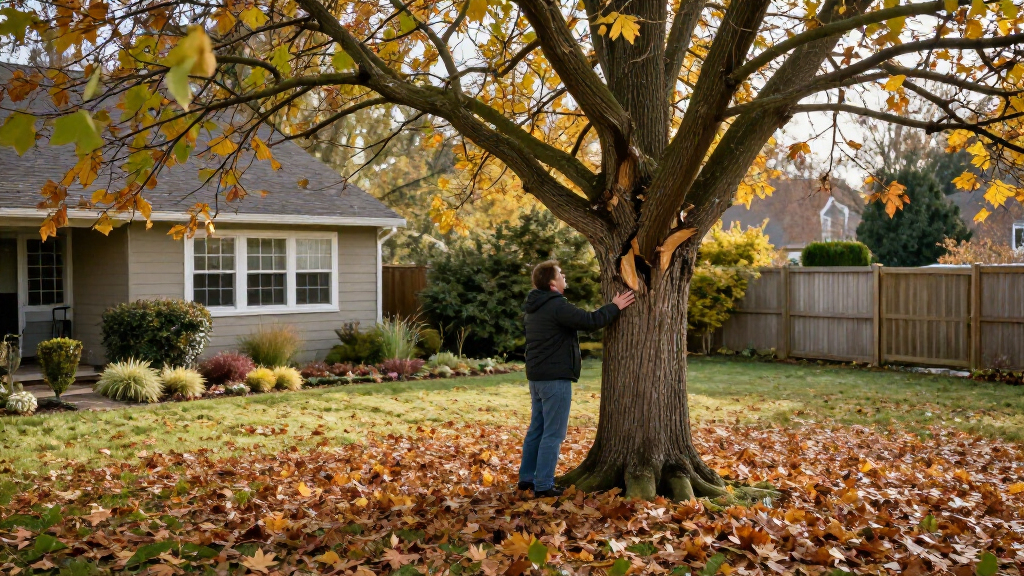
The report recommends making a visual assessment once deciduous trees have started to lose their leaves, when the canopy is easier to see. Homeowners can look around the tree from different angles and use binoculars to check higher branches. The cited advice focuses on trees near homes, streets, parked vehicles and pedestrian paths, where a falling limb could cause injury or property damage.
Warning signs include dead, damaged or hanging branches, cracks in the trunk or major limbs, fungal growth, and weak junctions where multiple stems meet. At the base, the report advises looking for cavities, mushrooms, a new lean or roots lifting from the ground. These signs do not by themselves establish that a tree will fail, but they can warrant closer assessment.
Some small pruning tasks may be manageable for homeowners using suitable tools, but the report says large limbs, high branches, significant leaning or other major concerns should be handled by a professional arborist. The appropriate response depends on the tree and what could be struck if it fell; options may include pruning to improve structure, additional support or, in serious cases, removal.
Spotting Hazards Before Storms
A pre-winter check gives homeowners a chance to identify potential problems before strong winds and added snow or ice weight put trees under stress. Finding a concern early may allow time to arrange professional pruning or assessment, rather than responding after a branch has fallen or a storm has caused damage.
The location of a tree matters as much as the visible defect. A weak limb over an empty part of a yard presents a different immediate risk from one extending over a roof, driveway or public walkway. Arborist Basil Camu, co-founder of Leaf & Limb, advises considering what a tree or branch would hit if it fell when deciding whether intervention is needed. That judgment can help homeowners avoid both ignoring a hazard and removing a tree without a clear reason.
The advice is preventive, not a guarantee that an inspection will predict every failure. Trees can have concealed structural problems, and conditions can change during severe weather. A visual check can help identify warning signs, while a qualified arborist can assess concerns that are difficult or unsafe to evaluate from the ground.
As an affiliate, we earn on qualifying purchases.
Why Fall Foliage Matters
The report identifies fall, after leaves begin to drop, as a useful time for a visual inspection because the structure of deciduous trees is less obscured. It also notes that winter presents several stresses: wind can shake vulnerable limbs, while snow and ice can add weight. These conditions can increase the chance that already weakened branches break.
Levi Williams, a Tree Risk Assessment Qualified and ISA Certified Arborist with Tree Scouts Tree Service, recommends basic checks before winter storms. The report also cites Camu on the risk of certain multi-trunk trees: two similarly sized trunks may have a weaker connection than a branch joining a trunk. A V-shaped union can be more concerning than a U-shaped one, though a specific tree’s condition requires individual assessment.
“I would always advise homeowners to do basic inspections of their trees before incoming winter weather storms.”
— Levi Williams, Tree Risk Assessment Qualified and ISA Certified Arborist with Tree Scouts Tree Service
As an affiliate, we earn on qualifying purchases.
What a Visual Check Cannot Show
The report does not provide a measured estimate of how much a fall inspection reduces the chance of tree failure or property damage. It also does not identify a single checklist that can determine whether a particular tree is safe. Visible warning signs are not a diagnosis, and some structural issues may require an arborist’s assessment.
The source material does not specify a location or a particular winter forecast, so the advice is general rather than tied to an individual storm. It remains a homeowner’s responsibility to assess the setting and seek professional help when a tree is large, difficult to inspect, leaning or close to people and property.
As an affiliate, we earn on qualifying purchases.
Arrange Help for Major Concerns
Homeowners can begin with a ground-level visual check as leaves fall, paying particular attention to limbs over roofs, driveways and paths. If there are large dead branches, trunk cracks, fungal growth, root movement, a new lean or a high limb that needs work, the report recommends contacting a qualified arborist rather than attempting hazardous pruning.
Pruning timing and the best remedy depend on the tree and the nature of the problem. Some safety work may be done in fall, while other issues can wait until late winter or early spring. Homeowners should seek an individual assessment before deciding whether a tree needs pruning, support or removal.
As an affiliate, we earn on qualifying purchases.
Key Questions
When should I inspect trees before winter?
The report recommends checking after leaves begin to fall and before winter storms arrive, when the structure of many deciduous trees is easier to see.
What warning signs should I look for?
Look for dead or hanging branches, cracks, fungal growth, weak trunk unions, a new lean, root lifting and cavities near the base. These signs may merit professional assessment.
Can I prune a tree myself?
Small, accessible dead or damaged branches may be suitable for careful homeowner pruning with appropriate tools. The report recommends a professional for large limbs, high branches, leaning trees or other major concerns.
Does every damaged tree need to be removed?
No. The report says the response depends on the tree’s condition and what could be hit if it failed. A professional may recommend structural pruning or support; removal may be necessary in more serious cases.
Source: rss
Fall Picks
fall essentials
As an affiliate, we earn on qualifying purchases.