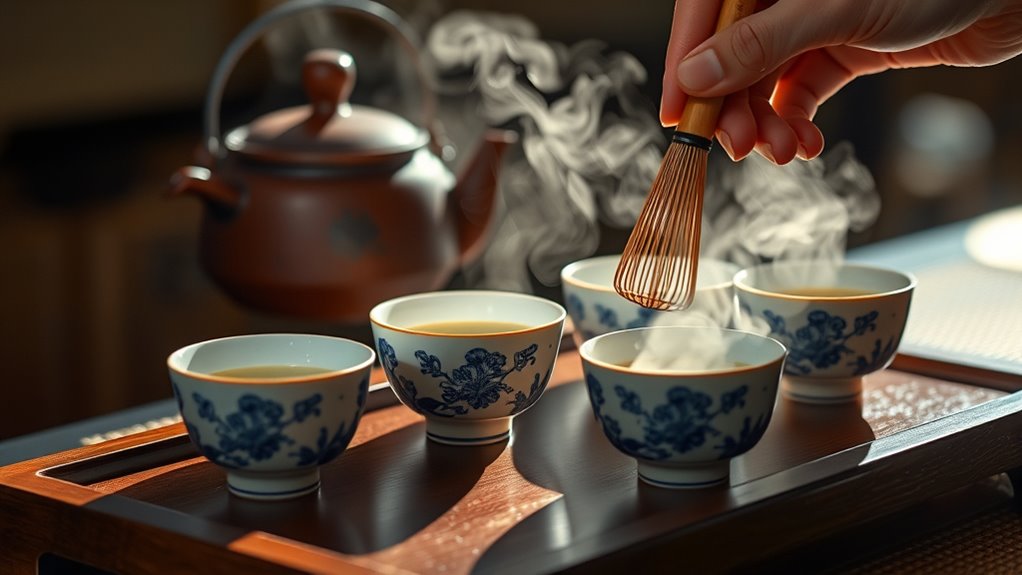
To master the art of tea, embrace centuries-old ceremonies, precise brewing techniques, and mindful tasting practices that elevate a simple drink into a meaningful cultural ritual. Use traditional accessories like teapots, cups, and strainers to connect with deep-rooted traditions. Focus on proper water temperatures, steeping times, and respectful gestures to enhance flavor and aroma. As you explore further, you’ll discover how these rituals deepen your appreciation and bring a richer experience to every sip.
Key Takeaways
- Traditional tea ceremonies emphasize mindfulness, respect, and harmony, elevating tea from a beverage to an artful ritual.
- Using specialized accessories like teapots, cups, and strainers enhances the brewing and tasting experience.
- Proper techniques involve understanding tea types, optimal temperatures, and steeping times to maximize flavor.
- Engaging in tea rituals fosters personal reflection, connection to cultural heritage, and appreciation of craftsmanship.
- The global evolution of tea traditions blends history, technique, and personal expression, enriching the overall art of tea.
Tea isn’t just a beverage; it’s a centuries-old art form that combines tradition, technique, and personal expression. When you explore the art of tea, you’re diving into a rich history that spans thousands of years and numerous cultures. Understanding tea history reveals how different civilizations have shaped the way we prepare, serve, and appreciate tea today. From the ancient Chinese origins of tea ceremonies to the refined practices in Japan and Britain, each culture has contributed unique rituals and philosophies. These traditions emphasize mindfulness, respect, and harmony, turning a simple drink into an experience that transcends taste alone.
Exploring tea’s rich history reveals a global tapestry of traditions that elevate a simple beverage into an art form.
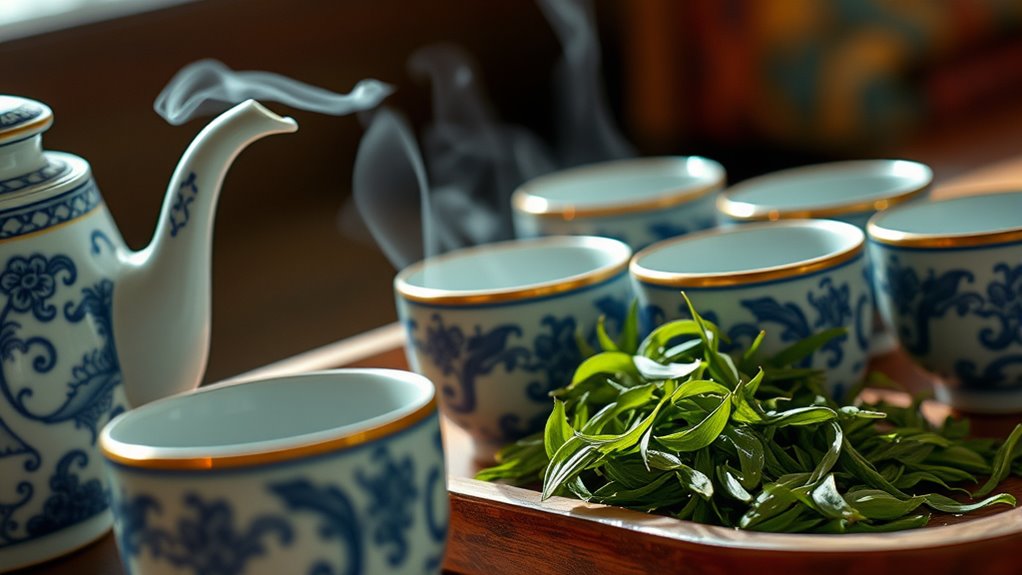
To truly embrace the art of tea, you need the right tea accessories. These tools aren’t just practical; they embody the elegance and precision that make tea preparation special. A traditional teapot, whether it’s a delicate porcelain or a robust cast iron, helps control infusion and enhances flavor. Tea cups, often crafted with care, invite you to savor each sip and appreciate the aroma and color of your brew. A tea strainer ensures that loose leaves stay contained, allowing for a cleaner, more refined experience. Other accessories like a tea scoop, a timer, or a tea tray can elevate your brewing process and make it more deliberate. Collecting and using these accessories connects you to centuries of tradition, turning each step into a mindful ritual.
Mastering the art of tea involves more than just boiling water and steeping leaves. It’s about understanding the subtleties of different types of tea, the ideal brewing temperatures, and steeping times. For example, green tea requires a lower temperature than black tea to avoid bitterness, and delicate white teas need even gentler handling. As you become more skilled, you’ll learn how to adjust these variables to suit your taste, creating a personalized experience each time. Tasting tea isn’t just about drinking; it’s about savoring the layers of flavor, aroma, and texture that develop through proper brewing. Developing an understanding of tea preparation techniques can significantly enhance your appreciation for this ancient craft. The more you explore, the more you’ll appreciate the intricate relationship between tea leaves, water, and your own senses.
In the end, the art of tea is a journey that combines history, culture, technique, and personal touch. It invites you to slow down, be present, and find joy in the simple act of preparing and drinking tea. With the right knowledge and accessories, you turn an everyday act into a meaningful ritual—one that connects you to a global tradition that continues to evolve and inspire.
Frequently Asked Questions
What Are the Health Benefits of Different Types of Tea?
You’ll find that different types of tea offer various health benefits. For example, green and black teas are rich in tea antioxidants, which help protect your cells from damage. Herbal teas, on the other hand, provide herbal benefits like soothing your digestion or easing stress. Drinking a variety of teas can boost your immune system, improve focus, and promote overall well-being. So, enjoy exploring these health-boosting beverages!
How Do Regional Tea Ceremonies Differ Worldwide?
Imagine tea ceremonies as a tapestry, woven with regional tea ritual variations and cultural influences. In Japan, you embrace precise, meditative movements, emphasizing harmony and respect. In China, the focus is on artistry, with elaborate brewing and tasting. Meanwhile, Morocco’s traditional tea ritual highlights hospitality with sweet mint tea served in a lively, social setting. These differences reflect each culture’s values and history, making every ceremony a unique story.
What Utensils Are Essential for Traditional Tea Brewing?
You’ll need essential tea utensils like a teapot or gaiwan, a strainer, and a tea scoop for traditional brewing. These traditional brewing tools help you control steeping time and tea strength, ensuring a perfect cup. A tea pitcher or fairness cup is also useful for even distribution. Using these utensils, you can honor the customs while enjoying a flavorful, authentic tea experience.
How Can I Identify High-Quality Tea Leaves?
Your senses tell you a lot about high-quality tea leaves. Look for vibrant, fresh-looking leaves with a glossy sheen, and trust your nose—aromatic, fragrant leaves indicate quality. Focus on tea leaf grading, which ranks leaves by size and quality, and consider the harvest season—peak periods produce superior flavor. Freshly plucked leaves from the latest harvest are often the most vibrant and flavorful, truly a treasure for true tea lovers.
What Are Common Mistakes to Avoid During Tea Tasting?
You should avoid rushing the steeping process, as it can ruin the tea aroma and flavor. Make sure you use the right steeping temperature—too hot or cold affects taste. Don’t judge the tea too quickly; take time to smell and taste it fully. Avoid using old or stale leaves, and don’t forget to note how the aroma changes during steeping. These mistakes can hinder your appreciation of a high-quality brew.
Conclusion
As you embrace the art of tea, remember that over 80% of the world’s population drinks tea daily, turning simple leaves into a daily ritual. Whether you’re perfecting a delicate brew or savoring a ceremonial pour, each step connects you to centuries of tradition. So, next time you steep, think of yourself as part of a global community that values mindful brewing and tasting. Truly, tea transforms a moment into a timeless experience.