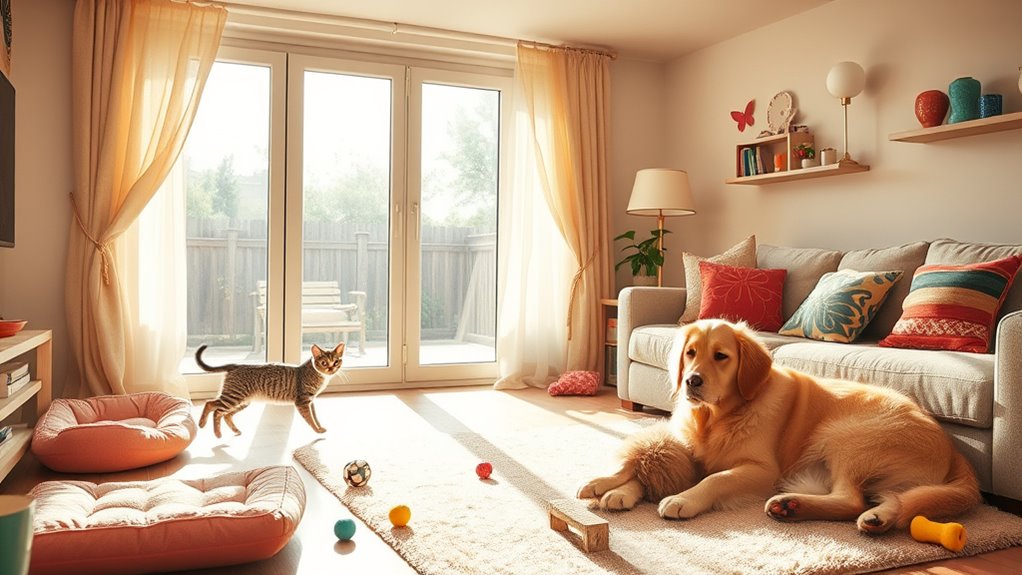

Creating a pet-friendly home starts with prioritizing safety by securing hazards like loose wires and toxic plants. Incorporate easy-to-clean water stations and designate comfortable, durable spaces for your pets to relax and play. Install pet-resistant furniture and ensure good ventilation to maintain hygiene. Smart home modifications, such as secure fencing and scratch-resistant flooring, make your space both safe and welcoming. Keep exploring to discover more tips for a happy, healthy environment for your furry friends.
Key Takeaways
- Secure potential hazards like wires, small objects, and toxic plants to ensure pet safety.
- Incorporate easy-to-clean water stations and hydration spots in accessible areas.
- Use durable, scratch-resistant flooring and pet-friendly furniture to enhance comfort and durability.
- Create designated spaces for pets to play, relax, and sleep, promoting their well-being.
- Maintain good ventilation and hygienic surfaces to reduce odors and allergens in the home.

Have you ever wondered how to create a home that welcomes your pets just as much as it welcomes you? Making your living space pet-friendly isn’t just about adding a few toys or beds; it’s about ensuring pet safety and making thoughtful home modifications that protect your furry friends while enhancing their comfort. Pet safety should always be your top priority. This means identifying potential hazards like loose wires, small objects that can be swallowed, or toxic plants and substances hidden around your house. You’ll want to secure trash cans with lids, keep cleaning supplies out of reach, and ensure that windows have secure screens to prevent accidental falls. Regularly inspecting your home for new risks and staying proactive helps keep your pets safe. Incorporating water stations that are easy to clean and accessible can also contribute to your pet’s health and hydration.
Prioritize pet safety by securing hazards, inspecting regularly, and creating a secure, comfortable home environment.
When it comes to home modifications, you should think about creating a space that accommodates your pet’s needs without sacrificing style or functionality. For example, consider installing durable, scratch-resistant flooring like tile or laminate in high-traffic areas. This not only makes cleaning easier but also prevents damage from scratching or accidents. If you have a yard, make sure it’s securely fenced to prevent escape and keep out unwanted visitors. Adding pet-friendly features such as built-in feeding stations, cozy nooks, or designated play areas can make your home more inviting for your pets. These modifications help establish boundaries and give your pets a sense of security within your space.
Another smart home modification involves choosing furniture and decor that can withstand pet wear and tear. Opt for slipcovers on sofas and washable rugs that are easy to clean. This way, you can maintain a tidy, inviting space without stressing over fur or scratches. Creating a dedicated corner or room for your pets to relax or sleep can also be beneficial, especially if you have multiple animals or a pet that needs extra comfort. Incorporate easy-to-clean surfaces like plastic crates or beds that can be washed regularly, ensuring hygiene and reducing odors.
Finally, think about the environmental aspects. Good ventilation helps reduce pet odors and allergens, making your home healthier for everyone. Water and food stations should be easily accessible but also placed in areas that are easy to clean. By planning these home modifications with pet safety in mind, you create a harmonious environment where both you and your pets feel comfortable and secure. Adapting your home thoughtfully demonstrates your commitment to your pets’ happiness and well-being while making your living space truly welcoming for everyone.

ZOMISIA 3-in-1 Raised Dog Bowl – 6 Height Adjustable Elevated Dog Bowls, Double Deck Design Mess Proof, Feeding Station with 2L No Spill Stainless Steel Bowls & Licking Plate for Medium Large Pets
3-in-1 Multifunctional Design & Detachable Layers: Features a unique double-deck structure. Easily detach the upper deck with dual…
As an affiliate, we earn on qualifying purchases.
As an affiliate, we earn on qualifying purchases.
Frequently Asked Questions
How Can I Pet-Proof My Outdoor Yard Effectively?
To pet-proof your outdoor yard, start by installing strong garden fencing to prevent escapes and keep your pets safe. Add shade structures to protect them from harsh sun and heat. Regularly inspect fencing for gaps or damage, and remove any toxic plants or objects. Creating a secure, shaded environment guarantees your pets can enjoy the yard safely and comfortably, giving you peace of mind while they play.
What Are the Best Plants Safe for Pets Indoors?
You don’t have to worry about indoor air quality when choosing pet-safe plants; many options are both beautiful and non-toxic. Popular choices include spider plants, Boston ferns, and areca palms. To keep your furry friends safe, learn toxic plant identification and avoid plants like lilies or philodendrons. Incorporate these safe plants to brighten your home while ensuring a healthy environment for your pets.
How Do I Manage Noise Levels for Pets in Shared Spaces?
To manage noise levels for your pets in shared spaces, practice good noise management by keeping sounds at a comfortable level and avoiding sudden loud noises. Use shared space etiquette by communicating with neighbors about your pets’ needs and establishing quiet hours. Provide your pets with plenty of enrichment and toys to keep them calm, and consider soundproofing areas if noise becomes a concern. This helps guarantee everyone’s comfort and keeps shared spaces peaceful.
What Safety Features Should My Home Include for Pets?
You should include safety features like pet door installation to give your pets easy access and prevent door-related injuries. Non-slip flooring is essential to avoid slips and falls, especially in high-traffic areas. Additionally, secure windows with screens, hide electrical cords, and store toxic substances out of reach. These features keep your pets safe and comfortable, making your home a true haven for your furry friends.
How Can I Accommodate Multiple Pets With Different Needs?
You can accommodate multiple pets with different needs by creating designated spaces for each, considering their pet diets and grooming routines. Set up separate feeding areas to prevent conflicts and tailor diet plans to each pet’s requirements. Keep grooming supplies handy for quick sessions, and make sure your home is safe and accessible for all. This approach helps manage their individual needs while fostering a harmonious environment for your furry friends.

Uross Carpet Protector for Pets – Cat Scratch Guard Mat, Anti Scratch Under Door Guard, Easy to Cut Plastic, 3.6FT
【MULTI-SIZE SUITABILITY】Measures 43.3” L x 14.96” W, fits 27 1/2"-35 15/16" doors (in width). Please be sure to…
As an affiliate, we earn on qualifying purchases.
As an affiliate, we earn on qualifying purchases.
Conclusion
Picture your furry friend curling up peacefully in a cozy corner of your home, surrounded by thoughtful touches that make every day easier and happier. When you create a pet-friendly space, you’re not just designing a house—you’re building a sanctuary where love and comfort flourish. Every soft bed, safe nook, and playful corner becomes a symbol of the bond you share. In this home, your pets aren’t just guests—they’re family, thriving in a space made just for them.

Temporary Fence with Posts, 36" x 50' Plastic Garden Fence Animal Barrier with Metal Stake Windbreak Rope, Portable Temporary Fencing for Dogs Outdoors Backyard Animal Protect
Create A Safety Fence for Animals: 36" tall, 50' long secure temporary fence – Keep chickens, ducks, dogs,…
As an affiliate, we earn on qualifying purchases.
As an affiliate, we earn on qualifying purchases.

Oblu life Stretch Couch Cover for 2 Cushion Loveseat Sofa, Fits 57–72 Inch, Jacquard Waffle Fabric Slipcover, Washable Pet Friendly Furniture Protector with Elastic Bottom, Dark Gray, 2 Seats
Premium Waffle Jacquard Small Check Fabric: Crafted with thick, dense waffle jacquard in a classic small check pattern,…
As an affiliate, we earn on qualifying purchases.
As an affiliate, we earn on qualifying purchases.