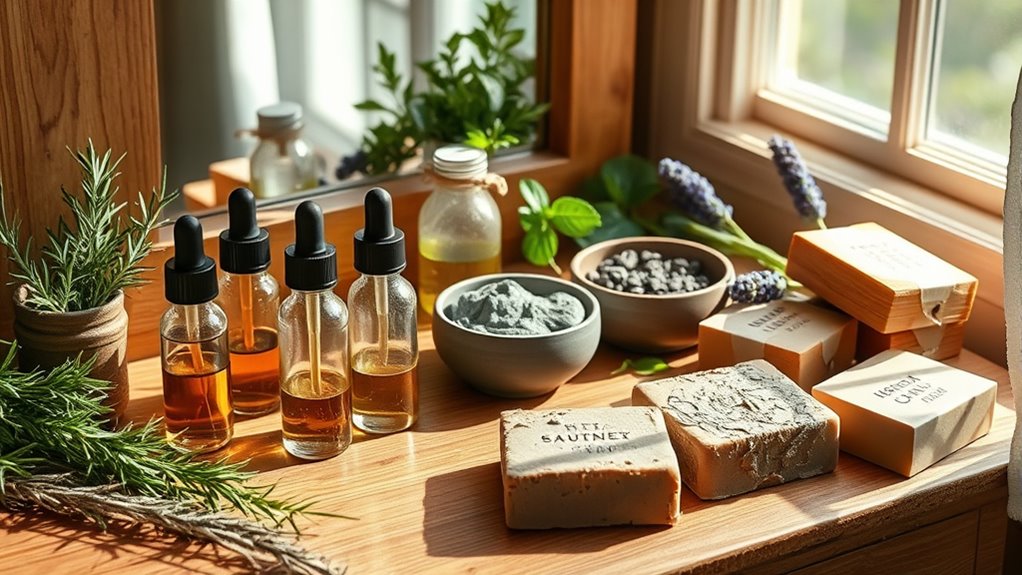

For natural beauty and grooming, DIY skincare and haircare let you customize products with herbal infusions and ingredient swaps, avoiding harsh chemicals. You can create soothing toners, masks, or serums using herbs like chamomile, rosemary, or calendula to target specific concerns. These homemade options are affordable, eco-friendly, and gentle on your skin and hair. Keep exploring to discover simple recipes and tips to craft your perfect routine with natural ingredients.
Key Takeaways
- Herbal infusions extract beneficial plant compounds, creating gentle, effective, and personalized skincare and haircare products.
- Substituting synthetic ingredients with natural herbs enhances product safety and caters to individual skin and hair needs.
- DIY formulations using herbal infusions support customization, allowing tailored solutions for specific concerns like dryness or scalp health.
- Creating homemade skincare and haircare promotes control over ingredients, reducing exposure to chemicals and supporting eco-friendly practices.
- Personalizing beauty routines with herbal infusions encourages cost-effective, natural, and sustainable grooming tailored to individual preferences.
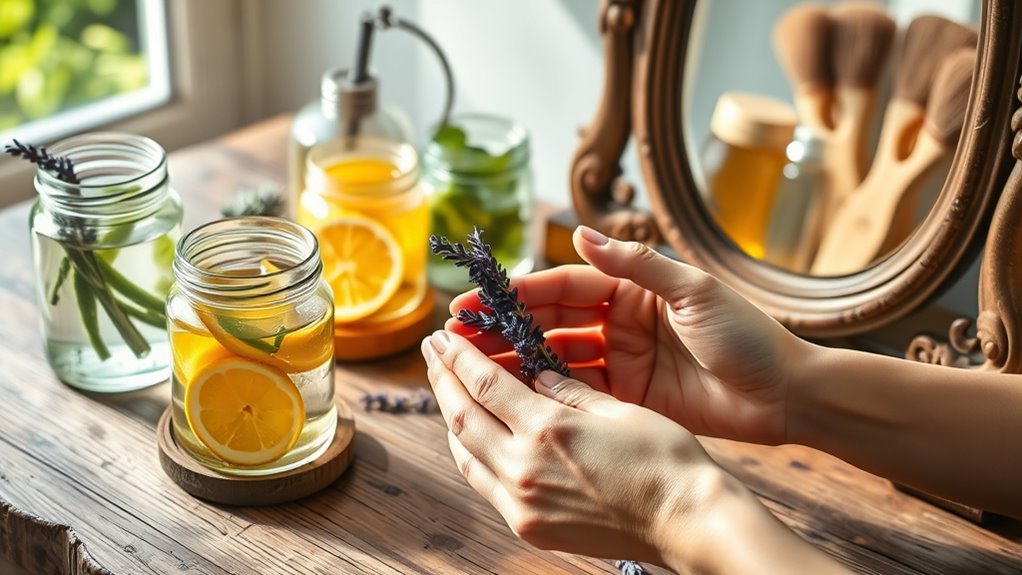
Have you ever wondered if you can create effective skincare and haircare products at home? The good news is, you definitely can, and it’s easier than you might think. One key to successful DIY formulations is understanding herbal infusions. These are simple yet powerful methods to extract beneficial properties from herbs, flowers, and plants, transforming everyday ingredients into potent ingredients for your skincare and haircare routines. By steeping herbs like chamomile, rosemary, or calendula in oils or water, you unseal their natural antioxidants, soothing agents, and nourishing compounds. Herbal infusions allow you to customize your products based on your skin or hair needs, making them gentle and effective without relying on harsh chemicals.
When working with herbal infusions, ingredient substitutions come into play. Instead of store-bought extracts or synthetic additives, you can swap in fresh or dried herbs to tailor your formulations. For example, if a recipe calls for lavender oil, you could substitute it with dried lavender-infused oil, which provides a milder, more natural scent and added soothing benefits. Similarly, if you need a moisturizer for sensitive skin, replacing synthetic preservatives with herbal infusions rich in calendula or chamomile can boost calming effects and reduce irritation. Ingredient substitutions aren’t just about replacing; they’re about enhancing your products with natural, readily available ingredients that align with your preferences and skin or hair type.
Creating your own skincare and haircare products lets you control every component, ensuring nothing unnecessary sneaks in. When making facial toners, masks, or hair serums, herbal infusions serve as a gentle base, providing both moisture and active plant compounds. You can customize your infusions by adjusting steeping times or combining herbs to target specific concerns—like mint for scalp refreshment or rose for hydration. If a recipe calls for a particular oil or extract that’s hard to find, don’t hesitate to explore substitutions with herbs you already have in your kitchen or garden. This flexibility makes DIY beauty approachable and budget-friendly, plus it encourages experimentation and personalization.
DIY herbal skincare kit
As an affiliate, we earn on qualifying purchases.
As an affiliate, we earn on qualifying purchases.
Frequently Asked Questions
Are DIY Skincare Products Suitable for Sensitive Skin Types?
Yes, DIY skincare products can be suitable for sensitive skin if you choose hypoallergenic ingredients and tailor recipes to your skin sensitivity. You should always do a patch test before applying new products widely and avoid common irritants like artificial fragrances or harsh chemicals. By selecting gentle, natural ingredients and monitoring how your skin reacts, you can create effective, safe DIY skincare that minimizes irritation.
How Long Do Homemade Hair Masks Typically Last?
Homemade hair masks usually last about 3 to 5 days when stored properly. You should keep them in airtight containers in the refrigerator to extend their storage duration. Using preservative methods like adding natural preservatives (honey, vitamin E) can help prolong freshness, but it’s best to make small batches. Always check for any changes in smell or texture before applying, and discard if anything seems off.
Can Natural Ingredients Replace All Commercial Skincare Products?
You can’t fully replace all commercial skincare products with natural ingredients because synthetic ingredients and chemical preservatives often offer longer shelf life and targeted benefits. While DIY skincare can be effective, it might lack the stability and consistency found in store-bought products. For ideal results, use natural remedies alongside commercial products, understanding that some synthetic components are designed for safety, preservation, and specific skin needs.
What Precautions Should I Take When Mixing DIY Skincare Recipes?
When mixing DIY skincare recipes, you should always check for ingredient allergies beforehand to avoid reactions. Use fresh, high-quality ingredients and follow recommended storage safety practices to prevent contamination or spoilage. Keep your preparations in clean, airtight containers, and store them in a cool, dark place. Also, do a patch test on a small skin area first to guarantee compatibility before applying the full recipe.
Are There Any Natural Remedies for Persistent Skin Conditions?
Are you tired of persistent skin conditions? You might find relief with natural remedies like herbal infusions or clay masks. These can soothe inflammation, detoxify your skin, and promote healing. Have you considered trying a chamomile herbal infusion for redness or a clay mask to absorb excess oils? Just remember, consistency is key, and patch testing first helps avoid any adverse reactions. Natural remedies can support your skin’s recovery naturally.
natural herbal hair oil infusion
As an affiliate, we earn on qualifying purchases.
As an affiliate, we earn on qualifying purchases.
Conclusion
By choosing natural ingredients over synthetic products, you embrace simplicity and purity, but don’t forget that even nature’s best can be harsh if misused. Your DIY skincare and haircare routines may be gentle and nourishing, yet they require care and attention. It’s the balance between nature’s power and your knowledge that truly enhances your beauty. Ultimately, embracing natural beauty isn’t just about what you put on your skin or hair, but how thoughtfully you care for yourself.
homemade herbal face masks
As an affiliate, we earn on qualifying purchases.
As an affiliate, we earn on qualifying purchases.

Thayers Alcohol-Free Witch Hazel Facial Mist Toner with Aloe Vera, Rose Petal, Soothing and Hydrating, For All Skin Types, 8 oz
Gentle Face Mist: Alcohol-free and formulated to soothe, tone, hydrate, refresh, rejuvenate, and balance the pH level of…
As an affiliate, we earn on qualifying purchases.
As an affiliate, we earn on qualifying purchases.