Choosing between minimalism and maximalism depends on your personality and what you want your space to say. If you prefer calm, clean lines, and neutral colors that create a sense of order, minimalism might suit you best. But if you love bold colors, layered textures, and expressive decor that showcase personality, maximalism could be your style. Exploring both themes will help you discover what truly reflects your unique taste. Keep exploring to find your perfect match.
Key Takeaways
- Identify whether you prefer calm, uncluttered spaces or vibrant, layered environments to determine your style preference.
- Consider color palettes: neutral tones support minimalism, while bold, contrasting colors favor maximalism.
- Evaluate your furniture taste: sleek and functional leans minimal, ornate and eclectic aligns with maximalist design.
- Reflect on personal expression: seek serenity and simplicity or vibrancy and personality in your living space.
- Experiment with blending elements from both styles to create a personalized environment that balances tranquility and vibrancy.
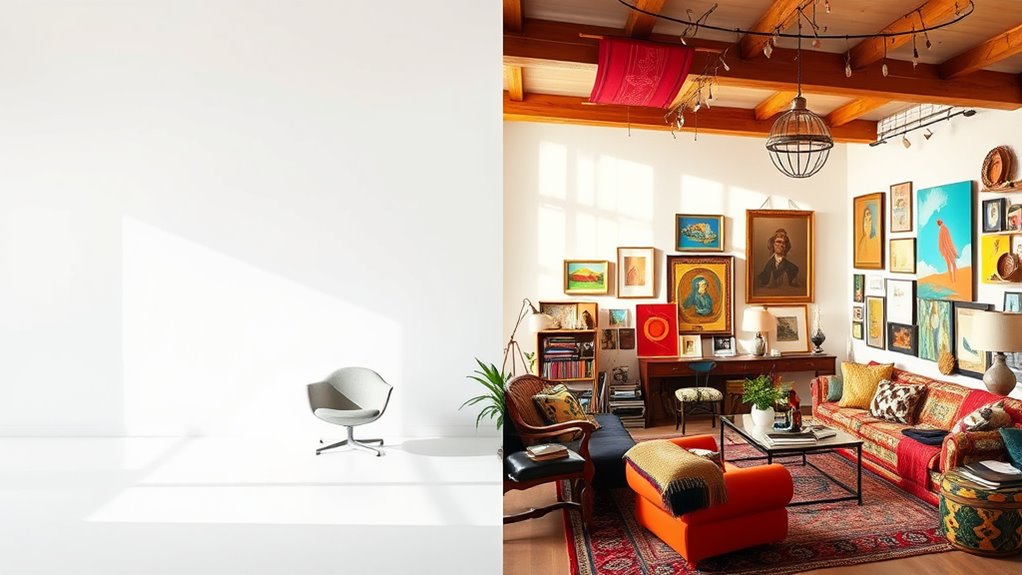
In the world of design and lifestyle choices, minimalism and maximalism represent two contrasting philosophies that shape how we perceive and create our environments. When exploring these styles, your choice of color palettes and furniture choices becomes central to expressing your personality and preferences. Minimalism favors neutral, subdued colors like whites, grays, and beiges, emphasizing simplicity and calm. These understated color palettes help create a sense of spaciousness and tranquility, making rooms feel open and uncluttered. When selecting furniture, minimalists opt for sleek, functional pieces with clean lines and minimal ornamentation. The focus is on quality over quantity, so each piece is carefully chosen to serve a purpose, often with multi-functional features. You might find yourself drawn to a simple, streamlined sofa or a minimalist dining table—furniture that feels intentional and unpretentious.
On the other hand, maximalism celebrates vibrancy and abundance. Its color palettes are bold and diverse, mixing patterns, textures, and hues to create lively, textured spaces. You may find yourself experimenting with jewel tones, contrasting colors, or layered neutrals to craft an environment that feels energetic and full of personality. Furniture choices in maximalist design tend to be more eclectic and expressive. You might incorporate statement pieces, vintage finds, or ornate furniture with intricate detailing. Instead of a pared-down aesthetic, you embrace a layered look, adding decorative objects, artwork, and textiles that reflect your interests and passions. The goal here is to evoke emotion, curiosity, and a sense of personality through your environment.
Your personal style will influence how you balance these elements. If you prefer a serene, clutter-free space, minimalism might resonate more with you. You’ll appreciate the simplicity of monochromatic schemes and streamlined furniture that promotes peace and order. Conversely, if you thrive on visual stimulation and creative expression, maximalism’s vibrant color palettes and diverse furniture choices will feel more authentic. You’ll enjoy mixing patterns and textures, curating collections, and creating a space that feels alive with personality. Additionally, incorporating rustic decor elements can help blend these styles, adding warmth and charm to your environment.
Ultimately, these styles aren’t mutually exclusive. You might find that blending elements from both allows you to craft a space that’s uniquely yours. For example, using a neutral, minimalist color palette as a backdrop while incorporating a few maximalist accents—like a patterned rug or a colorful piece of art—can create a balanced environment. Your design style is a reflection of your personality, and understanding the impact of your color palettes and furniture choices helps you shape spaces that truly feel like home.
Top picks for "minimalism maximalism find"
Open Amazon search results for this keyword.
As an affiliate, we earn on qualifying purchases.
Frequently Asked Questions
Can I Combine Elements of Both Styles Effectively?
Yes, you can effectively combine elements of both styles by blending approaches and focusing on style integration. Start with a minimalist foundation, then add maximalist accents like bold patterns or vibrant colors to create visual interest. Balance is key, so verify that each element complements the other, avoiding clutter while expressing your unique taste. This approach lets you enjoy the best of both worlds, resulting in a personalized, harmonious space.
How Do I Choose the Right Color Palette?
You should choose a color palette by applying color theory principles, considering how colors interact and evoke emotions. Start with a base of neutral tones for balance, then add accent colors that reflect your personality or mood. Focus on palette selection by testing combinations in your space, ensuring harmony and contrast. Trust your instincts, but also stay informed about color psychology to create a cohesive, inviting environment that matches your style.
What Are Common Mistakes in Minimalist Design?
Like a blank canvas, minimalist design invites mistakes that can clutter your space. Common errors include overusing furniture, neglecting space optimization, and poor lighting strategies that make rooms feel dull or cramped. You might also ignore balance and proportion, creating a chaotic look. To avoid these pitfalls, focus on simplicity, maximize natural light, and choose quality pieces that serve a purpose, allowing your space to breathe and shine.
Which Style Is Better for Small Spaces?
Minimalism works better for small spaces because it emphasizes space optimization. You should choose furniture with clean lines and multi-functional pieces to maximize every inch. Avoid clutter and opt for lighter colors to make the room feel larger. Maximalism can overwhelm a small area with too many decorations and bulky furniture. Focus on minimalism’s simplicity to create an open, airy atmosphere that feels comfortable and spacious.
How Does Maintenance Differ Between the Two Styles?
You’ll find that maintenance differs considerably between the two styles. With minimalism, clutter management is easier since you have fewer items, making cleaning and organizing quick. Furniture upkeep is simpler because there’s less to dust and maintain. Maximalism, on the other hand, requires more effort to manage clutter and keep intricate furniture or accessories clean, as you have more pieces to dust and organize regularly.
Conclusion
Ultimately, choosing between minimalism and maximalism depends on what feels right for you. Both styles have their charm and can reflect your personality perfectly. Remember, it’s not about fitting into a box but about creating a space that truly resonates with you. Don’t be afraid to mix and match until you find your sweet spot. After all, beauty’s in the eye of the beholder—trust your instincts and make your home your own masterpiece.