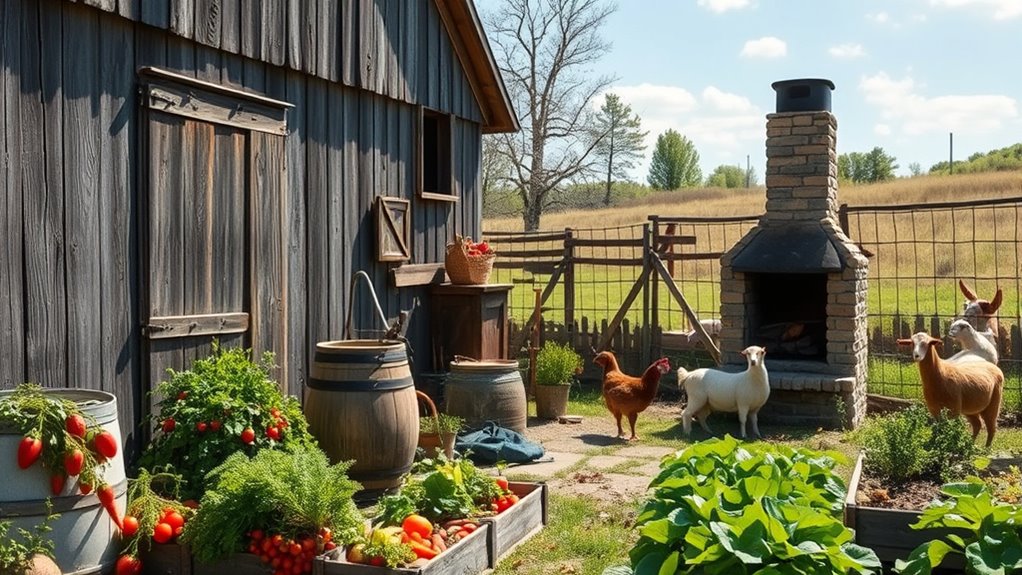

Homesteading and self-sufficiency today mean embracing modern back-to-basics living by growing your own food organically, generating renewable energy, and creating resilient systems that cut reliance on external sources. By practicing gardening, solar power, rainwater collection, and composting, you build a sustainable Lifestyle that’s both satisfying and eco-friendly. As you develop these skills, you’ll find your homestead becoming more autonomous and resilient. Continue exploring these ideas to discover even more ways to enhance your self-sufficient journey.
Key Takeaways
- Embrace organic gardening to produce healthy food and reduce chemical dependency.
- Integrate renewable energy sources like solar panels for sustainable power independence.
- Develop synergistic systems such as rainwater harvesting and composting to enhance homestead resilience.
- Practice self-sufficiency through skills like seed saving, crop rotation, and food preservation.
- Connect with community resources for guidance, motivation, and shared knowledge exchange.
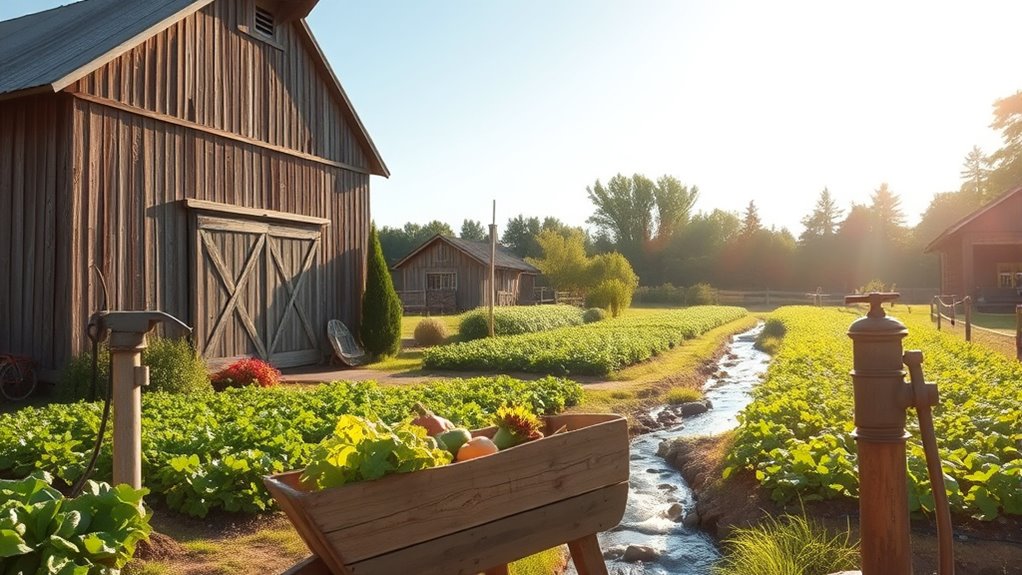
Have you ever wondered how to become more independent and reduce your reliance on modern systems? Embracing homesteading and self-sufficiency can be a rewarding way to regain control over your life. One of the foundational steps is developing your own food sources through organic gardening. When you grow your fruits, vegetables, and herbs naturally, you avoid pesticides and chemicals that are common in conventional farming. Organic gardening not only produces healthier, more flavorful produce but also helps you better understand the land and seasons. It’s about creating a sustainable cycle where your plants thrive with minimal external inputs, making your homestead more resilient and less dependent on store-bought goods. You’ll learn to compost, save seeds, and rotate crops, all crucial skills that foster a deep connection with nature and promote self-reliance.
Alongside growing your own food, harnessing renewable energy can notably decrease your reliance on traditional power grids. Installing solar panels or wind turbines allows you to generate electricity in a sustainable way. By investing in renewable energy sources, you’re taking a proactive step toward independence, ensuring you have power even when the grid fails or becomes unreliable. This shift not only reduces your carbon footprint but also saves you money over time, especially as energy costs continue to rise. It’s a practical move that aligns with the principles of homesteading—living more simply and sustainably. You’ll find that generating your own power gives you greater control over your environment and reduces your vulnerability to external disruptions.
Combining organic gardening with renewable energy creates a powerful synergy that enhances your self-sufficient lifestyle. You might set up a greenhouse powered by solar energy, extending your growing season while minimizing energy consumption. Installing rainwater catchment systems and composting toilets further reduces dependence on municipal utilities. These systems work together to create a homestead that’s less vulnerable to economic or environmental upheavals, giving you peace of mind and a sense of accomplishment. The journey toward self-sufficiency isn’t about perfection but progress—every step you take toward cultivating your own food and generating your own power makes you more autonomous. Over time, these practices become second nature, transforming your home into a resilient, sustainable haven rooted in the principles of organic gardening and renewable energy. Additionally, utilizing community support features can provide valuable advice and motivation as you develop your homestead.
Frequently Asked Questions
How Can I Start Homesteading With Limited Space?
You can start homesteading with limited space by focusing on urban gardening, like container or vertical planting, to maximize your area. Use composting techniques such as worm bins or small compost piles to recycle organic waste and enrich your soil. Prioritize small, manageable projects that grow over time. With dedication, even a tiny backyard or balcony can become a productive space for fresh vegetables, herbs, and sustainable living.
What Are the Essential Tools for Beginners?
You’ll want vital tools like a good spade and trowel for garden planning and planting, along with pruning shears for maintaining your plants. A wheelbarrow helps transport soil or harvests, while basic livestock care tools like a feed scoop and waterer are essential if you keep animals. Invest in quality gloves and a sturdy workbench, and don’t forget a compost bin to boost your garden’s health.
How Do I Finance a Self-Sufficient Homestead?
To finance a self-sufficient homestead, start with sound financial planning by creating a detailed budget and savings plan. Research land acquisition options, such as rural loans or seller financing, to make purchasing easier. Consider supplementing your income through side jobs or grants. Additionally, prioritize low-cost improvements and sustainable practices to reduce expenses, ensuring your homestead remains affordable and manageable as you build your self-sufficient lifestyle.
What Legal Regulations Should I Consider?
Did you know over 70% of rural counties have strict zoning laws? You need to check local zoning laws to guarantee your homestead plans align with them, especially regarding land use. Additionally, livestock regulations vary widely; some areas restrict certain animals or require permits. Before starting, contact your local planning office to clarify these rules, so you can avoid fines and ensure your self-sufficient lifestyle complies with all legal regulations.
How Can I Maintain Sustainable Water Sources?
To maintain sustainable water sources, start by implementing rainwater harvesting systems to collect and store rainwater efficiently. Use water conservation techniques like low-flow fixtures, mulching to reduce evaporation, and fixing leaks promptly. Consider planting native plants that require less water and reuse greywater where possible. Regularly monitor your water usage and maintain your systems to guarantee a steady, eco-friendly supply for your homestead needs.
Conclusion
Embracing homesteading and self-sufficiency lets you reconnect with simpler times, channeling your inner pioneer. By cultivating your own food, generating power, and preserving traditions, you forge a resilient lifestyle rooted in independence. It’s a modern act of living deliberately, much like the steadfast settlers of yore. So, don your apron and saddle up—your journey toward a sustainable, self-reliant life is just a handshake away. Remember, every small step builds a future worth cherishing.