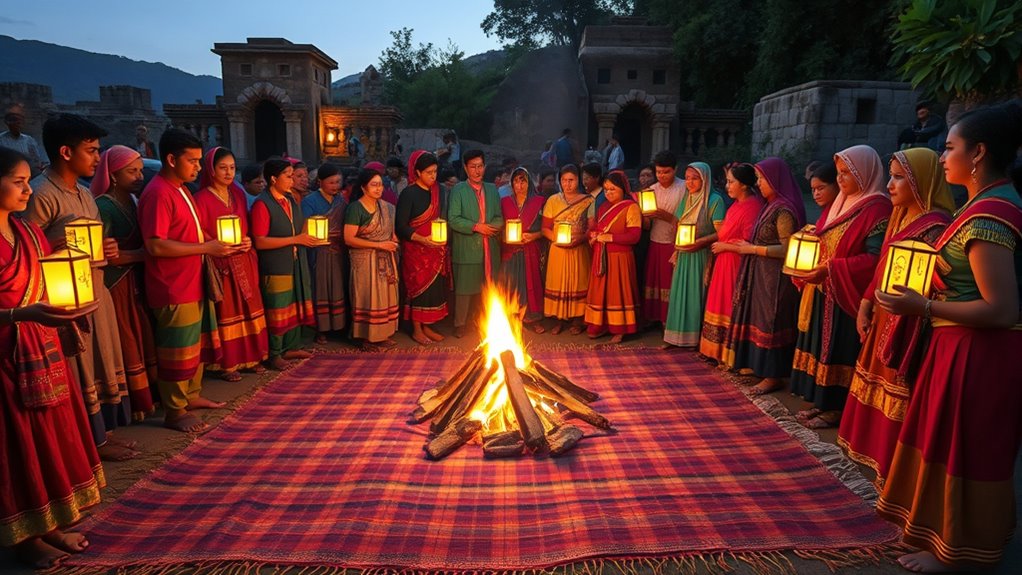

Secret social rituals around the world help communities bond deeply, passing down values and identities that last generations. These hidden practices often involve symbolic symbols, songs, or ceremonies that mark important life passages or reinforce shared beliefs. By keeping these rituals confidential, communities protect their traditions and create a sense of belonging and pride among members. Interested in discovering more about these powerful cultural acts? There’s much more to uncover about their unique origins and powerful effects.
Key Takeaways
- Secret rituals reinforce community bonds by fostering shared identity and belonging among initiated members.
- They preserve cultural traditions, symbols, and stories across generations, strengthening cultural continuity.
- Secrecy safeguards sacred practices, enhancing their spiritual significance and exclusivity.
- Rituals often mark important social transitions, such as coming of age, reinforcing social cohesion.
- The mystery surrounding these rituals elevates their power, fostering pride and unity within the community.
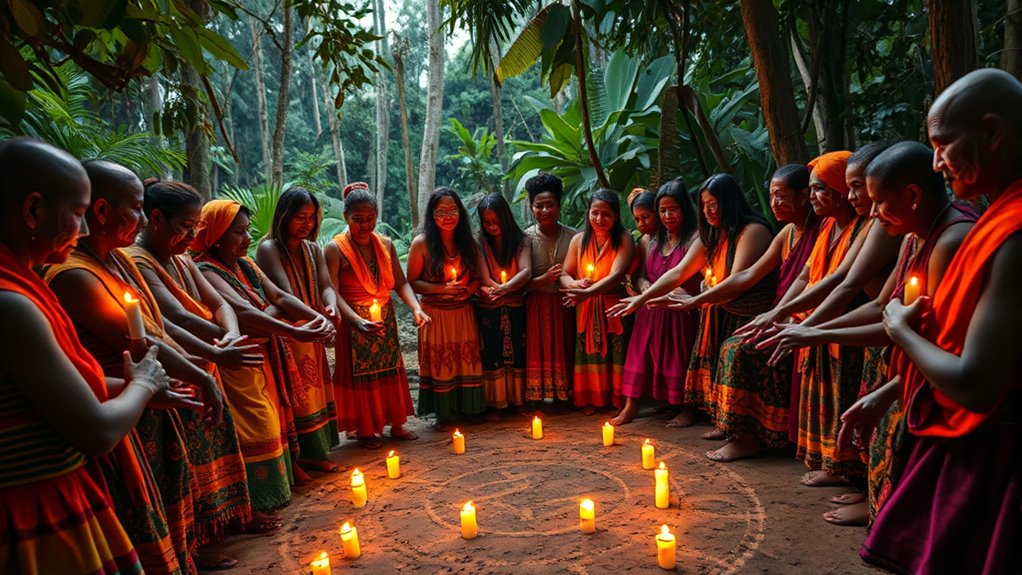
Have you ever wondered what hidden traditions communities around the world keep secret from outsiders? These secret social rituals often serve as powerful tools to reinforce bonds, preserve cultural identity, and pass down values through generations. They are not just mysterious ceremonies; they embody deep-rooted meanings that strengthen the fabric of a community. When you look closely, you’ll realize that many of these rituals hold significant cultural importance, often connected to the community’s history, beliefs, or social structure. Their ritual origins can be traced back centuries, sometimes even millennia, making them a living link to ancestors and shared heritage.
Imagine participating in a ceremony where every movement and symbol is carefully designed to convey collective memory and reinforce social cohesion. These rituals often operate under strict secrecy, and their concealment isn’t merely about mystery—it’s about safeguarding their sacred or exclusive nature. In many cases, outsiders are prevented from fully understanding or taking part, assuring that the ritual’s integrity remains intact. This secrecy can act as a filter, allowing only initiated members to access the full meaning and significance behind the tradition, which, in turn, fosters a sense of belonging and pride among community insiders.
For example, in some indigenous societies, secret initiation rites mark the transition from youth to adulthood. These rituals often involve complex symbols, songs, or dances that encapsulate the community’s history and spiritual beliefs. Such ceremonies are crafted with specific ritual origins, rooted in stories of creation, survival, or moral lessons, making them crucial to cultural continuity. Participating in or even witnessing these rituals can be a profound experience, revealing how tradition shapes social identity and maintains cohesion over generations. The secrecy often enhances the ritual’s power, creating an aura of sacredness that outsiders can’t access, but community members cherish as a essential part of their identity.
Ultimately, these secret social rituals serve more than just social functions—they act as repositories of cultural significance and historical memory. By keeping certain aspects hidden from outsiders, communities protect their core values and guarantee these traditions stay pure and meaningful. They remind you that culture isn’t static; it’s alive, dynamic, and fiercely guarded through ritual origins that carry the weight of history. When you understand the importance of such rituals, you see them not just as mysterious acts but as crucial threads in the ongoing tapestry of human community and identity.

Korean Doljabi First Birthday Kit – Doljabi Set 돌잡이 Zhuazhou,Traditional Doljanchi Ceremony Set with Fortune Items for 1-Year-Old Celebration
9 Symbolic Fortune Items + Party Bonus:This complete traditional set features 9 carefully selected items, each representing a…
As an affiliate, we earn on qualifying purchases.
As an affiliate, we earn on qualifying purchases.
Frequently Asked Questions
How Do These Rituals Influence Local Economies?
You might not realize it, but these rituals have a significant economic impact on local communities. They attract tourists, boosting the local economy through increased spending on accommodations, food, and souvenirs. This tourism boost creates jobs and supports small businesses, strengthening the community financially. By preserving and sharing these traditions, you help sustain local economies, ensuring they thrive both culturally and economically.
Are These Rituals Open to Outsiders or Only Locals?
You might wonder if these rituals are open to outsiders or limited to locals. Typically, many of these ceremonies prioritize cultural accessibility, allowing outsiders to observe and sometimes participate, fostering understanding and community bonds. However, some rituals remain exclusive, reserved for locals to preserve traditions. Whether open or restricted, participating shows respect for the community’s customs, helping you appreciate their cultural significance and strengthening connections across cultures.
What Is the Historical Origin of These Rituals?
They say, “History repeats itself,” and that’s true for these rituals. Their origins often date back generations, rooted in cultural continuity that keeps traditions alive. Over time, these rituals evolve, incorporating new influences while maintaining their core purpose. This evolution strengthens community bonds, ensuring that shared history and identity endure. Their deep roots help preserve cultural heritage, making each ritual a living piece of history that continues to unite people.
How Do Communities Ensure the Preservation of These Traditions?
You can help guarantee the preservation of these traditions by actively participating and passing them down through generations. Communities focus on maintaining cultural continuity by adapting traditions to fit modern contexts, making them relevant and engaging. They often document rituals, teach younger members, and celebrate them publicly. By doing so, they keep the spirit alive, ensuring these social rituals continue to foster community bonds and cultural identity for years to come.
Do These Rituals Change Over Time or Stay the Same?
You might wonder if these rituals stay the same or change over time. Typically, they evolve through tradition evolution and ritual adaptation, reflecting new influences or needs. As communities grow or face new circumstances, they often modify certain elements to stay relevant. However, core aspects tend to remain, preserving the essence of the tradition. This balance helps keep the rituals meaningful while allowing them to adapt to contemporary life.

Native American Costume Girls Dress Indigenous American Indians Kids Cosplay 6-7 Years Brown
【Packing list】Dress*1,Headband*1,Neck lace*1.
As an affiliate, we earn on qualifying purchases.
As an affiliate, we earn on qualifying purchases.
Conclusion
These secret rituals prove that community bonds can be so powerful, they feel like an unbreakable thread woven through generations. By participating in or simply witnessing these traditions, you realize that human connection can be as resilient as the strongest steel and as vibrant as a rainforest bursting with life. These hidden customs remind you that, no matter where you are, sharing in these sacred moments can transform ordinary lives into extraordinary stories of unity and belonging.

Symbols and Artifacts: Views of the Corporate Landscape (Communication & Social Order)
As an affiliate, we earn on qualifying purchases.
As an affiliate, we earn on qualifying purchases.

ODASDO Lyrical Dance Costumes for Women Modern Contemporary Dancewear Ballet Two Piece Outfit Tank Crop Tops Mesh Tulle Wide Leg Bottom Pants Set for Acro Yoga Jazz Recital Solo Black L
TWO PIECE LYRICAL DANCE COSTUMES: Unique two piece set women lyrical dance costume, ballroom dance outfit for women….
As an affiliate, we earn on qualifying purchases.
As an affiliate, we earn on qualifying purchases.