
Mastering brewing techniques like French press, pour-over, or AeroPress lets you customize flavor profiles and turn everyday coffee into a mindful ritual. Choosing ethically sourced beans from fair trade and sustainable farms not only supports farmers’ livelihoods but also enriches your coffee experience with purpose and integrity. Combining craftsmanship with responsible sourcing creates a deeper connection to your cup and the broader coffee culture. Keep exploring to uncover more ways to elevate your coffee journey.
Key Takeaways
- Different brewing techniques like pour-over, French press, and espresso highlight diverse flavor profiles and cultural practices.
- Mindful brewing methods enhance appreciation for complex notes in single origin beans.
- Ethical sourcing ensures fair trade, supports sustainable farming, and protects farmers’ livelihoods.
- Selecting high-quality, ethically sourced beans elevates the coffee experience beyond taste to social impact.
- Coffee rituals and storytelling connect drinkers to tradition, craftsmanship, and environmental responsibility.

Have you ever wondered why coffee has become such a global phenomenon? It’s more than just a morning pick-me-up; it’s a cultural experience that brings people together and offers a sense of connection. One reason for its widespread appeal is the emphasis on high-quality beans, especially single origin beans. These beans come from a specific region or farm, allowing you to enjoy the unique flavors and characteristics of that locale. When you choose single origin beans, you’re not only elevating your coffee experience but also supporting farmers who often practice sustainable and ethical farming methods. This focus on provenance enhances the story behind each cup, turning a simple beverage into a meaningful ritual.
Choosing single origin beans elevates your coffee experience and supports sustainable farming practices.
Coffee rituals vary around the world, and they play an essential role in shaping local identities. In some cultures, preparing coffee becomes an art form, requiring precision and care—think of the intricate process of brewing Turkish coffee or the slow, deliberate pour-over method favored in specialty cafes. These rituals aren’t just about making a drink; they’re about creating a moment of mindfulness and appreciation. By engaging in these rituals, you connect with centuries of tradition and foster a deeper appreciation for the craft. It’s about more than just drinking coffee; it’s about savoring the experience.
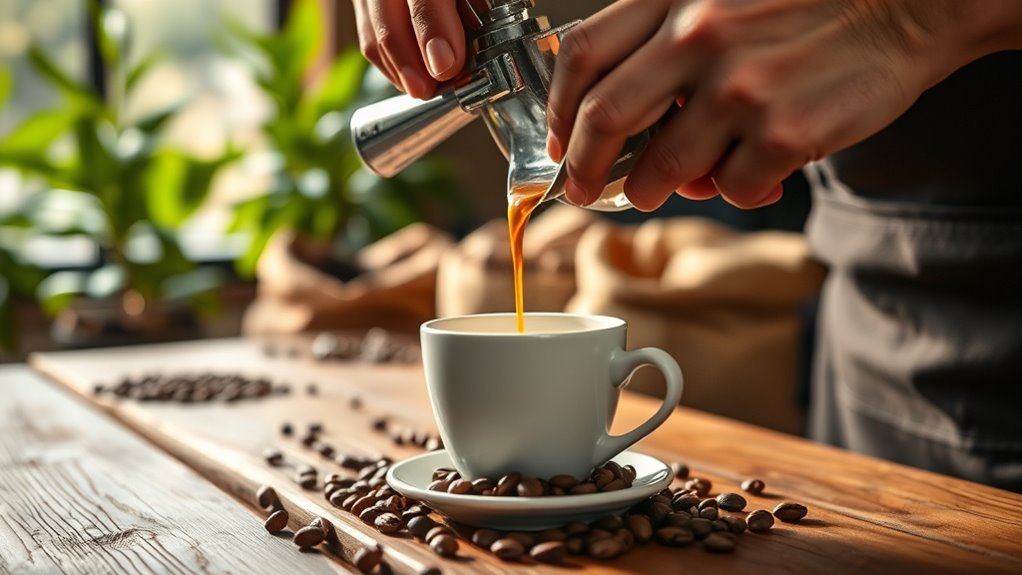
Brewing techniques are a key part of this culture, and mastering them can transform your daily routine. Whether you prefer a French press, AeroPress, pour-over, or espresso machine, each method reveals different flavor profiles and textures. Paying attention to grind size, water temperature, and extraction time allows you to customize your brew and truly enjoy the nuances of your chosen beans. If you opt for single origin beans, these techniques become even more important, as they reveal the complex notes and subtleties that make each batch unique. Taking the time to learn these methods turns your coffee-making into a mindful ritual, elevating your everyday cup into a moment of personal indulgence. Additionally, understanding different brewing methods helps you appreciate the variety of coffee culture around the world.
Beyond the brewing process, ethical sourcing is vital in today’s coffee culture. When you select beans from reputable sources, you’re supporting fair trade practices, environmental sustainability, and the livelihoods of farmers. This ethical approach guarantees that your coffee isn’t just delicious but also responsible. Knowing that your purchase helps improve farming communities and reduces environmental impact adds a layer of purpose to your coffee rituals. It’s a way to enjoy your favorite beverage while making a positive difference in the world. Ultimately, the blend of high-quality, ethically sourced beans, mindful brewing techniques, and cultural rituals creates a rich, meaningful coffee culture that celebrates both craftsmanship and conscience.
Frequently Asked Questions
How Does Altitude Affect Coffee Flavor Profiles?
Altitude influence profoundly impacts your coffee’s flavor development. As you brew, you’ll notice higher altitudes produce beans with brighter, more complex flavors because cooler temperatures slow maturation, allowing for better flavor development. Lower altitudes often yield beans with bolder, more earthy notes. So, when choosing your coffee, consider altitude to enjoy the nuanced flavor profile that best suits your taste.
What Are Emerging Trends in Sustainable Coffee Packaging?
You’ll see sustainable coffee packaging trending toward biodegradable options, reducing environmental impact and appealing to eco-conscious consumers. Minimalist design is also gaining popularity, emphasizing simplicity and elegance while minimizing material use. This approach not only enhances brand aesthetics but also aligns with sustainability goals. As a coffee enthusiast or industry professional, embracing biodegradable packaging with a sleek, minimalist look can set you apart and support a greener future.
How Do Different Brewing Methods Influence Caffeine Levels?
Imagine your brew as a race car engine — different brewing methods influence its speed and power. For example, espresso’s high pressure quickly extracts caffeine, boosting its strength, while cold brew’s slow process results in a smoother, milder caffeine profile. So, your choice of brewing method directly affects brew strength and caffeine extraction, letting you customize your coffee’s energizing punch based on your preference.
What Are the Best Practices for Reducing Coffee Waste?
To reduce coffee waste, you should practice waste reduction techniques like brewing only what you need and reusing coffee grounds. You can also participate in coffee composting, turning used grounds into nutrient-rich soil. Additionally, buy ethically sourced beans and store them properly to prevent spoilage. These steps help minimize waste, promote sustainability, and make your coffee routine more eco-friendly.
How Can Consumers Verify Ethical Sourcing Claims?
Think of verifying ethical sourcing claims as peeling back layers of an onion. You can check if your coffee bears a Fair Trade certification, which ensures fair wages and sustainable practices. Also, seek brands that prioritize supply chain transparency—they openly share their sourcing details. By doing so, you guarantee your coffee supports ethical farmers and eco-friendly practices, turning your morning brew into a mindful choice that makes a real difference.
Conclusion
As you embrace coffee culture, remember that every sip connects you to a rich history and a global community. By mastering brewing techniques and supporting ethical sourcing, you become part of a timeless tradition—like a modern-day troubadour singing the praises of sustainable practices. So, keep experimenting, stay curious, and savor each cup. After all, in this caffeinated saga, you’re both the creator and the connoisseur, shaping a future as vibrant as the Renaissance.